REVIEW · BEIJING
Tai Chi or Kung Fu plus Chinese Calligraphy Learning Class
Book on Viator →Operated by Beijing San Feng Tai Chi Club · Bookable on Viator
Tai chi and calligraphy make a sharp combo. This 3-hour class pairs martial arts basics with Chinese calligraphy, with Taoist ideas worked into the day’s movements. It is a practical way to see Beijing that is not just photos and plaques.
Two things I really like: you get a small-group setting with hands-on coaching, and you can choose either slow, calming Tai Chi or faster, more dramatic Kung Fu. The instruction also ties physical practice to philosophy, including the talk of yin and yang.
One consideration: on rainy days, the martial-arts portion may shift to a studio rather than staying in the Temple of Heaven area.
In This Review
- Quick hits
- Meet at Jixiaolan and start near the Temple of Heaven area
- Tai Chi vs Kung Fu: two different tempos, one class style
- Taoism, yin and yang, and what you actually practice
- Small-group coaching that helps you correct form
- Weather-proof Beijing: what happens when it rains
- The 90-minute Chinese calligraphy class: brush skills and character culture
- Why this pairing works: control in your body and control in your hand
- Price and value: two instructor-led classes in 3 hours
- What to bring and how to dress for comfort
- Who should book this Beijing class, and who might skip it
- Should you book the Tai Chi or Kung Fu plus calligraphy class?
- FAQ
- Where is the meeting point?
- What time does the class start?
- How long is the experience?
- What martial arts can I choose from?
- What do we do during the calligraphy class?
- Is hotel transfer included?
- Does the activity run in bad weather?
- Is it a private group?
- Can kids join?
- Can I cancel for a refund?
Quick hits
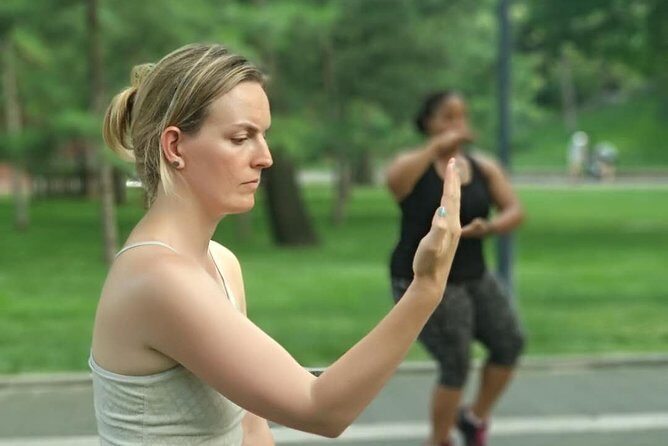
- Choose Tai Chi or Kung Fu so the pace matches what you want to feel
- Small-group, personalized coaching for better form and less guessing
- Ninety minutes of calligraphy after you move, not before you sit
- Taoism talk (yin and yang) turns the practice into something you understand
- All-weather operations with possible indoor studio space when it pours
Meet at Jixiaolan and start near the Temple of Heaven area
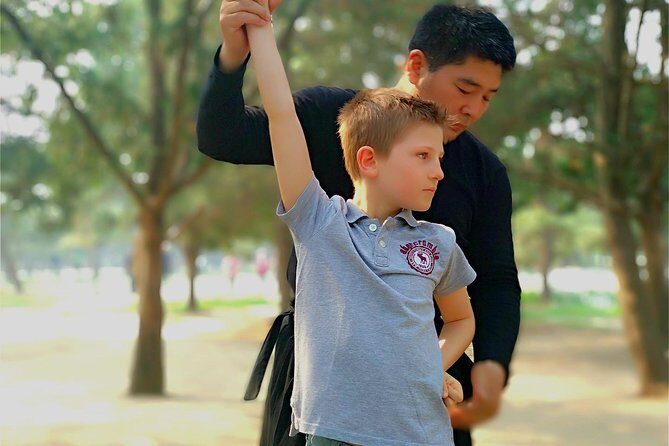
Your session begins at the Jixiaolan Former Residence Ticket Office, 241 Zhu Shi Kou Xi Da Jie, Xicheng District (near Beijing). The listed start time is 9:00am, and the experience is offered as morning or afternoon options depending on the booking. You’ll use a mobile ticket, and the group is private in the sense that only your party participates.
I like that this start point is specific. It cuts down on that vague, wander-and-hope feeling that can happen with some cultural classes. Also, the tour is designed to run in all weather, so you should plan as if you will be outside at least briefly.
Wear comfortable walking shoes. Even if most of your time is instruction, you’ll still be moving around the meeting area and getting oriented. If you are bringing kids, remember they must travel with an adult.
You can also read our reviews of more tours and experiences in Beijing


Tai Chi vs Kung Fu: two different tempos, one class style
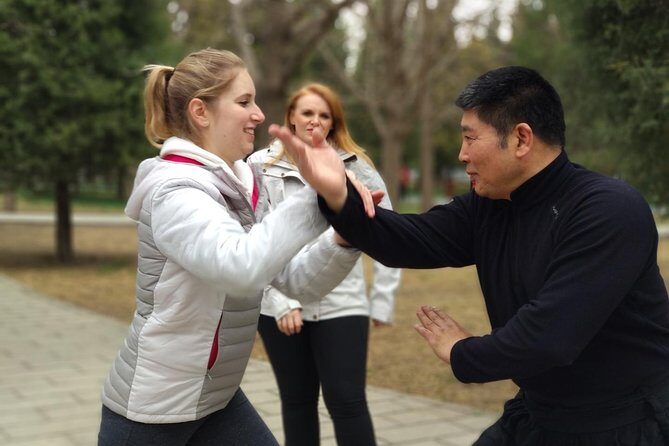
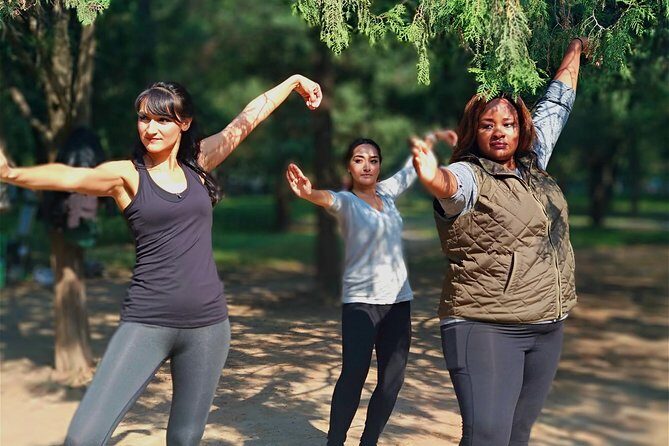
You’ll start with either Tai Chi or Kung Fu, and the choice is part of the appeal. Tai Chi leans into slow, relaxing movements, deep focus, and breathing that helps you settle into control. Kung Fu is taught as a faster, more dramatic martial arts style, with basic moves practiced as you learn the rhythm.
Both options are billed as teaching the foundations. That matters because you’re not expected to already know the art. You’re also not just watching someone demonstrate for 90 minutes and calling it participation. The structure is built around doing the movements, then refining them.
If you’re new to martial arts, Tai Chi is often the easier entry point because slow movement makes it clearer where your body should be. If you want a bigger adrenaline jolt and a more energetic practice, Kung Fu is the better fit. Either way, you get the cultural connection in the same package afterward with calligraphy.
Taoism, yin and yang, and what you actually practice
A unique part of this class is that the instructor explains the philosophy behind the movement. You’ll hear about Taoism and yin and yang, then connect those ideas to what you do with your body. This is not philosophy as trivia; it’s presented as a lens for balance, focus, and control.
In Tai Chi, the “essence” is described as slow, deliberate movement paired with deep breathing and concentration. That combination helps you feel how steadiness can be physical, not just mental. In Kung Fu, the philosophy still matters, but it tends to come through as intention and control—moving with purpose rather than flailing.
The practical takeaway for you is simple: your breathing and your attention are part of the technique. If you spend the class trying to copy shapes only, you’ll miss half the point. Instead, listen closely when the instructor cues focus and breathing, then match your practice to those cues.
Small-group coaching that helps you correct form
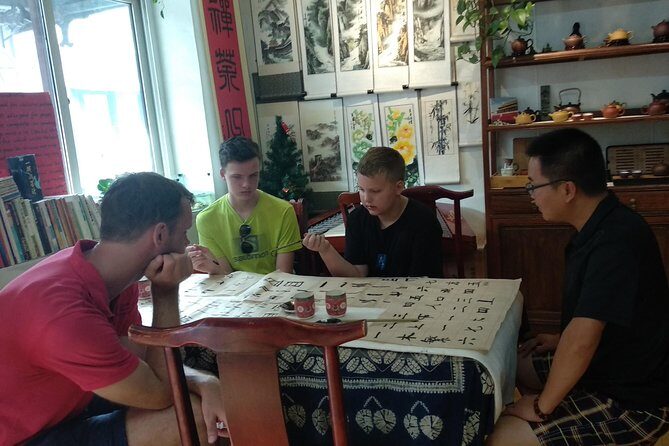
This is taught in a small group, which changes everything. In a larger class, you often spend your time trying to keep up. Here, the instruction is set up for clearer feedback so your posture and movement feel less guessy.
The class runs for about 90 minutes for the martial arts portion, and that time is enough to teach foundations without rushing. It also gives you time to ask questions about what you are feeling—tightness, balance, or where your focus should land. You also get more chances to repeat a movement while the instructor is still available to correct it.
Here’s what will make the session go smoothly for you:
- Follow the instructor’s pace first, even if it feels slow at the start
- If something feels off, ask where the focus should be (breath, balance, or posture)
- Don’t try to perfect everything; aim for steady improvement
That approach gets you the best value from the limited time.
Weather-proof Beijing: what happens when it rains
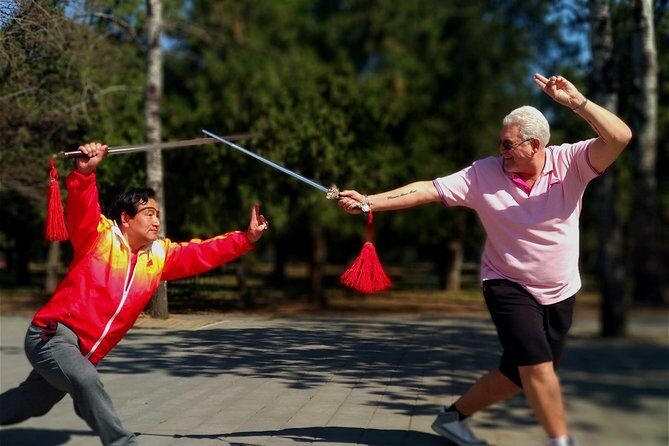
The experience operates in all weather conditions. That means you should dress appropriately and assume you may be outdoors at the start or between parts of the session. The good news is that instruction is not dependent on perfect skies.
One helpful detail from an earlier rainy session: the Kung Fu portion and calligraphy may take place in the instructor’s studio rather than in an open-air Temple of Heaven setting. That doesn’t mean you lose the experience—it just shifts the setting so you can keep learning comfortably.
If you’re planning for Beijing weather, think layers. You want to be warm enough to move well and cool enough that you’re not drenched by your own effort. Bring a light rain layer if rain is likely.




The 90-minute Chinese calligraphy class: brush skills and character culture
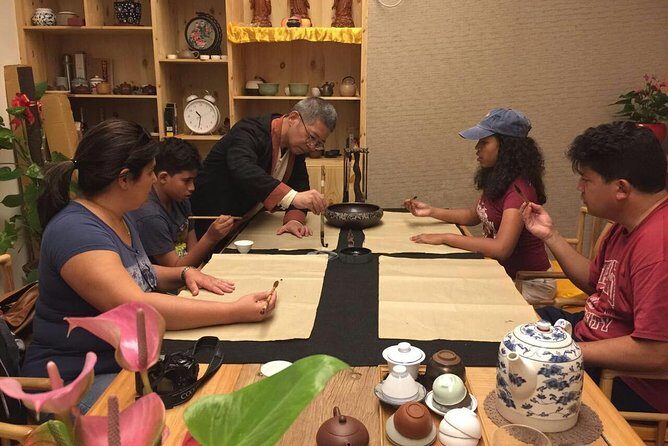
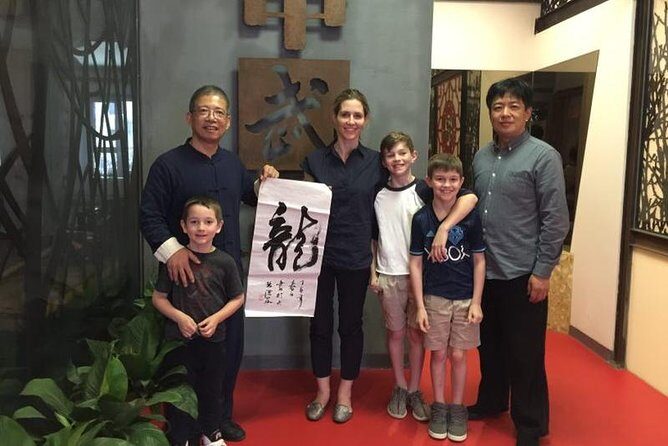
After the martial arts portion, you get another 90 minutes devoted to Chinese calligraphy. This second half is where the day’s pace changes from movement to fine control. The class gives you time to learn calligraphy culture and practice the fine art of Chinese characters, using a classroom setting.
Calligraphy is deceptively physical. You’re not just writing words; you’re learning how pressure, direction, and timing shape a character. That’s why it pairs well with a martial arts lesson. In both, small adjustments change the outcome.
What I’d watch for during your calligraphy time:
- How the instructor explains brush control and stroke timing
- When you are encouraged to slow down for quality
- How they frame characters as cultural expression, not just output
Even if you don’t leave with a masterpiece, you’ll likely leave with a better sense of why calligraphy is treated like an art form rather than handwriting homework.
Why this pairing works: control in your body and control in your hand
The best part of this experience is that it matches two kinds of discipline. Martial arts builds coordination and focus through full-body movement. Calligraphy asks for the same mental qualities—attention, patience, and control—just expressed through your wrist, fingers, and breath.
That connection shows up in the way the class is structured: you learn the basics, then you switch to a different medium without losing the theme. Taoism and yin and yang are talked about during the martial arts segment, and the calligraphy segment follows as a culture-focused contrast.
For you, that means the day feels coherent. You’re not bouncing between unrelated activities. Instead, you’re learning how “calm focus” can look like either slow movement or careful strokes on paper.
Price and value: two instructor-led classes in 3 hours
At $95 per person for about 3 hours, you’re paying for two structured lessons: 90 minutes of Tai Chi or Kung Fu plus 90 minutes of calligraphy. The value comes from that tight packing. You’re not spending your day on transit between distant experiences. You’re getting real instruction time for two skills that usually require separate bookings.
This is also a small-group format with personalized attention. In practice, that can save you from the common problem of cultural classes where you do the activity but don’t improve much because nobody can correct your form or help your questions land. Even with limited time, coaching makes a difference.
You’ll also see that group discounts are available, and the experience has a mobile ticket. Those details matter because they usually reduce friction on the day—less hassle, more time learning.
What to bring and how to dress for comfort
The basics are covered in the experience guidance: comfortable walking shoes and weather-appropriate clothing. Since the class operates in all conditions, you’ll want to plan for sudden temperature changes and damp air.
Bring:
- Comfortable walking shoes
- Layers (so you can adjust quickly if you warm up from movement)
- A light rain option if forecast looks iffy
If you are traveling with kids, make sure the adult in your group is ready to stay engaged. The class is designed for most people to participate, but it includes physical practice, even if it’s taught at a beginner-friendly pace.
If you are sensitive to intensity, pick Tai Chi. If you want more energy, pick Kung Fu. Either way, wear clothing that allows you to move without restriction.
Who should book this Beijing class, and who might skip it
This works best if you want hands-on Beijing culture rather than just sightseeing. I’d recommend it for people who enjoy learning through doing—standing, moving, paying attention to breath, then switching to a craft like calligraphy.
It’s also a good choice if you like structured experiences. You have a clear start point, a defined time block, and two focused segments. If you are the type who likes to use a morning efficiently, the 3-hour format is a strong fit.
It may not be ideal if you prefer a fully seated activity. The martial arts portion involves physical movement, and even beginners will spend time standing and practicing.
Should you book the Tai Chi or Kung Fu plus calligraphy class?
I think you should book this if you want a memorable, local-feeling experience that blends body and art. The small-group coaching and the choice between Tai Chi and Kung Fu make it feel tailored. Then the calligraphy half gives you something tangible to think about afterward, even if your strokes are still learning.
Skip it only if you don’t want any physical component. Otherwise, this is a smart use of a half-day in Beijing—especially because it includes instruction from two different angles, and it stays running even when the weather tries to mess with your plans.
FAQ
Where is the meeting point?
You meet at the Jixiaolan Former Residence Ticket Office, 241 Zhu Shi Kou Xi Da Jie, Xicheng District, Beijing, 100052.
What time does the class start?
The listed start time is 9:00am. The experience also offers morning or afternoon class options depending on what you book.
How long is the experience?
It runs about 3 hours (approximately), including 90 minutes for Tai Chi or Kung Fu and 90 minutes for Chinese calligraphy.
What martial arts can I choose from?
You can choose either Tai Chi or Kung Fu for the martial arts portion.
What do we do during the calligraphy class?
You spend 90 minutes in a Chinese calligraphy classroom, experiencing calligraphy culture and learning Chinese characters through instruction.
Is hotel transfer included?
No, transfer from or to your hotel is not included.
Does the activity run in bad weather?
Yes, it operates in all weather conditions. You should dress appropriately, and the instruction may happen in an indoor studio if conditions are rainy.
Is it a private group?
Yes. It is listed as a private activity, so only your group participates.
Can kids join?
Children must be accompanied by an adult.
Can I cancel for a refund?
Yes. Cancellation is free up to 24 hours in advance for a full refund. If you cancel less than 24 hours before the experience starts, the amount paid is not refunded.