REVIEW · BEIJING
Forbidden City Admission Ticket – With Guide Option
Book on Viator →Operated by Travel China Guide · Bookable on Viator
Your passport becomes your ticket. It is a smart, fuss-free way to step into the Forbidden City through the Meridian Gate and start exploring China’s most famous palace complex right away. I especially like that your passport is what gets scanned at the entrance, not a paper voucher, and that the route takes you past big-name highlights like the Gate of Divine Prowess and the Dragon Throne areas. The main thing to watch is that entry is locked to your reserved date and time slot, and your passport name/number has to be correct.
At $9.90, you’re paying for real value in time and effort. The Palace Museum site covers 72 hectares, and the collection is massive (about 1.8 million artifacts), so having the ticketing headache handled can make your visit feel way more relaxed. Just pick your option carefully, because ticket-only purchases do not include a guide service.
In This Review
- Key Things I’d Plan Around Before You Go
- Why Passport Entry Beats Ticket Scrambles at the Forbidden City
- Meridian Gate (Wu Men) Arrival: Where You Enter and What Exit Helps
- The Palace Museum Stops Included: From Central Harmony to Earthly Tranquility
- Imperial Garden: A Needed Breather From the Main Halls
- How Much Time You Really Need for 2–4 Hours at the Forbidden City
- Price and Value: Is $9.90 Worth It?
- Crowds, Security, and Photo Rules That Can Change Your Experience
- Should You Choose the Guide Option Here?
- Should You Book This Forbidden City Ticket Service?
Key Things I’d Plan Around Before You Go

- Passport entry at Meridian Gate (Wu Men), with no ticket presentation needed beyond passport scanning
- Route through major palace stops like the Hall of Central Harmony and the Palace of Heavenly Purity
- Timeboxed entry with a reserved slot, so arriving late can cost you entry
- Exit flexibility via Shenwu Gate near Jingshan Park or Donghua Gate near Wangfujing Street
- Great for self-paced exploring since the Forbidden City is huge and you’ll likely take breaks
- Photo rules to know: tripods aren’t allowed, and resting a phone on a flat platform may be restricted
Why Passport Entry Beats Ticket Scrambles at the Forbidden City
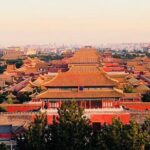
The Forbidden City is a UNESCO-listed complex that’s famous for a reason: the architecture is stunning, and the place is historically loaded. It’s said to include over 9,000 rooms, and it served as the seat of power for the Ming and Qing dynasties from 1368–1911. Even if you only give it part of a day, the scale hits you immediately.
What makes this experience practical is that you’re not hunting for tickets the morning of your visit. Instead, you’re pre-booked under your passport details, and at the Meridian Gate your passport is what matters. I like this approach because it reduces the number of moving parts when you’re already traveling.
There’s another big reason this matters in Beijing: long entry lines are common, and the complex is so popular that tickets can be hard to secure without local phone access. In my view, paying a bit to remove that uncertainty is smart—even if you could theoretically buy a ticket yourself, you might still lose time to sold-out slots or confusing systems.
One more “read this twice” detail: you’re admitted based on the exact passport info you provided. If your passport number or spelling doesn’t match, you can end up with wasted time at security.
You can also read our reviews of more tours and experiences in Beijing
Meridian Gate (Wu Men) Arrival: Where You Enter and What Exit Helps
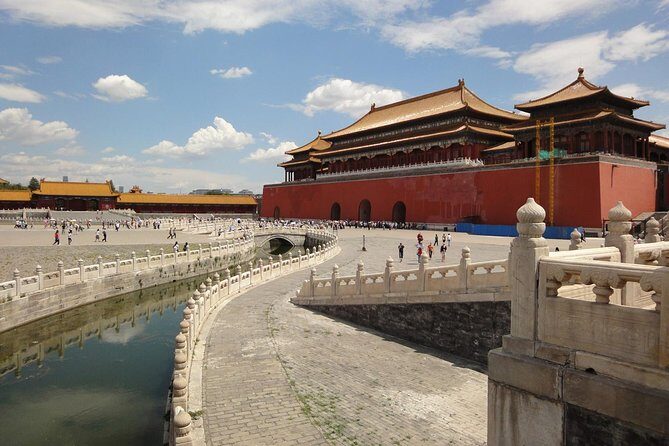
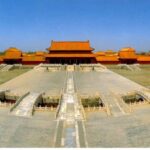
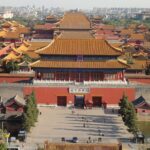
You enter through the Meridian Gate, also known as Wu Men. This matters because it sets your entire flow. Once inside, you’re already on the palace side of the experience, not circling around trying to find the right entrance.
This service is designed for overseas clients only. Chinese citizens aren’t eligible to use this particular option, and visitors from Hong Kong, Macau, or Taiwan must use the correct ID type and a Mainland Travel Permit when booking. If you’re a Chinese visitor, you may book independently through the official mini-program instead.
The experience is also close to public transportation, which helps if you’re building a visit into a bigger day in Beijing. And if you selected a ticket-only option, there’s no meeting point arranged. You should go straight to the Meridian Gate on your booked date and time slot.
Exits are a handy perk in planning. You have two options:
- Shenwu Gate (near Jingshan Park)
- Donghua Gate (near Wangfujing Street)
That means you can line up your walk after the museum with something else—rather than backtracking across the complex to return to the same area.
The Palace Museum Stops Included: From Central Harmony to Earthly Tranquility
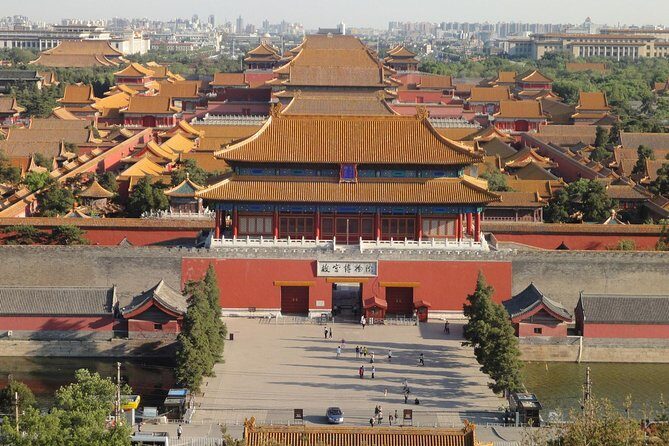
Once you’re in, you’re not just wandering randomly. Your ticket includes admission to several major buildings and key areas, which gives your day structure even when the crowds force slow walking.
Here are the included highlights you can expect to see:
- The Hall of Central Harmony (Zhonghe Dian)
- The Hall of Preserved Harmony (Baohe Dian)
- The Palace of Heavenly Purity (Qianqing Gong)
- The Palace of Earthly Tranquility (Kunning Gong)
- The Imperial Garden
I like this lineup because it covers big, iconic structures that most people come to see. Even if you’re not the type who reads every historical panel, these spaces tend to help you understand the “imperial scale” of the whole palace. Names like Central Harmony and Preserved Harmony also help you keep your orientation—your brain doesn’t feel as lost in the middle of all that open space.
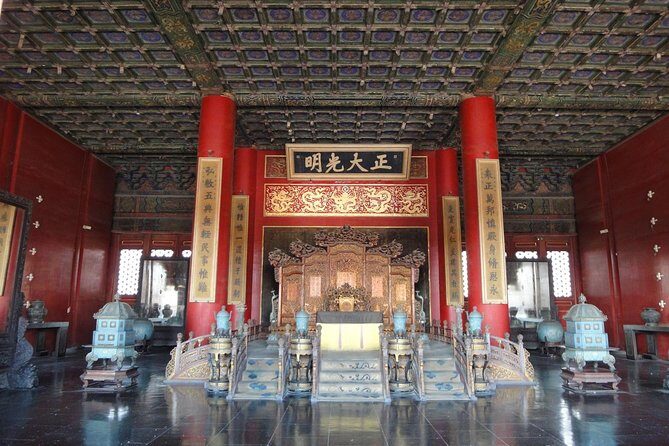
You’ll also see named route highlights mentioned for the experience, including the Gate of Divine Prowess and the Dragon Throne area. That’s useful because it turns the visit from a blur of “grand buildings” into a more connected experience with recognizable anchors.
A practical reality: the Forbidden City is enormous, and the included stops are still only part of the whole 72-hectare complex. You don’t need to try to conquer everything. Instead, use the included buildings as your spine, then fill time around them with courtyards and nearby sections you pass while walking.
Imperial Garden: A Needed Breather From the Main Halls
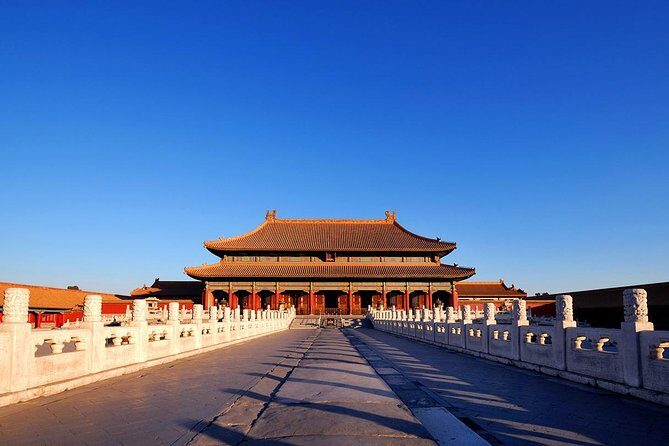
After time in the main halls, the Imperial Garden is one of those included spots that gives your feet and your eyes a break. This is helpful because a full Forbidden City visit isn’t just about looking—it’s also about moving through long stretches in crowded conditions.
If you’re doing this as part of a longer Beijing itinerary, I think the garden is the kind of stop that makes the day feel less like a checklist. You get a change of pace from the largest ceremonial buildings, and it gives you a place to slow down before you head toward your exit gate.
The key is to plan for pauses. Even if your ticketing entry is smooth, the site is still heavily visited. Your best experience comes when you stop treating the palace as a sprint and start treating it like a long walk with meaningful stops.
How Much Time You Really Need for 2–4 Hours at the Forbidden City
The duration is listed as about 2 to 4 hours. That range is realistic because you can’t comfortably power-walk a palace complex this big, especially when you factor in security checks and crowd movement.
One of the best planning tips you can steal from the day-to-day reality: don’t schedule your Forbidden City visit as the very first activity of a brand-new Beijing arrival day. It’s a walk-heavy place. If you’re tired, the scale becomes harder to appreciate.
Here’s a smart way to think about timing:
- If you arrive and you’re ready to focus, 2 hours can cover the core included sights.
- If you pause for photos, readings, and breaks, 3–4 hours feels more comfortable.
Also, your entry is controlled by the reserved time slot. Tickets are valid only for the selected date, and entry is strictly limited to your reservation window. So don’t treat your time slot like a vague suggestion. It’s a key part of the day.
You can also read our reviews of more guided tours in Beijing


Price and Value: Is $9.90 Worth It?
At $9.90 per person, this ticket option is mainly valuable for one thing: reducing uncertainty. The Forbidden City sells out quickly around when tickets go on sale, and getting access without a local phone number can be a headache. If you’re coming from overseas, this kind of pre-booking can save you from wasting your Beijing morning on ticket hunting.
You’re also paying for simplicity. Once you arrive, you show your passport at the Meridian Gate and get scanned. In practice, that means you spend less time juggling documents and more time standing inside the palace walls where you actually want to be.
Is it a “tour” in the full sense? Not really. Even though a with-guide option exists, the ticket-only version clearly does not include a guide service. So you’re buying admission and entry help, not necessarily interpretation.
If you want a guided storyline through the palace and want help sorting what matters most, you’ll need to choose the guide option (and confirm what’s included with your specific selection). If you’re happy to explore at your own pace, this is strong value.
Crowds, Security, and Photo Rules That Can Change Your Experience
The Forbidden City gets crowded. That’s not a surprise, but it affects how you should plan your expectations.
The good news is that entry management is efficient, and once you’re inside the flow moves. Still, build extra time for security and the general bottleneck at the entrance area. On at least one real visit, entry into the palace took around 30 minutes even though the process was organized.
Now for photos, because this is where some people get frustrated: tripods aren’t allowed, and placing a phone on a flat platform may be restricted too. If you’re the kind of traveler who likes a clean, stabilized shot with gear support, you’ll want to mentally prepare for adjustments. Your best strategy is to travel light and stay flexible with how you frame shots in crowded areas.
If you’re buying an on-site audio guide, keep your expectations practical. One Italian audio guide experience was reported as working poorly, so if audio is important to you, double-check quickly after purchase so you don’t waste the day.
Should You Choose the Guide Option Here?
This is the fork in the road: guided or DIY.
A guide can help a lot in a place like this because the Forbidden City is enormous and the names alone can be hard to connect into a meaningful route. If you pick a guide add-on, you’re likely choosing extra context so you don’t spend your limited time just walking and guessing.
But if you book the ticket-only service, there’s no guide service for booking only. In that case, you’re fully self-guided. You’ll rely on signage and your own interests to decide what to linger over, which can work well if you enjoy exploring freely.
My suggestion: if this is your first time seeing the Forbidden City and you care about understanding what each major building represents, the guide option can be worth it. If you simply want the visuals and the big-name halls in a well-managed entry experience, ticket-only is a solid path.
Should You Book This Forbidden City Ticket Service?
Book it if:
- You want passport-based entry that avoids ticket-printing drama.
- You’re an overseas visitor and you want to reduce the risk of missing out on sold-out time slots.
- You like a structured list of major stops (Central Harmony, Preserved Harmony, Heavenly Purity, Earthly Tranquility, and Imperial Garden) but still want to move at your own pace.
Skip it or rethink it if:
- You’re counting on tripods or phone mounts for photography. The on-site rules can limit that.
- You can’t be strict about your reserved time slot and date. Entry is controlled, and arriving off-time can ruin your plan.
- You expected a full guided tour even with a ticket-only purchase. If you want a guide, choose the guide option and check what you’re actually getting.
If you book with your passport details correct and you treat this like a timed entry to a self-paced palace walk, this option is a clean, high-value way to see one of the world’s most unforgettable historic sites.