REVIEW · BEIJING
Confucius Temple and Imperial College Entrance Ticket
Book on Viator →Operated by Unique Beijing Tours · Bookable on Viator
Quiet scholarship beats the crowds. This short walk from the Lama Temple area brings you to the Temple of Confucius and the Guozijian Museum, where the imperial education story comes through in stone. I like that you’re looking at hundreds of stone steles tied to the Imperial Examination, not just statues, and I like that the museum setup is easy to follow even if you skip the guide option.
One watch-out: check your QR codes carefully. A past booking reported only one of two QR codes worked at the temple entrance, so it’s smart to double-check the ticket package when it arrives and keep contact info handy in case you need help at the gate.
In This Review
- Key things to know before you go
- Temple of Confucius and Guozijian: why this stop matters
- What the prepaid ticket does for you in Beijing
- Temple of Confucius highlights: what to focus on
- Guozijian Museum: seeing the Imperial Examination system in context
- Guided tour option: when it helps and when you can skip it
- Timing and how long to plan for a temple-and-museum combo
- Price and value: does $8 make sense here?
- Should you book this Confucius Temple and Guozijian ticket?
- FAQ
- How much is the Confucius Temple and Guozijian entrance ticket?
- Where is this experience in Beijing?
- How long should I plan for?
- Is an English-speaking guide included?
- When will I receive the tickets?
- Is there free cancellation?
Key things to know before you go
- Prepaid entry near Lama Temple: you’re in the thick of Beijing’s temple sights, so it’s easy to pair with other stops nearby
- Temple of Confucius + Guozijian Museum: one ticketed experience covers both, so you don’t waste time figuring out logistics
- Stone steles tied to the Imperial Examination: the education system is shown through names, records, and inscriptions
- English signage helps a lot: you can spend your time reading at your own pace instead of hunting for explanations
- Guided option if you want stories: upgrade to an English-speaking guide when you prefer context and narration
- QR-code hiccups can happen: one reported issue means you should verify codes before you arrive
Temple of Confucius and Guozijian: why this stop matters
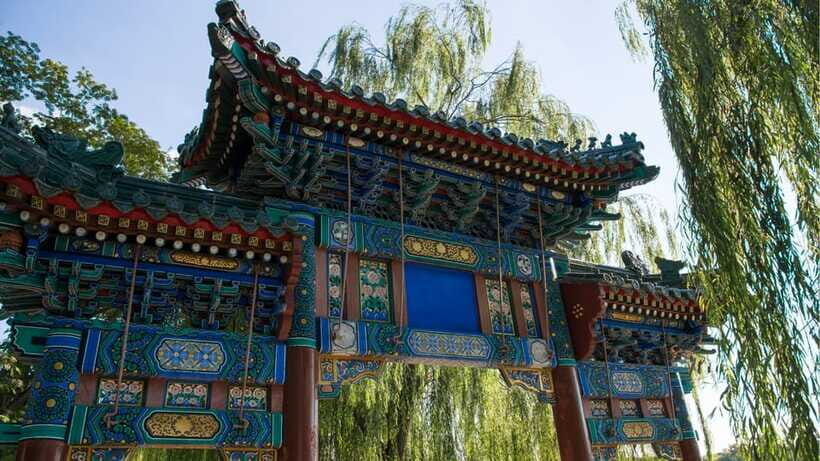
If you like Beijing’s grand temples, you’ll probably also like what’s happening here: less spectacle, more study. The Temple of Confucius in Beijing is the second largest Confucian Temple in China after the one in Confucius’ hometown of Qufu. It was originally built in 1302 for officials to honor Confucius and offer sacrifices, and today the grounds are packed with statues and carvings that keep that ceremonial purpose in view.
Just beside it, Guozijian Museum adds the classroom angle. This complex was the site of the imperial college during the Yuan, Ming, and Qing dynasties, and it now functions as a museum made up of multiple scholarly halls and stone steles. Put simply: you’re not only seeing Confucius as a thinker, you’re seeing how education and testing worked in imperial China—and how success was recorded in stone.
When you visit a temple, it’s easy to get lost in the setting. Here, the focus stays on the education system itself. That’s why I think this ticket is such a good use of time: you can leave with a clearer mental picture of how the Imperial Examination shaped careers.
You can also read our reviews of more tours and experiences in Beijing


What the prepaid ticket does for you in Beijing
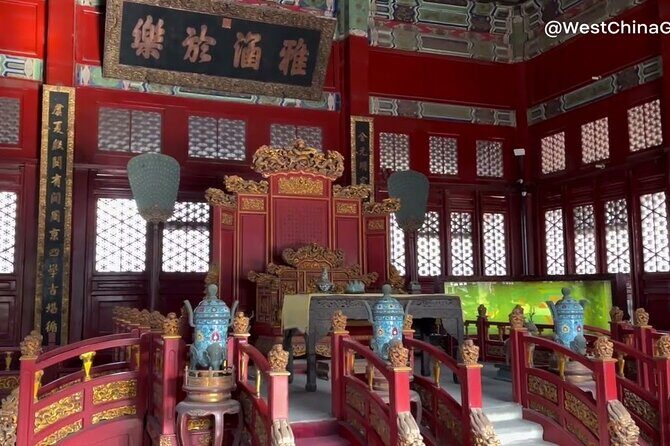
This is an $8 per person entrance ticket experience, and the entrance fee is included. That matters because it’s one less thing to figure out while you’re already dealing with Beijing crowds, transport, and ticket lines.
Also, the ticket is designed to help you beat waiting. With a pre-paid entrance approach, you’re meant to show up and get in rather than spending your trip time arguing with machines or standing in long queues.
A couple of practical notes to keep the day smooth:
- Tickets are sent about 5 days before your travel date, so don’t leave everything to the last minute.
- Booking is commonly made around 15 days in advance on average, so if your schedule is tight, plan earlier rather than later.
- The experience is private for your group, not a shared cattle-car situation. You’ll be with your own group only.
Value-wise, the pricing also stays simple: you’re paying for entry and optionally adding a guided layer if you want extra context.
Temple of Confucius highlights: what to focus on
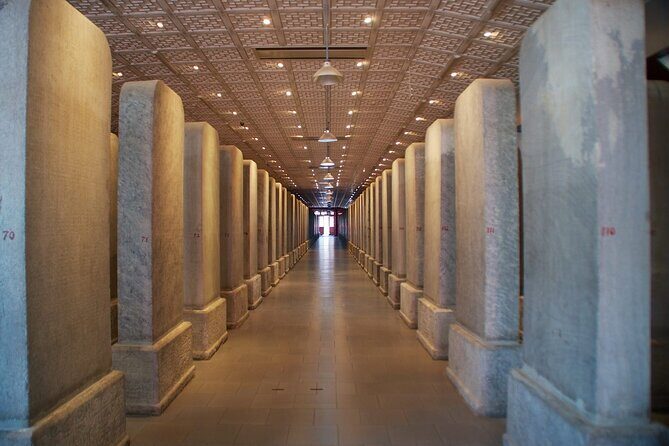
The Temple of Confucius isn’t just a scenic walk. It’s built to mark the presence of a cultural anchor, and you’ll feel that in the way the space is arranged around honoring Confucius.
Here’s what’s most worth your attention:
- Statues and carvings: look for details that connect to ceremonial traditions. These pieces aren’t just decoration; they help the temple keep its original purpose in mind.
- Stone steles and recorded names: the temple features hundreds of stone steles, including records connected to the Imperial Examination. This is the part that often slows people down—in a good way. Reading inscriptions can turn a quick visit into a 30–45 minute detour, especially if English explanations help you translate what you’re seeing.
A simple tip: don’t rush the “photo stops.” Spend a bit longer where you’ll be reading. Even if your Chinese is limited, you’ll likely catch the structure of what the inscriptions represent—names, exams, and achievement.
If you want the temple to feel more than just another courtyard, use the steles as your guide. Let the inscriptions set the pace.
Guozijian Museum: seeing the Imperial Examination system in context
Guozijian Museum is where this ticket really earns its keep. Instead of relying only on general descriptions, you’re walking through museum-style halls built around the educational story itself.
What you can expect to see includes:
- Multiple scholarly halls: the museum space is organized so you can move from one part of the story to another without feeling totally directionless.
- Stone steles as primary evidence: the museum uses stone records as a way to show what imperial education looked like on the ground. If you like learning through primary-type material, this is a big reason people enjoy the visit.
One of the strongest review-style takeaways is how much time people spend simply reading. With English instructions and exhibits placed around the spaces, the visit can easily stretch to about 2–3 hours if you actually stop to read. That’s not “standing around.” It’s part of the experience—slower, calmer, and more satisfying than skimming.
If you opt out of a guided tour, you’ll still likely be okay. The museum layout is set up so you can piece things together at your own speed. If you opt in to a guide, you’ll probably gain more story links—how the exam system worked, what the records meant, and why certain parts mattered.
Either way, plan for reading time. This place rewards it.
Guided tour option: when it helps and when you can skip it
This experience includes an English-speaking tour guide if you select that option. If you choose the guided version, the practical value is context: you won’t only be looking at stones and hallways—you’ll also get the connective tissue between Confucian ideals, the imperial college, and the examination culture.
But here’s the honest tradeoff. If you’re the type who likes to wander and read quietly, you may find you don’t need the guide. The museum experience is described as having English instructions and exhibits across the site, which makes self-guided exploration feel doable.
So I’d frame it like this:
- Choose a guide if you want the story told in a structured way.
- Skip the guide if you’re happy letting the exhibits and steles guide your own route.
Either choice fits the same ticket. You’re just deciding how much narration you want while you’re there.




Timing and how long to plan for a temple-and-museum combo
The experience is listed as about 1 day, but that doesn’t mean you need to spend all day on-site. For this type of temple plus museum, your realistic plan is usually a few focused hours.
If you read at a comfortable pace, expect around 2–3 hours in the museum areas, plus time for the temple grounds. This is especially true because the steles invite you to slow down. They’re the star attraction, and once you start, it’s hard to stop.
Because the sites are close together, you can keep it efficient:
- Start at the Temple of Confucius
- Walk over to Guozijian Museum
- Spend your deepest time where the stone records and English explanations are easiest to follow
Also, since it’s near public transportation and located close to the Lama Temple, you can build a tidy temple circuit on the same side of town. That’s one reason this combo works well for a first-timer day plan.
Price and value: does $8 make sense here?
At $8 per person, you’re paying for entry, and that’s the big value driver. You’re not dealing with separate museum ticket costs or trying to coordinate multiple vendors for one stop. For many visitors, that alone makes it feel fair.
You also get optional flexibility:
- Entrance is included.
- An English-speaking guide is available if you want it.
- Group discounts are mentioned, which can make the experience even easier on your budget if you’re traveling with friends.
The best value angle is how the site is designed for understanding. This isn’t only a pretty set of buildings. It’s a museum built around scholarly halls and stone steles showing the imperial education system. If you enjoy reading and inscriptions, you’ll likely feel the time was worth it.
Should you book this Confucius Temple and Guozijian ticket?
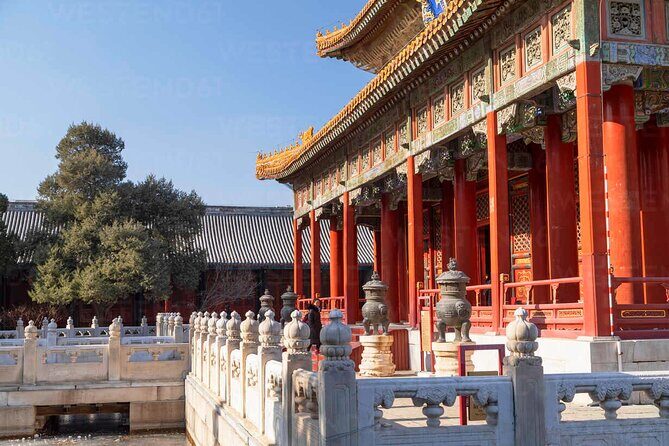
I’d book it if you want a calmer, more brain-on experience than the typical Beijing rush. This is a great choice when you enjoy:
- Cultural sites that are connected to education and ideas, not only emperors and buildings
- Reading stone steles and museum labels
- A visit that you can do with or without a guide
I’d think twice if:
- You hate reading at attractions and want only quick visual highlights
- You’re traveling with strict timing and prefer to skip anything that could turn into a slower, inscription-focused stop
One more practical point before you decide: because tickets are sent about 5 days before, make sure you’ll still have access to the email or contact method used for the booking around that time. That small step can save you stress on arrival.
FAQ
How much is the Confucius Temple and Guozijian entrance ticket?
The price is $8.00 per person, and the entrance fee is included.
Where is this experience in Beijing?
It’s in Beijing and is located just a short walk from the Lama Temple area. It’s also near public transportation.
How long should I plan for?
It’s listed as about 1 day. In practice, you can spend roughly 2–3 hours in the museum if you read the exhibits and information.
Is an English-speaking guide included?
An English-speaking tour guide is included if you select the related option. Entrance is included regardless.
When will I receive the tickets?
Tickets are sent about 5 days before your travel date.
Is there free cancellation?
Yes. Free cancellation is available, and you can cancel up to 24 hours in advance for a full refund.