REVIEW · BEIJING
Beijing Forbidden City Ticket Booking (Optional: guide service)
Book on Viator →Operated by Lily's Tour Company · Bookable on Viator
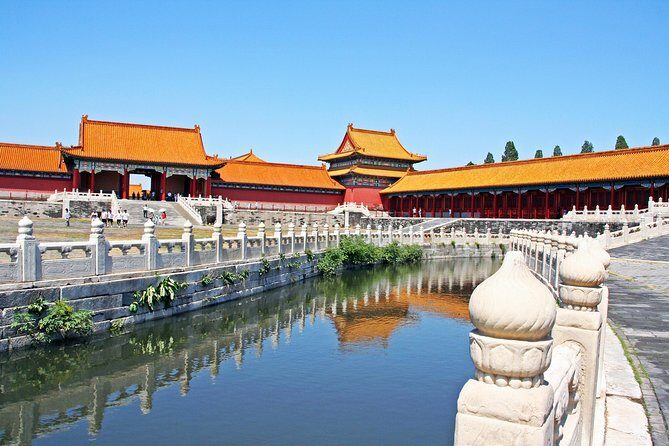
Stepping into Beijing’s Forbidden City feels easier than you expect. This ticket service aims to get you direct entry using your passport at the main entrance by Tiananmen Square, so you spend less time stuck in lines and more time looking at the palaces. I like that the visit is timed to a realistic 3–4 hours, and the route moves through the key halls in the Outer Court and the residential Inner Court. One thing to watch: the system is strict about your provided identity details, so one wrong passport number can spoil the day.
If you add the optional guide, you also get the payoff of context, not just sightseeing. In past tours with this operator, guides including Bobo and Summer have been singled out for clear, lively explanations (with other guides like Marco also mentioned). Your main drawback is still practical: the Palace Museum is big, and this route involves plenty of walking even when you keep it efficient.
In This Review
- Key things to know before you go
- Passport-based entry near Tiananmen Square: how you cut the chaos
- Price and value: why $9.98 can be a bargain (or not)
- How the 3 to 4 hour route actually works
- Stop 1: Forbidden City–The Palace Museum and the first look at the complex
- Stop 2: Hall of Middle Harmony and Hall of Supreme Harmony (the Golden Throne)
- Stop 3: Hall of Preserving Harmony (Baohedian)
- Stop 4: Gate of Heavenly Purity (Qianqing Men) and the shift from public to private
- Stop 5: Palace of Earthly Tranquility and what each room was used for
- Stop 6: The Imperial Garden of the Palace Museum
- Guide upgrade vs self-paced entry: what you’re paying for
- Before you go: passport accuracy, kids’ height, and Chinese ID rules
- Tiananmen Square and sequencing your Beijing day
- Should you book this Forbidden City ticket service?
- FAQ
- Do I need my passport to enter the Forbidden City?
- What happens if my passport name or number is wrong on the booking?
- Can I choose a morning or afternoon entry time?
- How long is the visit?
- Is the admission ticket the only thing included in the price?
- Is the ticket valid on another day if my plans change?
- Do I need a youth ticket for children?
- Can I cancel for a refund?
Key things to know before you go

- Passport entry at the main gate: you use your passport name and number for access, not just a general ticket QR code.
- Built-in pacing for a first visit: the route is designed around a 3–4 hour visit, not a full all-day wander.
- Outer Court highlights first: you move through the major Halls of Harmony, including the one linked with the Golden Throne.
- Inner Court contrast: you cross from the public ceremonial spaces into the emperor’s more private world near the Gate of Heavenly Purity.
- Optional upgrades: you can choose a guide service or add a visit to the Treasure Gallery.
- Max group size 10: the tour format keeps your day from feeling like a human conveyor belt.
Passport-based entry near Tiananmen Square: how you cut the chaos
The Forbidden City is one of those sights where the building is the point, but the line situation is the stress. This is why I like the concept behind this ticket service: it uses your passport for direct access through the security check and at the main entrance close to Tiananmen Square (the Meridian Gate area). In practical terms, you’re not trying to out-muscle the online booking system with a phone, a slow connection, and a foreign-language website.
The other big win is that you’re not guessing your way in. You’re essentially bringing your identity to the gate, and you have a reservation that matches your details. The Palace Museum is UNESCO World Heritage, and it’s a classic Beijing must-do. But you don’t want your first impression to be a crowded scramble at the checkpoint.
Two small notes help you mentally prepare. First, your visit is designed to be brisk: you’ll hit the signature halls plus a final garden stop, but it’s not meant to replace a slow, hours-long solo circuit. Second, the service works only for the correct travel date—so you can’t buy it “for later” if your plans change.
You can also read our reviews of more tours and experiences in Beijing
Price and value: why $9.98 can be a bargain (or not)
The price here is $9.98 per person, and that sounds almost too good for a ticket help service. The real value isn’t the ticket alone—it’s the reduction of headaches around getting the correct entry reservation, especially during peak demand.
Think of it this way: if you’re flying in from abroad or you’re juggling language barriers, the cost can be worth it when you compare it to the time spent repeatedly trying official booking pages, waiting for confirmations, and figuring out what to do if something sells out.
That said, you should judge it based on your own situation:
- If you’re comfortable handling the Forbidden City ticket process yourself and you’re okay with risk, you might not need this.
- If you want a calmer plan—especially if your trip is short or your dates are fixed—paying for smooth entry is smart value.
There’s one more value angle: the optional guide upgrade. Even if you choose not to add a guide, the route still focuses on the most important spaces. If you do upgrade, you’re paying for translation and context, which is what turns “pretty rooms” into “I get what this system was built to do.”
How the 3 to 4 hour route actually works
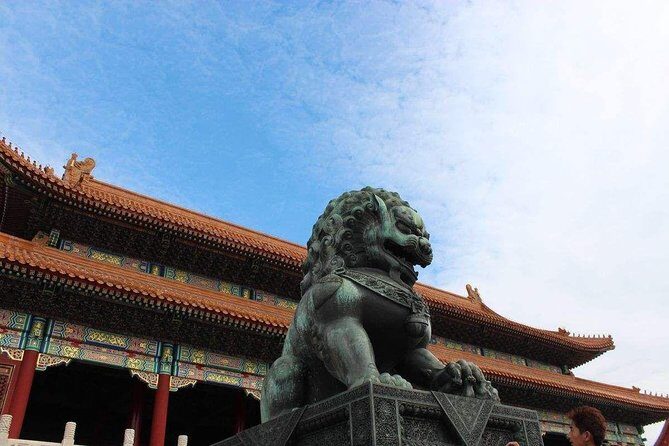
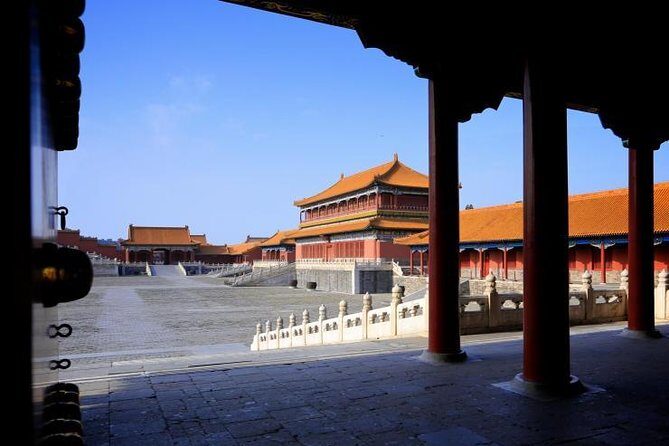
This is a Palace Museum route with a clear flow. It starts at the main complex, then moves through the Outer Court’s ceremonial power centers, crosses into the Inner Court’s more private imperial life, and ends with the Imperial Garden.
The idea is efficiency without feeling like a drive-by. You’ll spend most of your time at the major halls and then use the shorter stops to connect the story.
Here’s the route in the order you’ll experience it, and what each stop means for your first-time understanding:
Stop 1: Forbidden City–The Palace Museum and the first look at the complex
Your first stop is the Forbidden City itself, officially The Palace Museum. This part is where you get your bearings—how the courtyards, axes, and hall placements work together like a blueprint.
You enter through the security check and then show your passport at the main entrance for direct access. That step matters because it affects your energy. If you arrive calm, you’ll notice details you’d miss while stressed: how the spaces open up as you move, how each hall frames the next view, and how the architecture shifts from formal ceremony to more secluded living zones.
Time expectation: about 1 hour.
A practical consideration: if you’re the type who wants to read every plaque and take photos without moving on, you may feel a little rushed. This tour is built for a “great highlights” visit, not a museum deep-scan.
Stop 2: Hall of Middle Harmony and Hall of Supreme Harmony (the Golden Throne)
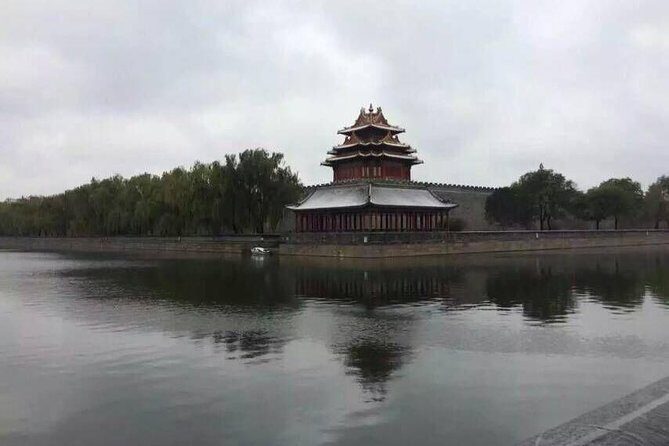
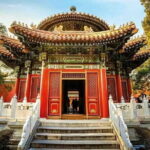
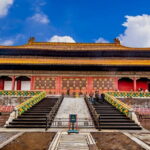
After you settle in, the route hits the Outer Court’s ceremonial heart. You’ll first visit the Hall of Middle Harmony, then the Hall of Supreme Harmony, also described as the Hall of Golden Throne.
This pair is where the palace stops being just architecture and becomes a message. These halls represent the emperor’s authority, staged through symmetry, scale, and precise arrangement. Even if you don’t read every label, you can feel the design logic: the halls were meant to impress, control the visual flow, and stage important moments.
If you add a guide, this is usually where explanations pay off the most—because it’s not just what the buildings look like, it’s what they were used to symbolize.
Time expectation: about 30 minutes for this section.
Potential drawback: these areas are understandably popular. The route helps, but you’ll still see crowds. The good news is that your access plan reduces the worst time sinks.
You can also read our reviews of more guided tours in Beijing


Stop 3: Hall of Preserving Harmony (Baohedian)
Next is the Hall of Preserving Harmony, described as the last main hall in the Outer Court. This is the “wrap-up” space of the ceremonial sequence—so it helps you understand how the Outer Court is organized as a set, not a random assortment of buildings.
Even with limited time, this stop gives you a sense of progression: the ceremonial hierarchy moves forward, then reaches a final major statement before the route pivots toward the Inner Court.
Time expectation: about 15 minutes.
If you’re hoping for an hour-long pause here for photos and reading, this may feel quick. But for a first pass, it’s enough to orient your eye for what comes next.
Stop 4: Gate of Heavenly Purity (Qianqing Men) and the shift from public to private
Then comes a key “story pivot” stop: the Gate of Heavenly Purity separates the palace into the Outer and Inner Court. Behind it is the residential area of the palace.
This gate is one of those points where a little context changes everything. Without context, you might just see a structure. With it, you understand the palace as a system of boundaries: public-facing ceremony up front, then the emperor’s private realm beyond.
Time expectation: about 30 minutes.
Practical advice: expect photos and people here. It’s a natural pinch point in many routes, and the Inner Court feeling is different, so it’s worth slowing down just a bit.
Stop 5: Palace of Earthly Tranquility and what each room was used for
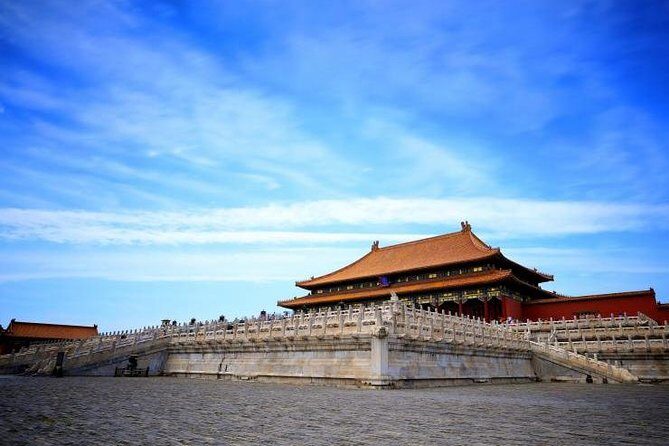
The route continues to the Palace of Earthly Tranquility. This stop is described with specific detail: the east chambers became bridal rooms for the emperor and empress, while the other chambers were used as places of worship.
That kind of detail is exactly why a guide upgrade can be worth it. The Forbidden City is famous, but it can also feel like “lots of halls.” Knowing that these specific spaces held ceremonial life and worship helps you connect the architecture to real human activity.
Time expectation: about 20 minutes.
A consideration: this portion can feel emotionally “less open” than the ceremonial halls. If you’re expecting huge sweeping views, you may need to adjust your expectations and focus on layout and symbolism instead.
Stop 6: The Imperial Garden of the Palace Museum
Finally, you end at the Imperial Garden behind the Palace of Earthly Tranquility. The garden is described as a recreated imperial space where members of the family lived in a more relaxed way.
This last stop is more than a pretty finale. It’s the palate cleanser that reminds you the Forbidden City wasn’t only built for power displays. It was also a home—and gardens were part of that lived environment.
Time expectation: about 30 minutes.
If you like photographs with less pressure than the main halls, the garden can give you a calmer rhythm. It’s also a good stop to reassess what you saw: which buildings made sense in your head after the last few hours.
Guide upgrade vs self-paced entry: what you’re paying for
This service includes the admission ticket. If you want more, you can upgrade to explore with a guide or visit the Treasure Gallery.
Self-paced entry works best if:
- You already read a bit about Ming and Qing palace life beforehand.
- You prefer to move at your own speed, even if you might miss some meaning.
- You like looking first, then filling gaps later with your own notes.
The guide option works best if:
- You want the “why” behind what you’re seeing.
- You want to avoid getting lost in palace terminology.
- You want your photos to come with context, not just a location.
In past experiences with this operator, guides like Bobo and Summer have been praised for making complex palace spaces feel understandable, including sharing little details many people miss. Names also mentioned include Marco and others, which hints at a consistent focus on explaining the palace as a story.
Also, this tour is capped at a maximum of 10 travelers. That’s not a guarantee you’ll hear every word, but it usually helps the pacing feel less chaotic.
Before you go: passport accuracy, kids’ height, and Chinese ID rules
This is the part you should treat like a checklist, not a suggestion.
For your reservation, you must provide passport details when booking: your full name and passport number, and they must match your passport exactly. If the details don’t line up, you might not be allowed to enter. This risk is real, and it’s not a “small chance.” A name or number mismatch can block entry at the gate.
Also note:
- Passport is required for direct entry for all travelers on the day of travel (Chinese tourists must use ID card information instead).
- Chinese tourists, including Taiwan and Hong Kong, must book more than 8 days in advance.
- Children must be accompanied by an adult.
- If a child’s height is over 1.2 meters (3’9″), a youth ticket is required. If under 1.2 meters, it’s free to join. Don’t guess on this.
One more timing note: this is described as a pre-booking service. If tickets are secured, you’ll receive the confirmation letter about 7 days in advance. Your ticket is then valid only for the specific day you booked.
Tiananmen Square and sequencing your Beijing day
The Forbidden City is near Tiananmen Square, but it’s not the same ticket. You should plan for Tiananmen Square to require a separate ticket, so don’t build your schedule around visiting both using only this service.
A sensible plan is:
- Visit the Forbidden City while your energy is highest.
- Then, if you have the separate ticket, move on to Tiananmen Square.
Also, because the day’s walking matters, give yourself breathing room for rest stops and water. The Palace Museum involves a lot of pavement and transitions between spaces, so “3 to 4 hours” can still feel like a workout.
Should you book this Forbidden City ticket service?
Book it if you want:
- A calmer, simpler plan for entry using passport-based direct access.
- A route that hits the main halls without turning your day into a navigation test.
- Optional help from a guide if you want the story behind the buildings.
Skip it (or at least think twice) if:
- You’re traveling with strict identity constraints and there’s any chance your passport details might be wrong.
- You need extreme flexibility to change dates last minute, since the ticket is only valid for the day booked.
- You prefer slow, all-day museum wandering and you know you’ll want much more time than a 3–4 hour highlights route.
If you fit the “first-timer who wants the important stuff” profile, this is a strong way to turn a stressful ticket scramble into an enjoyable palace visit.
FAQ
Do I need my passport to enter the Forbidden City?
Yes. Passport name and number are required at booking for all participants, and a passport is required on the day of travel for direct entry. Chinese tourists must use ID card information instead.
What happens if my passport name or number is wrong on the booking?
Your access can fail. The guidance is clear that your passport number and full name must match your passport exactly, otherwise you won’t be able to access the attraction.
Can I choose a morning or afternoon entry time?
Yes. Admission can be booked for either the morning or the afternoon.
How long is the visit?
Plan on about 3 to 4 hours for the full route.
Is the admission ticket the only thing included in the price?
The ticket includes admission. Food and drinks, and hotel pickup/drop-off are not included. You can upgrade to add a guide service or visit the Treasure Gallery.
Is the ticket valid on another day if my plans change?
No. The ticket is only valid on the day you book to travel.
Do I need a youth ticket for children?
If a child’s height is over 1.2 meters (3’9″), you should purchase a youth ticket upon booking. If under 1.2 meters, it’s free to join, with an adult accompaniment requirement.
Can I cancel for a refund?
Yes. You can cancel up to 24 hours in advance for a full refund. If you cancel less than 24 hours before the start time, the amount paid is not refunded.