REVIEW · BEIJING
Beijing: Peking University Campus Guided Walking Tour
Book on GetYourGuide →Operated by Explore PKU · Bookable on GetYourGuide
A campus tour can feel like a checklist. This one feels like learning to read Peking University’s symbols, courtyards, and traditions as you walk. You’ll move with a live English guide (often Henry) and see famous PKU spots in a tight 2-hour loop, starting at the East Gate and finishing at the West Gate.
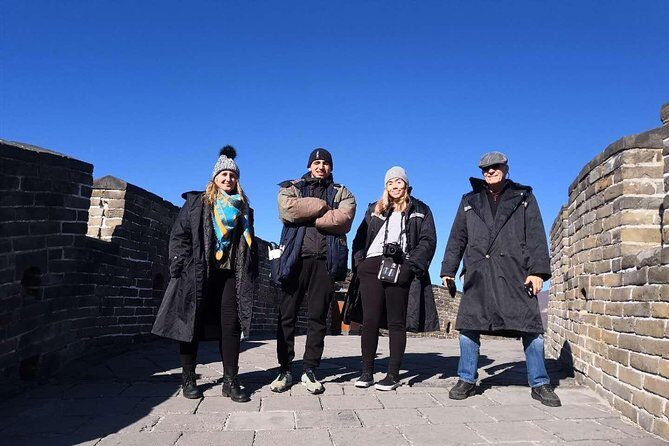
Two things I really like: the way the guide ties each landmark—like Boya Pagoda and Weiming Lake—to the school’s evolution, and the extra student-life context that makes PKU feel lived-in, not just photographed. You also get a small-group feel (up to 10 people), which matters when you have questions.
One possible drawback: it’s a walking tour with no food included, so plan around the timing. Bring comfortable shoes, and expect you’ll want water and snacks on your own afterward since transportation and meals aren’t part of the price.
In This Review
- Key reasons this PKU walking tour works
- Meeting at PKU’s East Gate: where the tour starts to make sense
- Why Henry’s English guide style matters on a campus walk
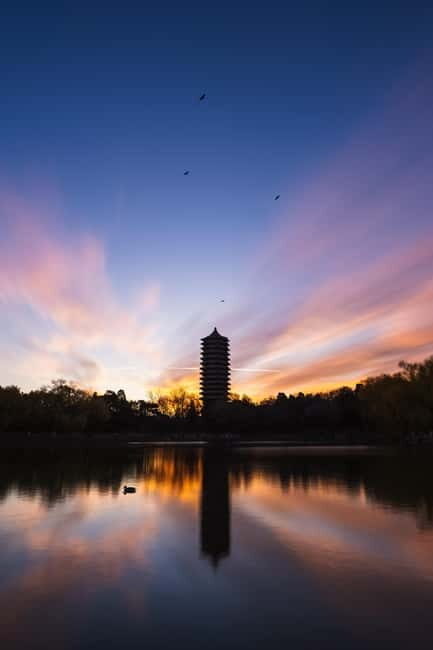
- Boya Pagoda and Weiming Lake: learning PKU through two iconic views
- Bell Pavilion, Hua Biao, and Qilin statues: reading campus details
- The grand PKU Library and the Statue of Cai Yuanpei
- How PKU grew from Yenching University and linked to Yuanmingyuan
- Traditional gardens, courtyards, and building layouts (and why they matter)
- Route flow: starting at the East Gate, ending at the West Gate
- Price and value: is $39 for two hours worth it?
- Who this tour is best for (and who might want to skip it)
- Should you book the Beijing Peking University Campus Guided Walking Tour?
- FAQ
- How long is the Peking University campus guided walking tour?
- Where does the tour start?
- Where does the tour finish?
- Is the tour guided in English?
- How large is the group?
- What landmarks do you visit during the tour?
- Do I need to bring food or drinks?
- Is transportation to and from Peking University included?
- What should I wear?
- Can I take photos?
- What if I need to cancel?
Key reasons this PKU walking tour works
- Small-group pacing so questions don’t get lost.
- Boya Pagoda + Weiming Lake as more than scenery; you learn what the campus “signals.”
- Bell Pavilion, Hua Biao, and Qilin statues interpreted as cultural messaging, not random decoration.
- Peking University Library and the Statue of Cai Yuanpei for context on academic values.
- Yenching University roots plus links to Yuanmingyuan (Old Summer Palace) and Heshen for deeper historical texture.
- Traditional gardens and courtyards explained through harmony between scholarship and nature.
Meeting at PKU’s East Gate: where the tour starts to make sense
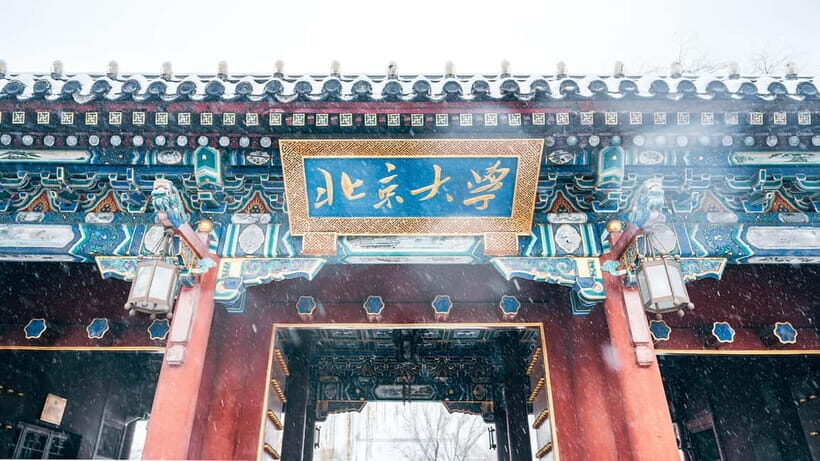
The easiest way to keep this tour smooth is to be at PKU’s East Gate a few minutes early. The meeting spot is specific: the stone lion on the right side when you’re facing the gate entrance. That kind of detail matters in a big, active campus where signage can be easy to misread.
From there, you’re not just roaming. You’re walking a route that’s designed to hit recognizable landmarks while still leaving time for the stories that connect them. In this setting, timing is everything: you cover a lot in two hours, so you’ll want to stay present and keep your photo stops quick.
PKU can feel like a “destination” campus, but this tour helps it feel like a working place. You’ll hear about student life and academic culture, which gives you a better sense of what PKU is like beyond big-name buildings.
You can also read our reviews of more walking tours in Beijing
Why Henry’s English guide style matters on a campus walk
You’ll be with a live English guide, and the overall tone matters more on this kind of tour than many people expect. The guides linked to this experience are described as friendly, patient, and clear—especially when families join. That’s a real plus if you’re traveling with kids or you just learn better when explanations come step-by-step.
Henry, in particular, shows up in the feedback as an excellent communicator: calm pace, good explanations, and an ability to keep the group engaged. In at least one case, the guide also invited the group to eat in the school cafeteria, which is the kind of optional, grounded touch that makes a campus tour feel human.
This matters for you if you’re visiting Beijing and want to understand the place rather than just pass through it. With a student-led perspective (current student, per the experience description), you’re less likely to miss the “why” behind the architecture and traditions.
Boya Pagoda and Weiming Lake: learning PKU through two iconic views
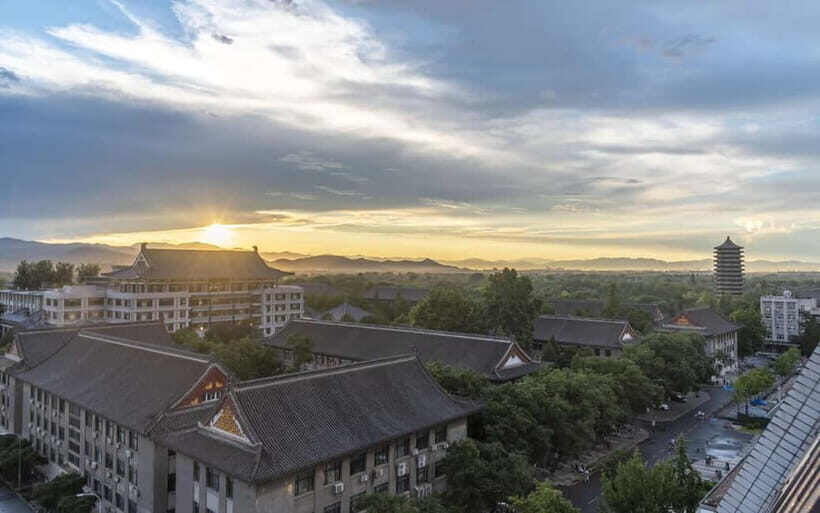
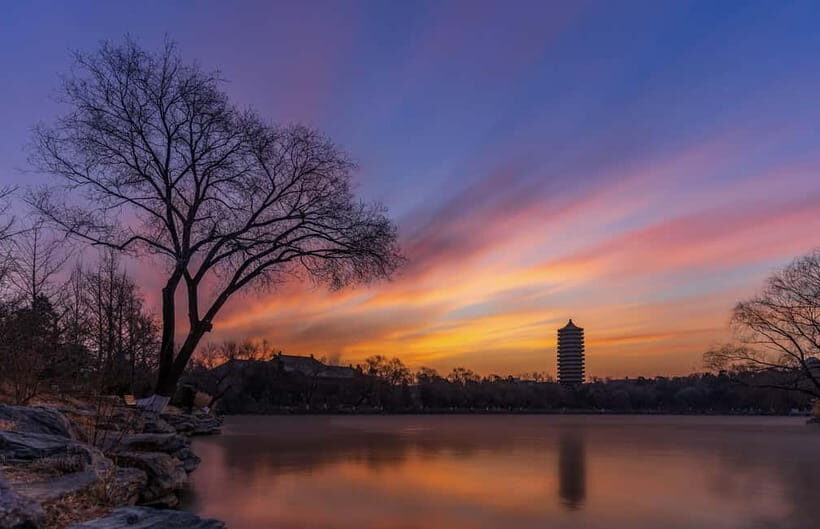
Boya Pagoda is one of those PKU landmarks people notice right away. But the value of the tour is that you’re not just looking at a pretty point on campus—you’re learning the role it plays in the overall campus story. The guide helps connect it to the cultural layer PKU carries forward.
Then you get Weiming Lake, which is picturesque in a straightforward way. The lesson here is how PKU’s scenery functions as part of an academic environment. Gardens, water, and sightlines aren’t random. They’re part of how the campus teaches a mindset: balance, restraint, and reflection.
If you like photography, this is where you’ll feel grateful the tour moves at a human pace. You can frame shots without sprinting, and the explanations give you captions in your head, so you don’t just end up with a camera full of generic campus photos.
Potential downside: because the tour time is limited to two hours, you don’t linger indefinitely at each stop. If you want long, slow look-around moments, use this as your “guided orientation,” then plan your own extra time afterward.
Bell Pavilion, Hua Biao, and Qilin statues: reading campus details
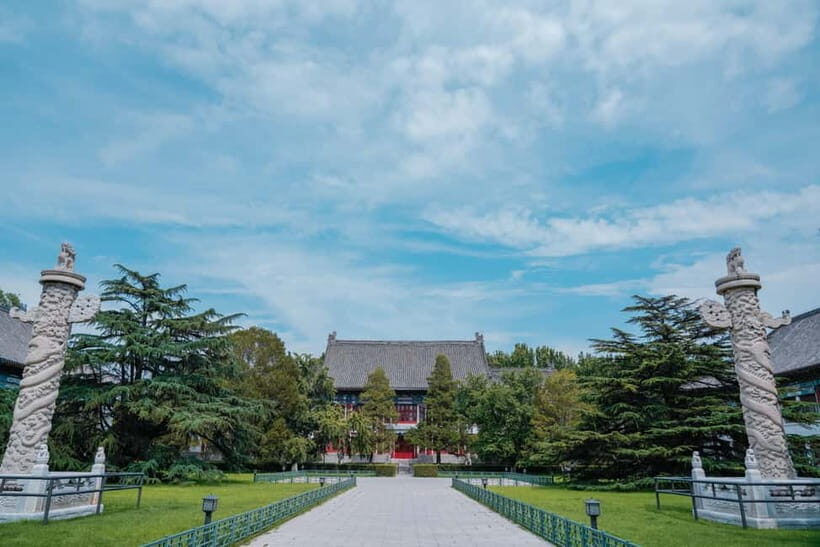
The Bell Pavilion is another key stop, and it’s one of the places where symbolic meaning becomes tangible. A pavilion like this doesn’t exist only to be seen; it’s tied to rhythm and tradition. The guide’s job is to translate that into plain language you can actually use while walking.
You’ll also come across Hua Biao (ornamental pillars) and Qilin statues. These are the kinds of details tourists often speed past. Here, the guide explains the meaning behind them so they stop feeling decorative and start feeling intentional.
This is where the tour becomes more than sightseeing. You start to notice patterns: how certain structures signal rank, respect, continuity, or learning culture. Even if you don’t know Chinese architecture terms before you arrive, the guide makes it understandable.
For you, that’s the real payoff. You’ll leave with a mental map of how PKU communicates values through stone, layout, and tradition.
The grand PKU Library and the Statue of Cai Yuanpei
At some point, you’ll reach the Peking University Library, a building that carries weight without needing a speech. The tour helps you see why it’s so central to the university’s identity: it’s where academic spirit becomes real, day after day.
Right after that, you’ll pay respects at the Statue of Cai Yuanpei. Cai Yuanpei is described here as the revolutionary former president of PKU, and the guide’s explanations connect him to the school’s mission and direction. This isn’t a random photo stop; it’s a moment to understand how leadership and educational ideals get embodied in public space.
If you care about education history, this pair of stops lands well. The library represents what the university builds and protects—knowledge and study—while the statue represents the people and ideas behind the push to build it.
Tip for your visit: take a minute to look around the statue area rather than only aiming your camera. The guide’s stories make the surrounding campus feel like part of the same message.
You can also read our reviews of more guided tours in Beijing
How PKU grew from Yenching University and linked to Yuanmingyuan
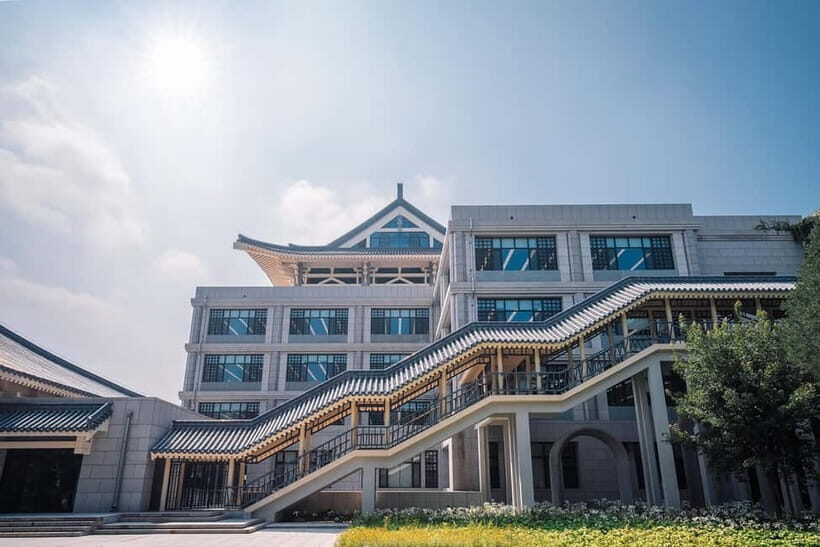
One of the most interesting parts is the story of PKU’s evolution from its roots as Yenching University. This is where the tour helps you connect Beijing’s academic world to the wider story of the city.
You’ll also hear about ties to Yuanmingyuan (Old Summer Palace). That’s a big name in Beijing history, and linking it to PKU gives you a clearer sense of why the campus feels positioned at the intersection of ideas, politics, and cultural change.
The guide also references Heshen, the infamous Qing Dynasty official. It’s a reminder that universities don’t grow in a vacuum. They’re shaped by the people and systems around them, even when the campus later tries to present itself as purely academic.
For you, this history layer is valuable because it stops PKU from feeling like a museum. It becomes an institution with complicated roots—then a place where scholarship continued to shape its identity.
A fair caution: because you’re getting the information while walking, not while sitting in a classroom, you’ll get the highlight version. If you want to go deeper, treat this tour as your starting point and build your own reading afterward.
Traditional gardens, courtyards, and building layouts (and why they matter)
PKU is famous for traditional Chinese gardens and campus planning, and this tour focuses on the meanings behind them. You’ll learn how courtyards and building layouts reflect an idea of harmony between nature and scholarship.
This is one of those topics that sounds abstract until you see it in place. As you move through the campus, the guide points out how the design encourages certain behaviors—slower attention, respectful distance, and a sense that study belongs in conversation with the natural world.
If you’re the kind of traveler who likes architecture and design, you’ll appreciate this section because it gives you a framework. You won’t just notice the shapes and spaces; you’ll understand what the designers were trying to communicate.
If you don’t care about design theory, you can still enjoy this part because it changes how you perceive the campus. Instead of thinking, “Nice garden,” you’ll think, “This layout is making a point.”
Route flow: starting at the East Gate, ending at the West Gate
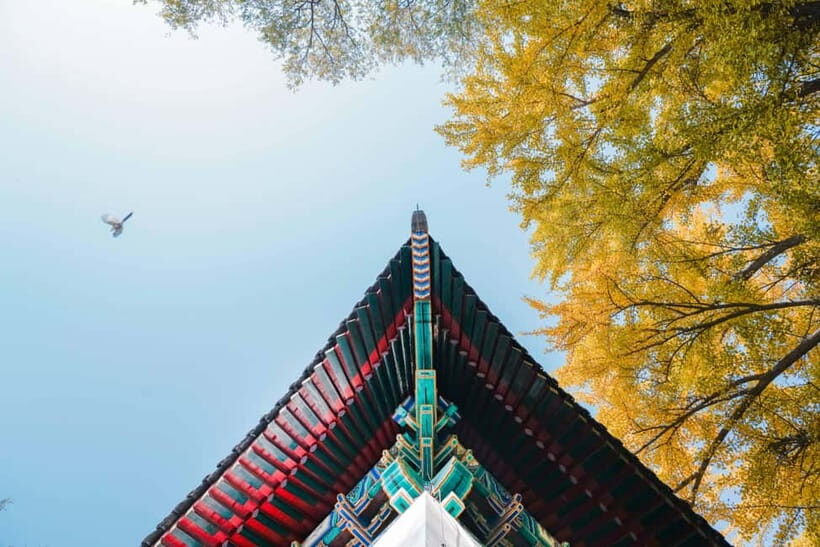
The route is intentionally short and structured: you begin at the East Gate and finish at the West Gate. That helps you avoid the common problem of campus tours where you end up backtracking or stuck in the wrong area for your next plan.
This also means you should plan your afternoon or evening with that in mind. Your time on campus is limited to the two-hour window, so don’t schedule something tight immediately after the finish unless you’re confident about your transport.
Because transportation to and from the university isn’t included, you’ll want to know how you’ll get there and where you’ll go next. The good news is that ending at a different gate gives you flexibility—you can often work around that in your Beijing itinerary.
Price and value: is $39 for two hours worth it?
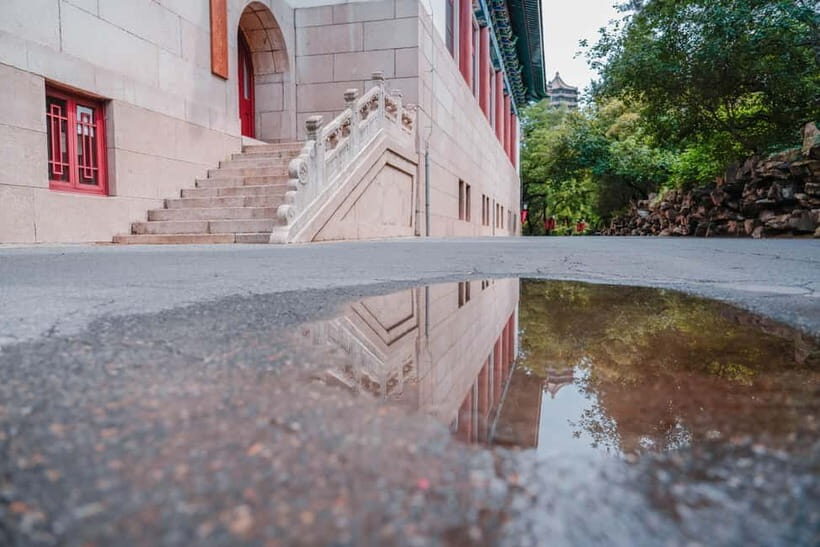
At $39 per person for a 2-hour guided walking tour, the value comes from three things you’re getting together: a live English guide, a small group size (limited to 10), and a narrative that ties buildings to real campus evolution and cultural meaning.
If you were to try to do this on your own, you’d still see the landmarks. But you’d miss the interpretive layer—why Boya Pagoda matters, what Hua Biao and Qilin statues communicate, and how Yenching University connects to today’s PKU identity.
And if you care about explanations in English, that’s a practical premium you’re paying for. The tour’s structure is meant for people who want clarity without spending their whole visit searching for answers.
One tradeoff: you’ll be walking, and there’s no food included. So budget a light snack or meal plan around your own schedule. The tour is best treated as an orientation with story, not a full day event.
Who this tour is best for (and who might want to skip it)
This experience is a strong match for:
- First-time visitors to Beijing who want a meaningful campus introduction in a short window.
- People interested in Chinese cultural symbolism in everyday spaces, not just famous attractions.
- Families who appreciate a guide who can handle kids patiently—Henry has been described that way.
- Students, or future students, who want a taste of campus academic culture and traditions from a current-student perspective.
You might want to skip it if:
- You’re mainly after long independent wandering with minimal talking.
- You want food and transportation bundled into one price (those aren’t included).
- You have very limited mobility and can’t comfortably handle walking for two hours.
Should you book the Beijing Peking University Campus Guided Walking Tour?
I’d book it if you want your PKU visit to feel guided and explainable. The combination of small group size, English interpretation, and landmark-by-landmark meaning makes it a smart way to understand why PKU feels “big” even when you’re standing inside its courtyards.
You should especially consider booking if you like historical context that doesn’t get stuck in textbooks. The tour’s stories about Yenching University, ties to Yuanmingyuan, and the mention of Heshen add texture without overwhelming you.
If you’re time-limited in Beijing, this is also a practical choice. Two hours is enough to get your bearings across major stops—Boya Pagoda, Weiming Lake, the Bell Pavilion, Hua Biao and Qilin statues, the library, and the Cai Yuanpei statue—without turning your day into a rushed sprint.
FAQ
How long is the Peking University campus guided walking tour?
It lasts 2 hours.
Where does the tour start?
The meeting point is Peking University East Gate, at the stone lion on the right side when facing the gate entrance.
Where does the tour finish?
It finishes at Peking University West Gate.
Is the tour guided in English?
Yes, the tour guide provides the tour in English.
How large is the group?
It’s a small group limited to 10 participants.
What landmarks do you visit during the tour?
You visit Boya Pagoda, Weiming Lake, the Bell Pavilion, Hua Biao (Ornamental Pillars), Qilin Statues, the Peking University Library, and the Statue of Cai Yuanpei.
Do I need to bring food or drinks?
Food and drinks are not included, so you’ll want to plan for your own snacks or meal.
Is transportation to and from Peking University included?
No. Transportation to and from the university is not included.
What should I wear?
Wear comfortable shoes because the tour is walking-focused.
Can I take photos?
Bring a camera for photos.
What if I need to cancel?
You can cancel up to 24 hours in advance for a full refund.