REVIEW · BEIJING
China’s Favourite Street Food Cooking Workshop
Book on Viator →Operated by Our Beijing · Bookable on Viator
Jian bing gets personal fast. This private Beijing workshop turns a street-food favorite into a hands-on lesson, with help as you cook. I love the build-it-yourself approach and the way you get to try different flavors and fillings, including options that go sweet (yes, chocolate and banana show up). I also like that the instructor brings in the story behind jian bing, not just the steps.
One thing to consider: this is more class than wandering for snacks, so if you’re only after casual street eating, you’ll want to pair it with other time for browsing carts.
You’ll start at 10 Shi Que Hu Tong and finish back at the same meeting point, which makes planning easy. It’s also a true private experience for just your group, and you’ll use a mobile ticket.
In This Review
- Key Things I’d Book This For
- Jian Bing 101: What You Actually Learn in About 90 Minutes
- The Hutong Meeting Point at 10 Shi Que Hu Tong (And Why It’s Convenient)
- Dom’s Teaching Style: Stories First, Then the Pan
- Filling Choices: Making Sweet and Savory Versions Your Way
- Hands-On Results: Making Batter and Cooking the Jian Bing
- Private Experience Value: Just Your Group, Real Attention
- What You Take Home: Know-How (And Possibly Ingredients)
- Price and Value: Is $80 Fair for 1.5 Hours?
- Who Should Book This Workshop (And Who Might Skip It)
- Should You Book This Jian Bing Cooking Class?
- FAQ
- Where does the jian bing cooking workshop start?
- How long is the workshop?
- Is this a private experience?
- What will I learn to make?
- How much does it cost?
- Is there a mobile ticket and can I cancel for a refund?
Key Things I’d Book This For
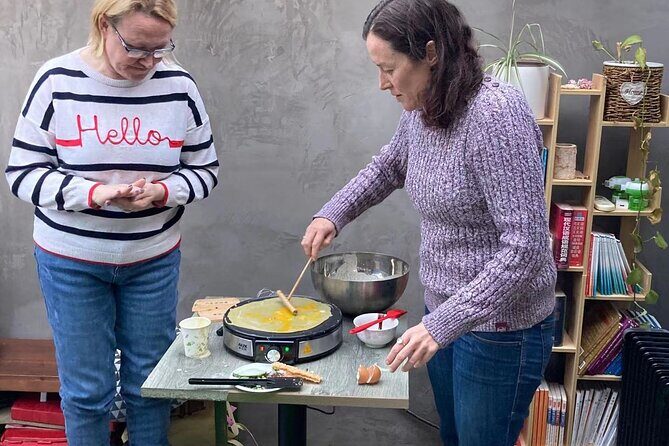
- Hands-on cooking: you make the batter and cook your own jian bing on the pan
- Fillings with choices: savory options plus sweet mixes like chocolate and banana
- History as a warm-up: you learn where Beijing’s favorite street food comes from, with an entertaining story from Dom
- Private attention: only your group, so questions don’t get lost
- Works for families: it’s a fun, mid-day activity that suits kids and adults alike
Jian Bing 101: What You Actually Learn in About 90 Minutes
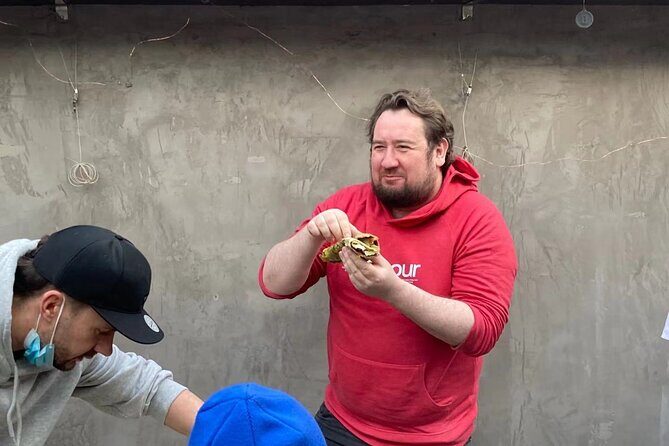
In 90 minutes or so, you’ll cover the core “street-food method” for jian bing. The class is built around one goal: you don’t just watch someone else cook—you learn how to make it from scratch and then make it your own.
The session starts with context. You’ll learn where Beijing’s favorite street food comes from, and the instructor shares that background in a way that keeps people engaged. In the reviews, that storytelling part stands out because it’s not dry. It’s more like a quick set-up so the cooking steps feel meaningful, not random.
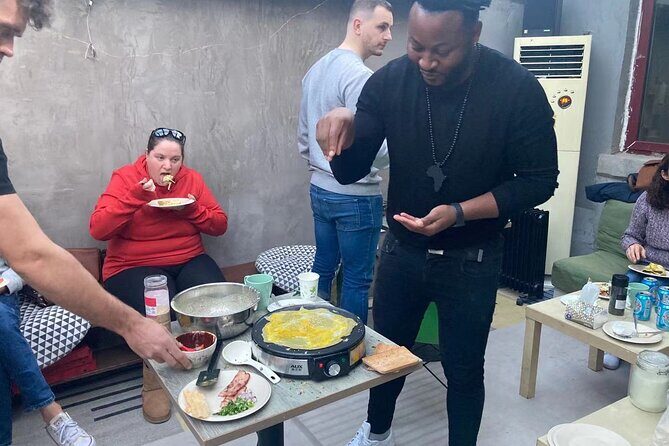
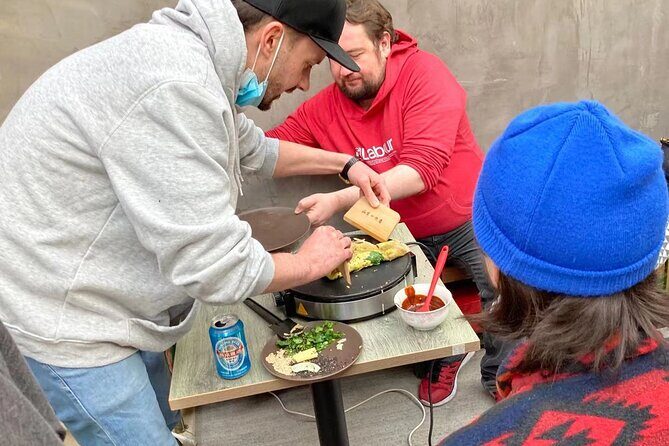
Then it’s straight to the working part. You’ll learn how to prepare the batter and cook the jian bing on a pan with hands-on help. The standout detail here is not just that you get to make something—it’s that you get multiple attempts. One participant highlighted making the dough and cooking on the pan themselves, which is exactly what you want from a real cooking workshop: you build comfort with the technique instead of only getting a single moment of participation.
If you’re worried you’ll be too slow or clumsy, relax. The teaching style described is step-by-step, with help when needed. That matters because jian bing is one of those foods where timing and technique are everything, and you can’t learn it by reading alone.
You can also read our reviews of more food & drink experiences in Beijing
The Hutong Meeting Point at 10 Shi Que Hu Tong (And Why It’s Convenient)
This workshop meets at 10 Shi Que Hu Tong in Dongcheng District, Beijing (100010). The address matters because Hutong streets can be easy to miss, and you don’t want to burn time hunting for the exact spot while your cooking window is running.
The good news: the experience ends back at the same meeting point. That eliminates the common post-class scramble where you’re left figuring out where to go next.
Also, it’s listed as being near public transportation. That’s useful if you’re squeezing this into a packed Beijing itinerary, especially if you plan to pair it with other Hutong time. You can treat the class like a focused “food lab” session and still move around the city without stress.
Dom’s Teaching Style: Stories First, Then the Pan
A key reason this workshop earns repeat recommendations is the way Dom teaches. You’ll get history and technique together, with the history delivered as an entertaining story, then the cooking broken into manageable steps.
Here’s why I like this teaching rhythm: it prevents that common problem in cooking classes where you only absorb facts from your mouth while your hands feel lost. With a short story set-up, you’re mentally ready. Then when you start cooking, you’re not just trying to replicate motions—you understand what you’re aiming for.
Dom’s help also seems practical. Multiple people mention that the instructor is there when you need support, which is a big deal in a hands-on class. It’s one thing to be shown once. It’s another to have someone point out what to adjust when your batter looks off or your cooking pace needs tweaking.
If you’re traveling with kids or teenagers, this style is even more important. The workshop described as fun for families hits the right balance: enough structure to keep things moving, enough participation to keep young cooks involved.
Filling Choices: Making Sweet and Savory Versions Your Way
One of the biggest perks here is the variety of flavors and fillings. This isn’t a “one recipe fits all” situation. You’ll learn how to add different fillings and flavors to match your tastes.
The most specific examples from the experience include traditional savory options and sweet combinations like chocolate and banana. That matters because it signals two things:
- You’re not limited to the classic way jian bing is sold.
- You can customize based on your own preferences, even if you normally avoid street-food ingredients that are unfamiliar.
In a cooking class, customization is not just about fun—it’s how you learn. When you adjust fillings, you learn how they work with the base, and you remember the technique because you’re linking it to a result you actually liked.
And if you’re traveling as a group, filling choices help keep everyone happy. One person might want savory, another might want sweet. Everyone gets to taste what they helped create, which makes the class feel more like a shared activity and less like a single production line.
Hands-On Results: Making Batter and Cooking the Jian Bing
The workshop is designed around doing the work yourself. The reviews highlight that participants cook on the pan themselves, not just assemble at the end. That’s a major value driver for a short class: if you only assemble, you leave still unsure. If you cook, you leave with confidence you can repeat.
You’ll learn the method to make jian bing from scratch, then take that method into your own version with the fillings you chose. Since the instructor provides hands-on help, you’re not expected to perform perfectly on your first try. You’re expected to improve as you go.
A practical takeaway: if you’ve never cooked at this pace before, don’t aim for perfection. Aim for understanding the steps. The goal is to walk away knowing how to get the result, not to earn a cooking certificate.
You can also read our reviews of more tours and experiences in Beijing

Private Experience Value: Just Your Group, Real Attention
This is a private tour/activity, meaning only your group participates. That changes the experience in a big way.
In a group class, you often spend your time waiting your turn. Here, personalized attention is part of the promise. That’s especially helpful when you have questions like:
- What should I do if my batter looks different?
- How do I keep the cooking step from going too fast or too slow?
- How much filling is right for the size and texture?
The private format also helps with comfort. If you’re traveling with friends, it’s more relaxed. If you’re traveling with family, it’s easier to manage. Kids can focus on one instructor instead of competing for attention in a busy setting.
Based on the feedback, this setup is a big reason people rate it highly. It’s not just “food plus a demo.” It’s food plus coaching with your own pace.
What You Take Home: Know-How (And Possibly Ingredients)
A good cooking workshop leaves you with more than memories. It gives you a method you can reuse at home.
That’s exactly what this class is aiming for: you learn a popular Beijing street food technique so you can make it again. Several people mention wanting to recreate jian bing later, which is the best sign you can get from a short class.
Also, one detail worth noting: some participants mentioned receiving ingredients to take home. The lesson here is practical. If you get any take-home components, you’ll be able to try your version soon instead of waiting months and forgetting the exact steps.
Even if you don’t get take-home ingredients, you should still leave with a working mental checklist: batter basics, cooking on the pan, and how fillings change the final experience.
Price and Value: Is $80 Fair for 1.5 Hours?
The price is $80 for the private experience, lasting about 1 hour 30 minutes.
Whether that feels like a win depends on how you like to travel.
If you enjoy hands-on activities, $80 can be a strong value because:
- You’re paying for instruction, not just entry.
- You’re getting enough time to actually cook, not just watch.
- You’re also getting multiple filling/flavor options to try.
If you’re the type who prefers to sample many foods by walking from cart to cart, then this may feel like you’re choosing one thing and going deeper rather than wider. But if you want a single activity that teaches you a repeatable skill—this is exactly the kind of class that pays off later.
The private format is the real price lever. You’re not splitting the instructor’s attention across a large group, and that tends to be worth it for couples, families, and small groups.
Who Should Book This Workshop (And Who Might Skip It)
This workshop suits you if:
- you want a hands-on cooking lesson and not just a tasting
- you like customizing food and trying both savory and sweet variations
- you’re traveling with kids or teens and want an activity that keeps everyone engaged
- you’d rather learn one Beijing street-food technique thoroughly than sample a dozen things quickly
You might consider skipping if:
- you only want to eat, not cook
- you’re short on time and need a quick stop with no cooking involvement
- you’re looking for a long, multi-stop itinerary (this is focused and compact)
Should You Book This Jian Bing Cooking Class?
I’d book it if your Beijing trip includes a craving for street food plus a desire to do something with your hands. The combination of hands-on pan cooking, a guided introduction to the food’s background, and the filling variety makes it feel like more than a gimmick.
If you want a private, classroom-style “learn it so you can repeat it later” experience, this hits the mark. If you’re just trying to graze and wander, you’ll still enjoy the food part, but you may feel this is a different travel mode than you wanted.
If you do book, come hungry (or at least ready to eat soon after). And go in with the mindset that your first tries are part of the learning. That’s how you get the full benefit of a short, practical workshop.
FAQ
Where does the jian bing cooking workshop start?
It starts at 10 Shi Que Hu Tong, Dong Cheng Qu, Beijing, 100010, and it ends back at the same meeting point.
How long is the workshop?
The duration is about 1 hour 30 minutes.
Is this a private experience?
Yes. It’s a private tour/activity, so only your group participates.
What will I learn to make?
You’ll learn how to make jian bing with hands-on help from an instructor, including how to add different fillings and flavors.
How much does it cost?
The price is $80.
Is there a mobile ticket and can I cancel for a refund?
You’ll receive a mobile ticket. Confirmation is received within 48 hours of booking, subject to availability. Free cancellation is offered up to 24 hours in advance for a full refund. Service animals are allowed, and it’s near public transportation.