REVIEW · BEIJING
Beijing: Yonghe Lama Temple Tickets with guide (optional)
Book on GetYourGuide →Operated by Chinatravelhelper · Bookable on GetYourGuide
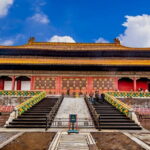
First steps into a sacred courtyard. The Yonghegong Lama Temple gives you an instant look at how Tibetan Buddhism influenced Beijing’s Qing-era architecture. I especially like the way the complex is laid out from south to north, with courtyards that narrow and halls that step upward in size and height. Another big plus: you get a pre-booked ticket (and an English guide option), so you’re not wasting time standing around trying to sort out entry.
You’ll also appreciate the scale once you’re inside—three archways, five main halls, and more than 1,000 rooms in a 66,400-square-meter complex. One consideration: it’s a working religious site with clear closing rules, so you have to plan your timing around the last admission and when entry stops.
In This Review
- Key highlights to know before you go
- Yonghegong Lama Temple: what you’re really seeing
- How to get there: metro to Yonghegong station
- The Tibetan-Chinese design blend you can spot while walking
- A practical walking route through gates and main halls
- Zhaotai Gate and the early landmarks
- Yonghe Gate: the transition moment
- Grand Hall (Hall of Great Buddha): the anchor
- Hall of Great Buddha to Yongyou Hall and the Dharma space
- Pavilion of Ten Thousand Blessings
- The bigger picture: why the route matters
- Price and value: is $12 a good deal here?
- Opening hours and timing: plan around last admission
- What’s included: ticket, guide option, and small-group feel
- Who this is best for (and who should think twice)
- A note on rules: what you must bring and what you can’t do
- Should you book the Yonghegong Lama Temple ticket with guide?
- FAQ
- How much is the Yonghegong Lama Temple ticket?
- How long is the experience?
- Where is Yonghegong Lama Temple, and how do I get there by metro?
- What are the opening hours?
- Do I need to stop entering at 16:00?
- Do I need to bring a passport?
- Is an English guide included?
- Is this a pre-booked ticket so I don’t buy on-site?
- What items are not allowed at the temple?
- Is wheelchair access available?
- Can I cancel and get a refund?
Key highlights to know before you go
- Pre-booked entry helps you avoid on-the-spot ticket stress and get straight into the temple grounds.
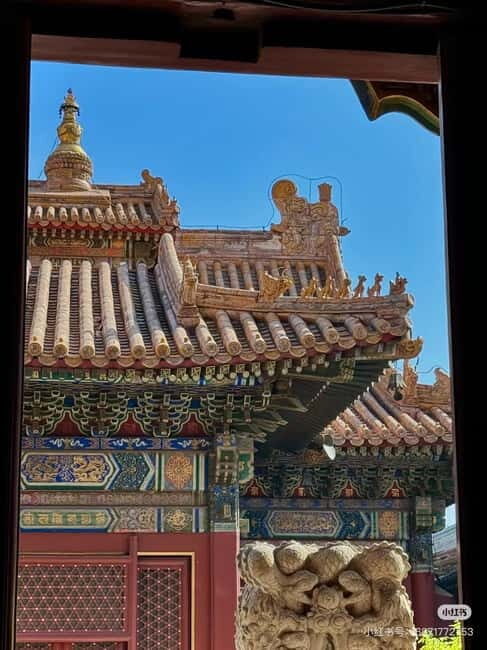
- Tibetan-Chinese architectural mix shows up in the halls, gates, and overall layout—not just in a few decorations.
- Three archways and five main halls make it easy to follow a natural walking route through the complex.
- Courtyards narrow, halls rise as you move through the site, creating that tall, ceremonial feel.
- English live guide option makes the symbolism and layout easier to understand while you walk.
- Strict timing windows matter, because last admission is earlier than closing in both summer and winter seasons.
Yonghegong Lama Temple: what you’re really seeing
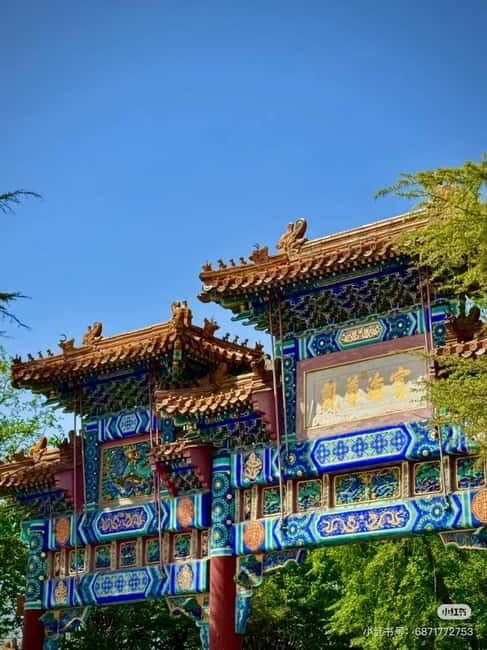
Yonghegong Lama Temple (often called Yonghegong for short) is in Beijing’s Dongcheng District, in the northeast corner of the city. The site started in 1694 during Emperor Kangxi’s reign, built in the 33rd year of his rule. Later, it became the highest-ranking Buddhist temple in the late Qing Dynasty. That background matters, because the place isn’t just pretty. It was designed to impress—and to function as a grand, official religious complex.
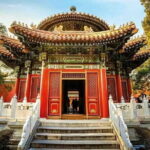
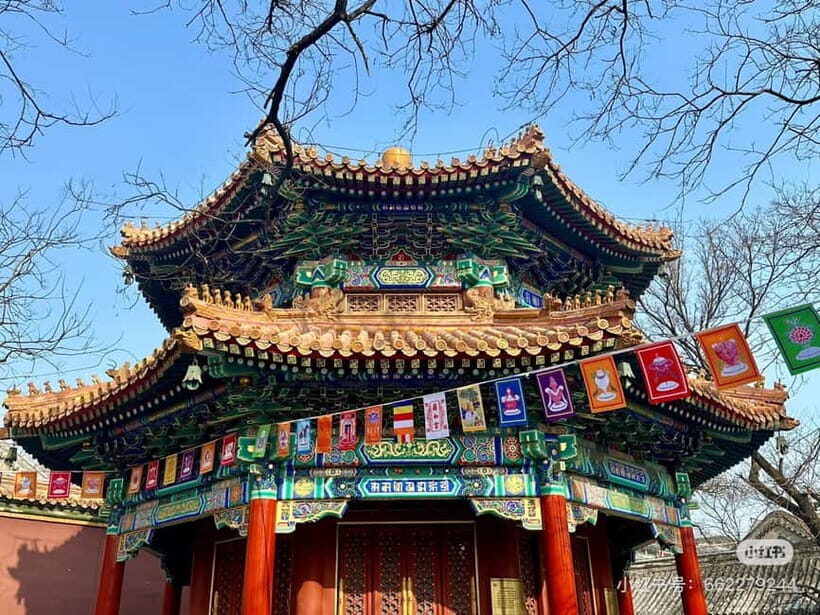
What you’ll notice quickly is the mix of traditions. The temple is rooted in Tibetan Buddhism, but it’s expressed through traditional Chinese architectural planning. You’re also seeing influences from multiple ethnic groups tied to the Qing empire—Han, Manchu, Mongolian, and Tibetan. In other words: it’s not one style stuck on top of another. The design language is blended, and it shapes the way the whole complex feels as you walk.
The sheer size is part of the experience. You’re walking through an area of about 66,400 square meters with over 1,000 rooms. Even if you don’t see every single room (nobody does), the layout keeps reminding you this is a full temple city, not a small garden stop.
And since this visit includes a pre-booked ticket, you can focus on the walking route and the buildings instead of making a puzzle out of entry lines and ticket booths.
You can also read our reviews of more tours and experiences in Beijing
How to get there: metro to Yonghegong station
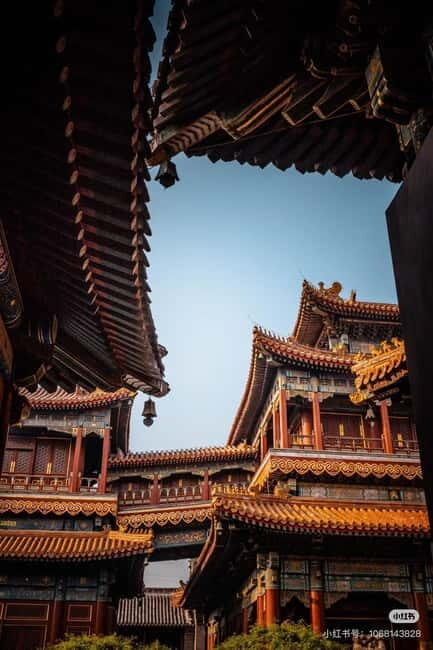
If you want things simple in Beijing, use the subway. The convenient option here is to take Metro Line 5 and get off at Yonghe Lama Temple station. Then you’ll be in the neighborhood fast enough that you can arrive before your chosen entry window gets tight.
This matters because temple visits aren’t flexible the way museum visits can be. Once the last admission time passes and the grounds start clearing, you’ll be pushed out. So arriving with a little buffer helps you take photos, slow down at each gate, and actually enjoy the space.
The Tibetan-Chinese design blend you can spot while walking
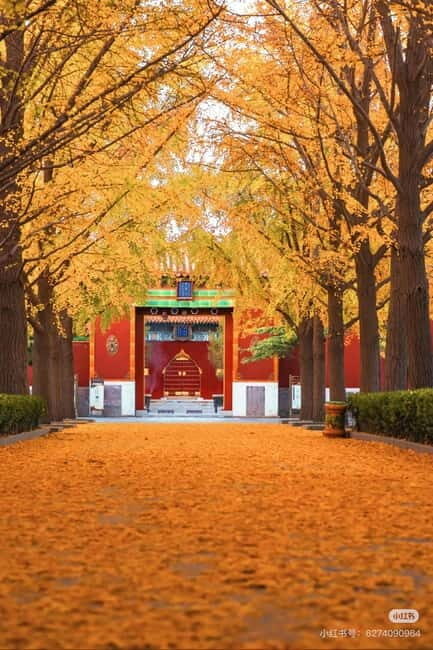
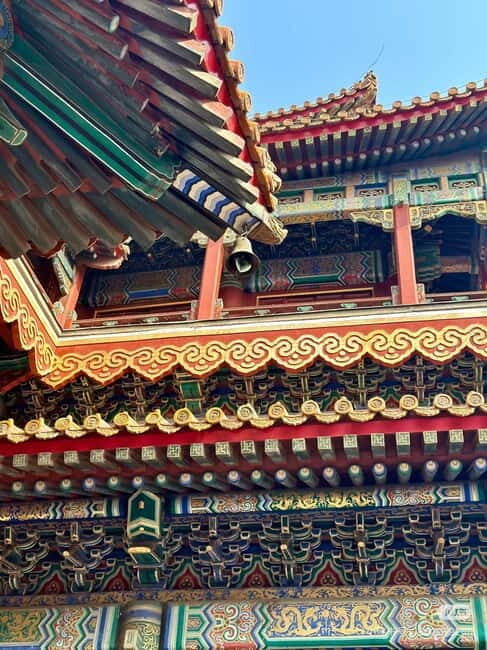
Yonghegong’s architecture isn’t random. It’s planned. The complex has three archways and five main halls, and the space is arranged so the ceremonial feel ramps up as you move deeper. One of the best ways to appreciate the blend is to watch how the design changes from gate to hall.
Here’s what the layout tells you:
- As you go from south to north, the courtyards gradually narrow. That’s a classic planning move in Chinese imperial architecture.
- At the same time, the height of the halls increases in sequence. That gives the visual punch of a processional route.
- Because the temple is connected to Tibetan Buddhism, the feeling is also more ceremonial and ritual-minded than a typical Han-style shrine experience.
Even the key structures help you track the route. You’ll pass through areas tied to landmark gates and then move toward the major worship spaces, including the Grand Hall (Hall of Great Buddha) and other named halls like the Hall of the Wheel of the Dharma and the Pavilion of Ten Thousand Blessings.
If you like architecture, this is the kind of place where you start paying attention to proportions and alignment. The “wow” is in how the whole complex moves you forward—step by step.
A practical walking route through gates and main halls
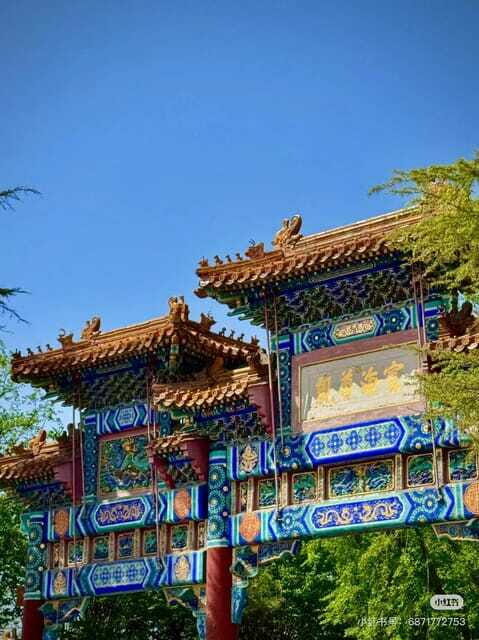
This visit is built around a clear route across the temple grounds. You’ll spend your day moving through the main ceremonial sequence, guided by the layout itself. Here’s a straightforward way to think about what you’ll see and what each stop means.
Zhaotai Gate and the early landmarks
Your first big reference points are the named entrance areas, including the Zhaotai Gate. From there, you’ll encounter the iconic symmetrical landmarks that help orient you in a large complex—specifically the Bell Tower and Drum Tower. Even if you don’t focus on sound or ritual timing, these towers act like mental waypoints. They also add to the imperial-courtyard feel before you reach the deeper worship halls.
You can also read our reviews of more guided tours in Beijing
Yonghe Gate: the transition moment
As you continue inward, the Yonghe Gate is another key threshold. Think of it less like a single photo stop and more like a point where the experience starts to feel more formal. The grounds are still walkable, but the character shifts toward the central halls.
Grand Hall (Hall of Great Buddha): the anchor
The Grand Hall (Hall of Great Buddha) is named as the major hall, so it functions as the core focus of the route. In a complex with lots of gates and side halls, this kind of “main room” keeps the day from feeling scattered. You’ll want to slow down here, even if only for a few minutes, because it’s where the whole layout usually makes its most obvious sense.
Hall of Great Buddha to Yongyou Hall and the Dharma space
From the main hall area, the route continues to other major worship spaces, including the Yongyou Hall and the Hall of the Wheel of the Dharma. The names alone tell you what to pay attention to: one hall is linked with blessings and continuity in the name, while the other points to the Dharma (teaching) and a circular, ongoing idea tied to Buddhist tradition.
Pavilion of Ten Thousand Blessings
Deeper in the route you’ll reach the Pavilion of Ten Thousand Blessings. In a temple complex, a pavilion like this often functions as a symbolic endpoint—something you can treat as a final “resolution” stop. If you’ve been scanning the architecture and the progression of courtyards, this is a good place to reset your attention and just take in the atmosphere.
The bigger picture: why the route matters
Because the visit covers multiple halls and archways, the order helps you understand the design logic. The courtyards narrowing and the halls increasing in height create a build-up. If you try to wander without a plan, the complex can feel big in a confusing way. Having an organized, guided route (optional English guide) keeps you oriented without turning the day into a lecture.
Price and value: is $12 a good deal here?
At $12 per person for a 1-day visit with a pre-booked ticket and an information service fee, this is mostly a value play on two fronts: convenience and time.
First, pre-booking is not just a “nice to have.” In popular sites, the hassle of figuring out tickets on the spot can eat into the hours you actually want inside the temple. Since Yonghegong has seasonal closing limits, time lost outside is time you can’t get back.
Second, the optional English live guide can turn what could be a simple architecture walk into a more meaningful experience. Even without a long talk, a guide can help you make sense of the named spaces—like why the Hall of Great Buddha is the anchor and why the Dharma hall is placed where it is in the processional sequence.
The watch-out with any low-cost tour is that you’re still walking a lot inside a large complex. You’re paying for entry and a structured experience, not for being whisked around. If that walking pace sounds fine to you, $12 is a solid bargain.
Opening hours and timing: plan around last admission
Yonghegong’s hours change by season, and it’s not just about the closing time. You need to follow last admission and the clearing schedule.
- Summer and autumn (April 1 – October 31): 9:00 AM – 5:00 PM
- Last admission at 4:30 PM
- Entry ends, grounds cleared by 5:00 PM
- Winter season (November 1 – March 31): 9:00 AM – 4:30 PM
- Last admission at 4:00 PM
- Entry ends, grounds cleared by 4:30 PM
There’s also a note that you should treat 16:00 as a hard practical cutoff for entering. Translation: don’t plan to stroll in late. Plan to start your route earlier, especially if you want to linger at the major halls.
My practical advice: choose the earliest feasible starting time you see when you book. Then you’re not rushing between gates, and you get to actually enjoy the ceremonial progression instead of doing a quick pass-through.
What’s included: ticket, guide option, and small-group feel
This experience includes:
- Yonghegong Lama Temple tickets
- Information service fee
On top of that, there’s a live tour guide in English available, with a small group option. The small-group setup is a big deal here because you’re moving through a complex with lots of sightlines. Small groups usually mean less stopping and starting. It also helps you stay oriented without feeling like you’re being herded.
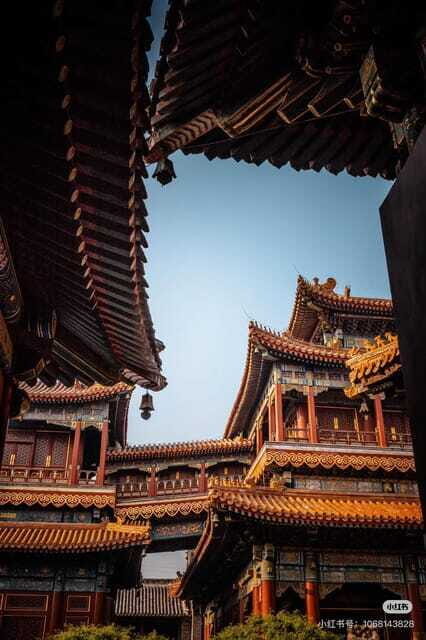
You’ll be walking through the main parts of the temple complex—archways, main halls, and the named buildings in the main ceremonial route.
Who this is best for (and who should think twice)
This is a great fit if you:
- Want a focused, religion-and-architecture experience in Beijing
- Prefer a structured route through a large site
- Like history that’s tied to real places (Qing Dynasty origins, Tibetan Buddhist influence)
- Would rather pre-book than troubleshoot ticket lines
It may not be ideal if you:
- Need wheelchair access. This activity is not suitable for wheelchair users.
- Don’t want to walk through multiple halls and courtyards. Even with a guided route, it’s still a temple complex and you’ll cover distance inside it.
If you’re traveling as a couple, with friends, or as a solo visitor who likes meeting a small group, this setup tends to work well.
A note on rules: what you must bring and what you can’t do
Bring a passport. That’s listed as required for this experience.
You should also plan around temple rules. Alcohol and drugs are not allowed, and you can’t make fire on the grounds. These aren’t tiny details; they’re the kind of basics that keep your visit smooth and respectful.
Should you book the Yonghegong Lama Temple ticket with guide?
If you like your Beijing sightseeing organized and you care about not wasting time, I’d say yes, book it. For a low price like $12, the value comes from pre-booked entry plus the option of an English guide to make the layout easier to understand. The temple is large, the closing windows are strict, and the route is better when you have help connecting the names to the spaces.
Book it especially if:
- You’re visiting in peak season and want predictable entry timing
- You want an architecture-focused visit without guesswork
- You’d appreciate an English explanation of the temple’s Tibetan-Chinese blend
Skip it or look for a different format if:
- You need wheelchair-friendly access
- You want a fully self-directed experience and don’t care about learning what each hall represents
FAQ
How much is the Yonghegong Lama Temple ticket?
It costs $12 per person.
How long is the experience?
The ticket is valid for 1 day, and you’ll visit within the temple’s opening hours.
Where is Yonghegong Lama Temple, and how do I get there by metro?
It’s located at No. 12 Yonghegong Street, Dongcheng District, Beijing. The listed metro option is Line 5, getting off at Yonghe Lama Temple station.
What are the opening hours?
Summer and autumn (April 1 – October 31): 9:00 AM – 5:00 PM, last admission at 4:30 PM.
Winter and spring (November 1 – March 31): 9:00 AM – 4:30 PM, last admission at 4:00 PM.
Do I need to stop entering at 16:00?
There’s a note that you should stop entering at 16:00.
Do I need to bring a passport?
Yes. A passport is required.
Is an English guide included?
The experience offers a live tour guide in English, and small-group options are available.
Is this a pre-booked ticket so I don’t buy on-site?
Yes. This activity includes Yonghegong Lama Temple tickets that you reserve in advance, helping you avoid purchasing on the spot.
What items are not allowed at the temple?
Alcohol and drugs are not allowed, and you can’t make fire.
Is wheelchair access available?
No. This activity is not suitable for wheelchair users.
Can I cancel and get a refund?
Yes. There is free cancellation available up to 24 hours in advance for a full refund.