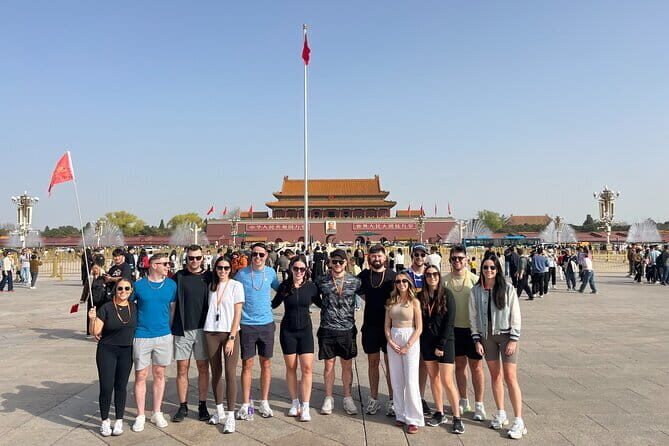
REVIEW · BEIJING
Beijing Hutongs Walking Tour
Book on Viator →Operated by Roy Li Tours Beijing · Bookable on Viator
Hutongs feel like a city within a city. This Beijing walk pairs a relaxed small-group pace with courtyard-house stops, so you get context without getting lost in the lane maze. I like that you’ll cover big-city landmarks like the Bell and Drum Towers and then shift to the quieter, everyday world of hutongs instead of only chasing imperial sights.
Two things I especially like: the English-speaking guide keeps the story clear (and interactive), and the route takes you through places many fast-paced visits skip. One drawback to consider: you need to be on time and at the exact meeting spot—when you miss the start, the group can move on, and you can end up wandering alone.
In This Review
- Key Highlights You’ll Actually Notice
- Hutongs in 90 Minutes: Why This Walk Works
- Meeting Point at Nanluogaxiang: Find the Lane, Not the Crowd
- Bell and Drum Towers: Where Time-Telling Gets Personal
- Nanluogixiang and Courtyards: Grey Walls, Old Trees, Real Texture
- Mao’er Hutong: Narrow Lanes With Character Stories
- Empress’s Mansion and Wanrong: A Photo Stop With Teeth
- Walking Toward Qianhai and Houhai: Breaks From Alley Geometry
- Price and Value: Why $30 Makes Sense for Hutong Learning
- The Roy Factor: Clear English and a Guide Who Engages
- Pacing, Group Size, and How to Get the Most Out of It
- Best-Fit Travelers (and Who Might Not Love It)
- Should You Book the Beijing Hutongs Walking Tour?
- FAQ
- What time does the tour start?
- How long does the Beijing Hutongs Walking Tour last?
- How much does the tour cost?
- Is the tour guide included, and is it in English?
- Do I need a paper ticket?
- Where do I meet the guide?
- Where does the tour end?
- What’s the maximum group size?
- Is admission included?
Key Highlights You’ll Actually Notice

- Small-group vibe (max 15) keeps it conversational and easy to ask questions
- Bell and Drum Towers start ties into how people used time in old Beijing
- Nanluogixiang to Mao’er Hutong shows the courtyard-home grid of daily life
- Empress’s Mansion photo stop connects to Puyi’s world through Wanrong
- Qianhai–Houhai channel gives you a calm water break from alley walking
- Mobile ticket makes check-in straightforward
Hutongs in 90 Minutes: Why This Walk Works

This tour is built for people who want Beijing to feel real, not rushed. Hutongs can be confusing—tiny turns, lane names that change the feel of the street, and courtyards tucked behind plain walls. Here, the pace is laid-back, which matters because you’re walking through neighborhoods, not just lining up for sights.
You also get a story, not a lecture. The guide covers details like Chinese time-keeping and the fate of China’s last emperor, then uses those themes to make the lanes easier to understand. You’ll leave with mental “markers” for where you are in the old city.
You can also read our reviews of more walking tours in Beijing



Meeting Point at Nanluogaxiang: Find the Lane, Not the Crowd

The start point is in the South Luogu Lane / Nanluoguxiang area, near the metro. The instructions point you to Nanluoguxiang station (Line 8 or Line 6), Exit E. Since it’s a walking tour, getting the meeting spot right is half the battle.
Start time is 10:00 am, and the tour lasts about 1 hour 30 minutes to 2 hours. If you arrive late, you may not catch up—one unhappy experience pointed to a guide being at the meeting point while the late guest ended up not being found. So do yourself a favor: get there a bit early and double-check you’re at the right exit.
Bell and Drum Towers: Where Time-Telling Gets Personal
The tour kicks off around the Bell and Drum Towers area. Even if you’ve never studied a single Chinese historical detail, these towers make sense because they connect to a simple idea: how a city keeps track of time before modern clocks.
That time-keeping theme isn’t just trivia. It gives you a framework for reading old Beijing. When you understand that rhythm—how people organized days and routines—you start noticing why certain public spaces mattered.
Nanluogixiang and Courtyards: Grey Walls, Old Trees, Real Texture
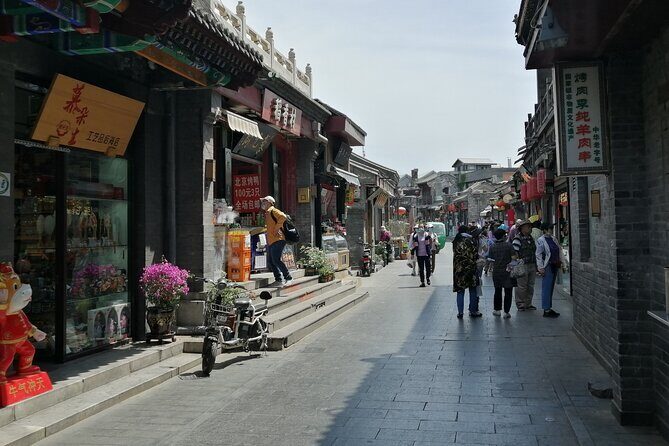
Next comes Nanluogixiang lane, which the guide frames as a walk back toward the Yuan Dynasty era. You’re not just looking at buildings. You’re seeing a layout style—vernacular courtyard homes—built for daily life: entrances, enclosed inner space, and walls that keep street noise out.
As you move through, watch for the look the tour highlights: courtyard buildings with a grey tone, paired with old trees. Those details are the kind of visual anchors that make hutongs feel less like random alleys and more like an intentional neighborhood system.
One practical note: this part is slower because you’re soaking up details and stories. Wear shoes you don’t mind getting dusty or slightly scuffed, because hutong lanes don’t walk like polished museum floors.
Mao’er Hutong: Narrow Lanes With Character Stories
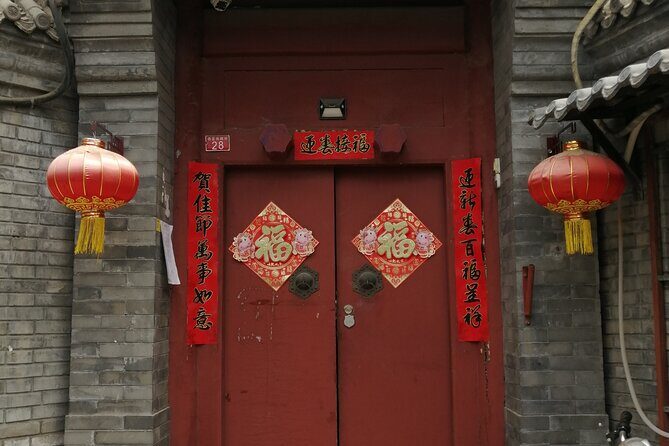
From Nanluogixiang, you continue into Mao’er Hutong. This is where the route really helps you “read” the neighborhood. The lanes feel tight, and it’s easy to lose your sense of direction if you’re walking on your own. With a guide, you get the context that prevents the usual hutong problem: seeing a lot but understanding very little.
The tour emphasizes that Mao’er Hutong has famous buildings and character stories. That matters because hutongs are partly architecture, partly people—who lived where, what the lane was used for, and how a name carries memory. You’ll likely pick up why some courtyards and compounds are talked about more than others.






Empress’s Mansion and Wanrong: A Photo Stop With Teeth
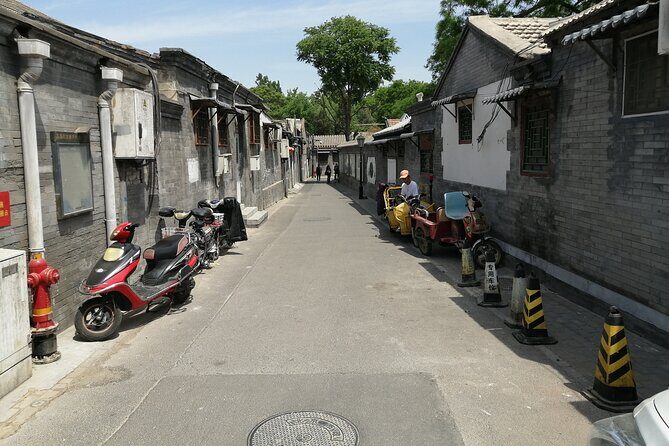
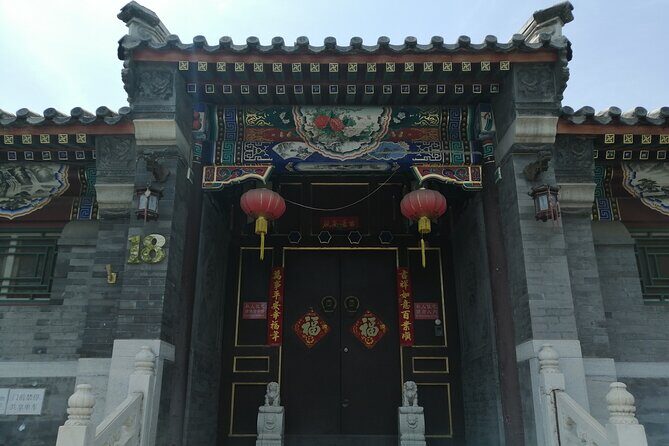
One of the most interesting stops is Empress’s Mansion, described as the former residence of Puyi’s empress Wanrong. This is a classic hutong contrast: an area known for everyday courtyard life also connects to the last imperial era, through one of its most personal stories.
You’ll stop here for pictures, which is great, but don’t treat it like only a backdrop. The point of this stop is to connect what you see in the lanes with larger national history—how the fall of an empire changed the lives tied to it.
If you’re the type who likes to match faces and names to places, this is the moment that will stick with you. If you’re mainly after scenic wandering, it’s still worth it because it gives the tour a clear human thread.
Walking Toward Qianhai and Houhai: Breaks From Alley Geometry
Later, the walk shifts toward the area linking Qianhai Lake and Houhai Lake, including a narrow channel between them. This part matters because it changes the mood. After courtyards and tight lanes, the water and open sightlines make the whole neighborhood experience feel less claustrophobic.
It’s also a smart pacing move. In a route like this, you need a mental reset. The lakeside environment gives you that without turning the tour into a full sightseeing detour.
Price and Value: Why $30 Makes Sense for Hutong Learning

At $30 per person, you’re paying for something you can’t easily replicate alone: an organized route plus an English-speaking guide who explains why the lanes and courtyards matter. For a 1.5 to 2 hour walk, that’s a pretty strong deal—especially if it’s your first full day and you want to get your bearings fast.
Admission fees are noted as not included, so keep expectations realistic. You’ll still get a lot out of the public-lane walking and photo stops, but don’t assume every “major moment” comes with entry.
Value also comes from the format: mobile ticket, small group up to 15 travelers, and a relaxed pace. That combination usually means less waiting, more questions, and fewer awkward moments where your guide talks only to the loudest person in the back.
The Roy Factor: Clear English and a Guide Who Engages
Multiple details point to why this tour is so frequently recommended: the guide experience. Roy is specifically mentioned for good English, strong command of hutong stories, and a style that keeps people involved. One person described how the guide engaged the group using quizzes, which is a fun way to turn history facts into something you actually remember.
You don’t need to be a history student to enjoy that. It helps you pay attention during lane changes, when your brain would otherwise drift. If you like tours where you can ask questions and get more than a basic summary, this setup is a good match.
Pacing, Group Size, and How to Get the Most Out of It
A max group of 15 is more than just a number. It often means your guide can slow down when you’re looking at details, not just rush the group toward the next photo. The relaxed pace also helps if you’re traveling with family or friends who want a calmer day.
To make the tour feel easy:
- Bring water, especially if it’s warm out.
- Keep your phone ready for the photo stop at Empress’s Mansion.
- Arrive a few minutes early at the metro exit so you’re not stressed at the start.
Also, this kind of walking rewards curiosity. When your guide mentions something like time-keeping or a named residence, it’s a prompt: look for the physical clues in front of you. Hutongs work that way.
Best-Fit Travelers (and Who Might Not Love It)
This tour is ideal if:
- You’re in Beijing for the first time and want a practical way to understand hutong life.
- You like history when it’s tied to real neighborhoods, not only grand halls.
- You want a small-group experience instead of a big bus herd.
It might not fit you as well if:
- You only want major imperial monuments and prefer less walking.
- You’re in a hurry and don’t have time for a relaxed 90-ish minute street story.
- You tend to arrive late or hate meeting at exact transit exits (the start point accuracy really matters).
Should You Book the Beijing Hutongs Walking Tour?
I’d book it if you want Beijing beyond the headline sights. The route is short enough to fit early in your trip, but it covers the right mix: time-keeping connections at the Bell and Drum Towers, courtyard architecture at Nanluogixiang, lane stories in Mao’er Hutong, and the human imperial link at Empress’s Mansion. Add the lakeside channel near Qianhai and Houhai, and you get a well-paced day that doesn’t feel like a marathon.
One final practical point: this is a small-group tour with a clear meeting spot, so plan to arrive on time. And if your schedule is uncertain, it’s good to know you can cancel for a full refund up to 24 hours before the start.
If that sounds like your style—walk, learn, ask questions—this one is an easy yes.
FAQ
What time does the tour start?
The tour starts at 10:00 am.
How long does the Beijing Hutongs Walking Tour last?
It lasts about 1 hour 30 minutes to 2 hours.
How much does the tour cost?
The price is $30.00 per person.
Is the tour guide included, and is it in English?
Yes. The tour includes an English-speaking guide.
Do I need a paper ticket?
No. You’ll use a mobile ticket.
Where do I meet the guide?
Meet at the South Luogu Lane / Nanluoguxiang area, near Nanluoguxiang station (Line 8 or Line 6), Exit E.
Where does the tour end?
The tour finishes in the Houhai, Xicheng District area, with the end described as near the Drum Tower area.
What’s the maximum group size?
The tour has a maximum of 15 travelers.
Is admission included?
Admission tickets are not included. The tour notes that an admission ticket is not included in the price.