REVIEW · BEIJING
Beijing: Full-Day Small-Group Great Wall Hiking at Jinshanling
Book on Viator →Operated by Great Wall Hiking · Bookable on Viator
Fewer crowds, bigger views, real wall texture. I love the mix of original stone and carefully restored sections, plus the way the guide explains decorative details you’d otherwise miss. The one real catch is the hike is step-heavy, and there’s no toilet along the Wall path—you need to plan ahead.
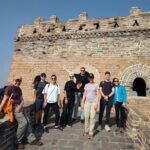
This tour runs in a tight max of 10 people, so you can actually move at a human pace and grab photos without turning every shot into a crowd photo. A morning start means you get more quiet time on the Wall, then you refuel with a lunch spot operated by local farmers before heading back to Beijing.
In This Review
- Key things that make this Jinshanling hike work
- Jinshanling Great Wall: why this route feels different
- The 8:00 am start: smooth transport and a realistic day length
- Simatai West to Jinshanling: what the hike feels like in real life
- Restored vs original wall views: decorative details and photo strategy
- Guides who talk history clearly (and keep the pace sane)
- Lunch after the hike: why this local meal is part of the value
- Toilets, water, poles, and the small rules you should follow
- Price and value: why this is more than just “a Great Wall ticket”
- Who should book this Jinshanling hiking tour
- Weather, safety, and keeping your schedule flexible
- Should you book this Jinshanling Great Wall hiking tour?
- FAQ
- How long is the Great Wall hiking tour from Simatai West to Jinshanling?
- What’s the price per person?
- Is the Jinshanling entrance ticket included?
- What’s included in the tour package?
- Is there a chairlift included?
- Are there toilets along the Wall path?
- Do I need to bring toilet paper?
- Are trekking poles provided?
- Can I choose a vegetarian meal?
- What fitness level is needed?
- What happens if the weather is bad?
- Is the tour really small group?
Key things that make this Jinshanling hike work
- Small-group size (up to 10) for a calmer, more personal day
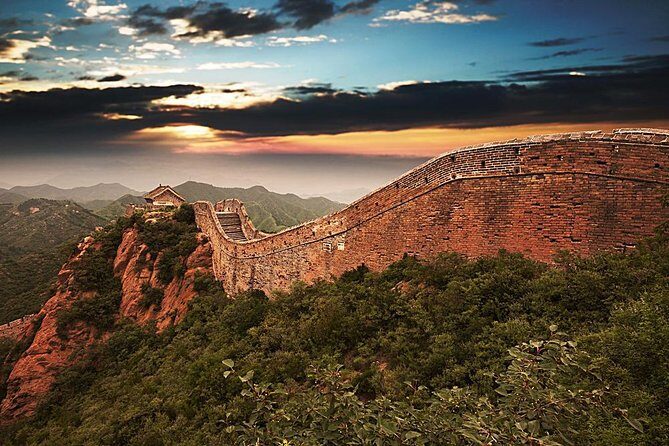
- Original + restored sections so you can compare the Wall’s real textures
- English-speaking guide who points out what to look for, not just where to walk
- Lunch with local farmers to balance the hiking with local food and conversation
- Water, trekking poles, and a day pack setup so you’re not scrambling on the day
- A less-crowded route that avoids the most overrun parts of the Great Wall
Jinshanling Great Wall: why this route feels different
If you’ve only seen the most famous Great Wall stops, you might expect a theme park vibe. This trip is built to feel more like walking through history. The hike here focuses on Jinshanling, a UNESCO World Heritage area that includes both partially restored stretches and sections that look far more rugged and original.
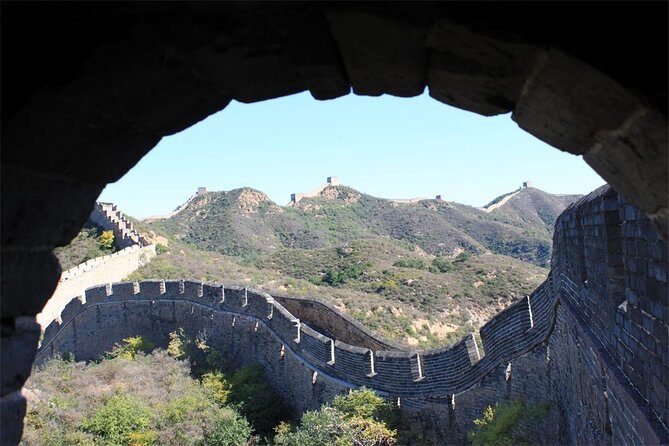
That mix matters. Restored sections are easier to see, photograph, and interpret. Original stretches show the wall in its less-polished form—broken lines, weathered stones, and the kind of rough detail that makes the Great Wall feel less like a postcard. If you care about how the Wall was built, and how it has changed over time, this route gives you that contrast in one day.
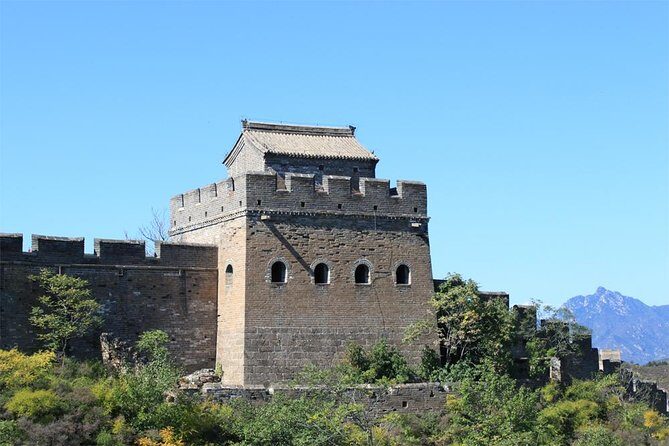
And yes, the photo ops are real. You get long ridgeline views and watchtowers that pop against the sky. The best part is the crowd level. It’s not that you see nobody—you’ll still spot other hikers—but it’s often quiet enough to step aside and actually frame your shot.
You can also read our reviews of more hiking tours in Beijing
The 8:00 am start: smooth transport and a realistic day length
The day starts early, around 8:00 am, with pickup at WCRP+934, Beijing and the tour ending back at the same meeting point. Total time is about 9 hours, depending on traffic later in the day. The return timing is why the tour asks you not to schedule anything afterward; they’re aiming to get you back around 5–6 pm.
Getting to the Wall is part comfort, part practicality. The group travels in an air-conditioned vehicle with an experienced driver. That’s a big deal in Beijing traffic and during warm months. You’ll also get unlimited bottled water, stored in the car/van, but you’ll want a day pack to carry what you need on the hike.
This matters because you’ll be walking for hours, and once you’re on the Wall, the options are limited. The tour is designed so you don’t have to hunt for supplies halfway through. It’s also a small-group setup (max 10), so the vehicle time doesn’t feel like a long cattle drive.
Simatai West to Jinshanling: what the hike feels like in real life
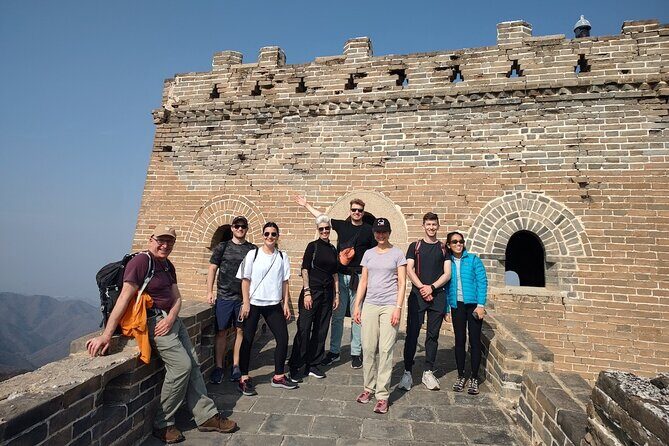
This is a full-day hiking-style experience. You hike the Great Wall section from Simatai West to Jinshanling, and the guided time on the Wall is about 3 hours with the Jinshanling entrance ticket included.
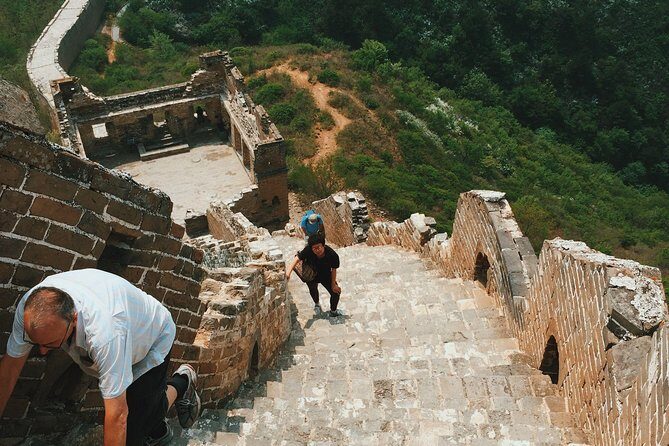
The step count can surprise people. Expect lots of ups and downs. One of the hardest stretches is at the beginning, with a climb that can feel like a wall (literally) of steps. You may see guidance-style walking segments separated by short breaks, but the rhythm is still climb, pause, climb, pause.
You’ll also want to think about your knees and hips. If you’ve had knee issues, this is not the day to “power through” without considering the impact. The terrain is uneven and steep in places, and you’re using real wall stairs—not a flat nature trail.
Good shoes help. Trekking poles are available too. They’re brought in the vehicle, and you can ask your guide for them on the day. That small support can make the difference between feeling okay and feeling destroyed by the descent.
Restored vs original wall views: decorative details and photo strategy
One of the standout reasons to pick Jinshanling is that you get to see the Wall in different “modes.” Some sections are carefully restored, with stones that look cleaner and more uniform. Other stretches show older, less retouched structure.
That contrast becomes more interesting when your guide points out what you’re looking at. The tour includes time to learn about decorative elements and wall features from an English-speaking guide. The idea is simple: don’t just walk the Wall—learn how to read it.
Photo-wise, you’ll get plenty of chances to stop for pictures with far fewer people than the busiest Wall sections. A quiet Wall changes your photos fast. You can frame watchtowers without bodies crowding every edge, and you can take your time waiting for the light.
A helpful tip is timing your stops. The beginning climbs can be slow and step-focused; later segments open up into longer views. If you save your “big photo” moments for when the ridge opens, you’ll capture more dramatic lines across the wall.
Guides who talk history clearly (and keep the pace sane)
The biggest quality signal here is the guide. In the feedback, names like Jason, Dewit, Cheney, Luis, and Woody come up often, and the common thread is clear: guides lead with both history context and practical hike management.
What I like is how the history support is tied to what you can actually see in front of you. Instead of long lectures, you get short, targeted explanations while you’re moving through towers, turns, and wall details. That keeps you engaged and makes the hike feel more meaningful without dragging out the day.
Another plus: pacing. Some steps feel brutal, and the best guides don’t treat the group like a race team. You’ll still be hiking actively, but your guide should help keep you together and moving steadily. One review experience even highlighted that a guide adjusted for weather safety when conditions got rough, which is what you want from someone leading on an exposed, slippery route.
If English is your second language, you’ll still be okay. The guides are English-speaking, and their job is to make the Wall make sense. Still, the pace of explanations can be quick at points, so it helps to be alert and ready to listen.
You can also read our reviews of more tours and experiences in Beijing


Lunch after the hike: why this local meal is part of the value
After the hike, you eat lunch at a restaurant operated by local farmers. That’s not just a nice extra. It’s the kind of meal choice that keeps the day from feeling like a scripted tourist loop.
In practice, the timing works well. You finish your Wall walking, then you sit down, refuel, and chat with local people in a relaxed setting. It’s a break from constant stepping and photographing. And it avoids the common trap of spending time hunting for food while your legs are exhausted.
Food details aren’t listed in the core tour info, but there is a vegetarian option available if you ask when booking. Since you won’t want to be figuring out meals on the fly during a hike day, that’s a solid planning benefit.
One practical note: the hike is active, so lunch will taste better than you think it will. Plan for a hearty meal, and don’t rush through it. You’re going to want your energy back for the ride home.
Toilets, water, poles, and the small rules you should follow
This tour gives you a lot of support, but it also makes you responsible for the parts you can control.
The big one: there is no toilet along the path on the Wall. Toilets exist at the entrance of Simatai West and at the entrance of Jinshanling, so use them before you start the Wall portion and again at the access points. Also carry toilet paper with you. The tour specifically flags this because it’s easy to forget when you’re focused on steps and views.
Water is handled well: unlimited bottled water is stored in the vehicle, and you’ll need to carry your portion in a day pack on the hike. Don’t show up with just a small day bag and hope you’ll be fine. Bring something you can use comfortably for water, your phone, and toilet paper.
Trekking poles are available in the car/van. If you want them, tell your guide. Also remember the tour asks you to travel with a light, respectful mindset: take nothing but photos, leave nothing but footprint.
And for safety and comfort: the Wall can be slick or unsafe in bad weather. The tour requires good weather, and guides should be prepared to manage conditions on the day.
Price and value: why this is more than just “a Great Wall ticket”
At $138 per person, this isn’t the cheapest way to see the Great Wall. But it’s also not aiming to be the cheapest option. It’s paying for a small-group guided hiking experience that includes a few high-impact items:
- A personal English-speaking hiking guide
- Entrance ticket to Jinshanling
- Air-conditioned transport with an experienced driver
- Unlimited bottled water
- Lunch after hiking
- Trekking poles available (if you request them)
When you add those up, the price starts to make sense—especially if you’re trying to avoid the stress of figuring out transportation and timing on your own. Also, the less-crowded route and smaller group size are not just marketing. They directly affect your ability to enjoy the hike and take photos.
For people who want the Wall without the massive crowd crush, this kind of guided hiking format often feels like better value than a generic bus tour where you spend more time waiting and less time walking.
Who should book this Jinshanling hiking tour
This fits best if you:
- Want a guided hike along a quieter Great Wall stretch
- Enjoy stepping up and down and being active for part of the day
- Care about learning what you’re seeing, not only taking pictures
- Prefer a small group over large tour buses
It’s less ideal if you:
- Have significant hip/knee issues or can’t handle steep steps
- Want a super relaxed, mostly flat walk
- Rely heavily on toilets being available constantly while hiking (they’re not on the Wall path)
Children must be accompanied by an adult, and children under 5 aren’t allowed. If you’re traveling with kids, plan carefully for the step intensity and the no-toilet-on-the-path rule.
If you like hiking in moderate heat, consider the season. The pace is manageable for many people, but it can feel hard in hot conditions.
Weather, safety, and keeping your schedule flexible
Great Wall hikes are weather-dependent, and this one explicitly requires good weather. If the tour is canceled due to poor conditions, you’re offered another date or a full refund.
If you’re visiting in a season with rain or sudden changes, pack for it. In some experiences, guides have supported guests through rougher weather and helped keep conditions safer. Still, you should expect that steep stone + rain can change how difficult the hike feels.
Also keep your day flexible. The tour asks you not to schedule anything after the trip because return timing depends on traffic between roughly 5–6 pm. So give yourself some buffer time for the Beijing ride back.
Should you book this Jinshanling Great Wall hiking tour?
I’d book it if you want the Great Wall in a way that feels more personal and less crowded. The biggest reasons are the small group, the chance to see both restored and original Wall sections, and the guide-led explanations that help you understand what you’re looking at. The lunch with local farmers also turns the day from a pure endurance test into a full, satisfying experience.
Skip it or choose another option if you can’t handle steep steps, need frequent on-the-path toilet access, or prefer a mostly flat sightseeing style. This is a hike day. Plan like it’s a hike.
If you’re reasonably fit and ready for stairs, this is one of the better ways to see Jinshanling without feeling like you’re fighting other tourists for space on the Wall.
FAQ
How long is the Great Wall hiking tour from Simatai West to Jinshanling?
It’s about 9 hours total, with around 3 hours on the Jinshanling Great Wall portion.
What’s the price per person?
The tour costs $138.00 per person.
Is the Jinshanling entrance ticket included?
Yes. The entrance ticket to Jinshanling is included.
What’s included in the tour package?
Included items are air-conditioned vehicle transport with an experienced driver, a personal English-speaking hiking guide, unlimited bottled water, lunch after the hike, and the Jinshanling entrance ticket.
Is there a chairlift included?
No. A chairlift is not included.
Are there toilets along the Wall path?
No, there are no toilets along the path on the Wall. Toilets are available at the entrance of Simatai West and at the entrance of Jinshanling.
Do I need to bring toilet paper?
Yes. You should carry toilet paper yourself since there’s no toilet on the hike path.
Are trekking poles provided?
Trekking poles are brought in the car/van. You should tell your guide if you want one.
Can I choose a vegetarian meal?
Yes. A vegetarian option is available if you advise the provider at booking.
What fitness level is needed?
You should have a moderate physical fitness level. The hike involves a lot of steps and walking.
What happens if the weather is bad?
The tour requires good weather. If canceled due to poor weather, you’ll be offered a different date or a full refund.
Is the tour really small group?
Yes. It has a maximum of 10 travelers.