REVIEW · BEIJING
Old Beijing Dinner Tour
Book on Viator →Operated by UnTour Food Tours · Bookable on Viator
Old Beijing tastes better at dusk. This small-group hutong route takes you off main streets and into family-run spots, and the night is built around a tasting-heavy dinner with beer and northern specialties. The main catch: you’ll likely eat more than you planned, so don’t schedule an extra meal right after.
I like that it starts with an easy transit anchor and keeps things simple: meet near Beixinqiao Station at 7:00 pm, then you finish by the Dongsi North St / Dongsi 10th Alley area (close to Metro Line 5). You’ll use a mobile ticket, and you get a post-tour welcome packet with restaurant and travel tips so you can keep eating after you return.
The guides are a big part of the value. I saw repeat praise for hosts like Shan, Garth, Kelly, Jesus, Zeben, and Katie, with lots of dish-by-dish context and stories about Beijing life in the hutongs. If you want a dinner that also teaches you what you’re eating and why it matters, this is a strong fit.
In This Review
- Key things I’d watch for
- Why this Old Beijing dinner works (and why it’s not just food)
- Meeting at Beixinqiao Station and planning your evening
- Stop 1: UnTour Beijing Food Tours and how the evening gets set up
- Stop 2: Hutong Tour—walking narrow lanes to reach the food
- The food itself: northern Chinese favorites you might not pick alone
- Come hungry. That’s the drawback.
- Beer with dinner and the mini-stops that keep you moving
- Ghost Street (Gui Jie): a short snack stop that hits the right note
- Nuoyan Rice Wine Shop: learning mijiu one tasting at a time
- Small group logistics: what you get with a max of 12
- Price and value: why $75 can work out well
- Practical tips to make your night smoother
- Should you book the Old Beijing Dinner Tour?
- FAQ
- How long is the Old Beijing Dinner Tour?
- What time does the tour start?
- Where do I meet the guide?
- Where does the tour end?
- What group size should I expect?
- What’s included in the price?
- Is beer included?
- Does the tour include rice wine tasting?
- Is there a snack stop on Ghost Street?
- What if the weather is bad or the minimum number of travelers isn’t met?
Key things I’d watch for
- Small group (usually 8) + max 12 means you can actually ask questions while moving through narrow lanes
- Off-the-tourist-street hutong food stops are the point, not a side feature
- Beer and local drinks are part of the flow, not an afterthought
- Nuoyan rice wine tasting adds a cultural stop you can’t easily DIY
- Ghost Street snack time (Gui Jie) is short but perfect for late-night nibbling
- Post-tour recommendations help you turn one good night into several good meals
Why this Old Beijing dinner works (and why it’s not just food)
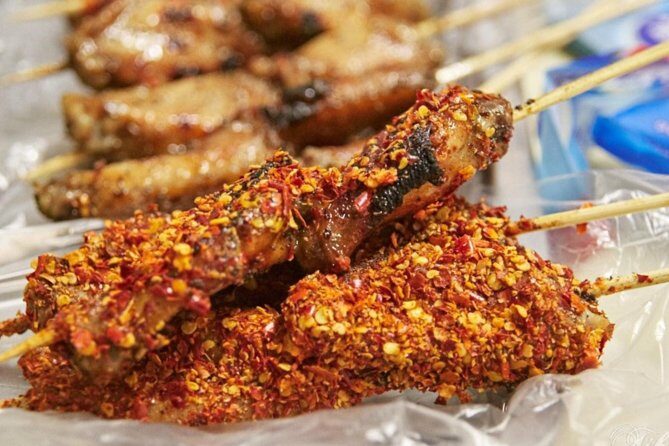
Beijing’s food culture changes fast once you leave the big-name sights. Main streets are fine, but they often push you toward places that are set up for visitors. This tour is designed around the opposite idea: walk through real neighborhoods and eat where local life still drives the menu.
The hutong focus matters. Those narrow lanes are where you see daily rhythms—how people get to shops, where they linger, and what kinds of food you’ll smell at night. And because you’re not trying to read the city alone, you spend less time guessing and more time eating.
The other smart move is pacing. You don’t hit one restaurant and call it dinner. Instead, you move stop to stop, building a meal out of smaller tastes. That’s more fun for you, and it also reduces the odds of getting stuck with one dish you don’t love.
You can also read our reviews of more tours and experiences in Beijing
Meeting at Beixinqiao Station and planning your evening
You start at 7:00 pm near Beixinqiao Station in Dongzhimen (Dongcheng). It’s also listed as near public transportation, which is useful in a city where traffic can be a wild card.
This is a walking-focused experience in narrow hutong lanes, so I’d treat it like part tour, part night out. Wear shoes you’re comfortable in for a few hours of uneven sidewalks and tight spaces, especially if it’s hot or humid.
It ends near the intersection of Dongsi North St & Dongsi 10th Alley, close to Zhangzizhong Rd Metro (Line 5). Plan for an easy ride home from there, and don’t overbook the rest of your night. The tastings add up to a very large meal, and the tour is designed so you probably won’t want another dinner for several hours.
Stop 1: UnTour Beijing Food Tours and how the evening gets set up
The first stop is with UnTour Beijing Food Tours, where you meet up and start the evening’s rhythm. Even if you’ve eaten northern Chinese food before, this is where the tour starts framing what you’re about to taste and how to think about it.
This matters because Beijing food has strong regional personality. The tour leans toward flavors and dishes shaped by northern China’s cooking styles—hearty, often sauce-driven, and very tied to street food culture and neighborhood restaurants.
You also get a clear structure early on: the walking, the restaurant switches, and the idea that you’re building one big meal out of several tastings. If you like organized chaos—the good kind—this will feel just right.
Stop 2: Hutong Tour—walking narrow lanes to reach the food
The hutong portion is the heart of the experience, running about 2 hours. The idea is simple: head deep into the alley neighborhoods where many of the best local spots are hard to find on your own.
Here’s what you’re really buying: shortcut knowledge. Hutongs can be confusing even for people who navigate well in cities. With a guide, you’re not just getting to restaurants—you’re also understanding the neighborhood around them, which makes the food feel more connected to place.
You’ll see the difference between tourist-facing dining and the local pattern: family-run places, small counters, and stalls that feel like they’ve been feeding neighbors for years. That’s the kind of context that turns tastings into memories.
The food itself: northern Chinese favorites you might not pick alone
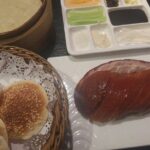
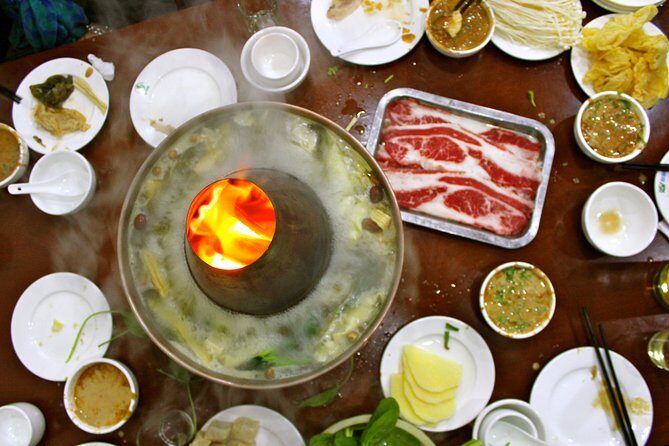
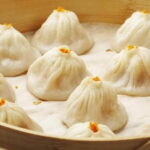
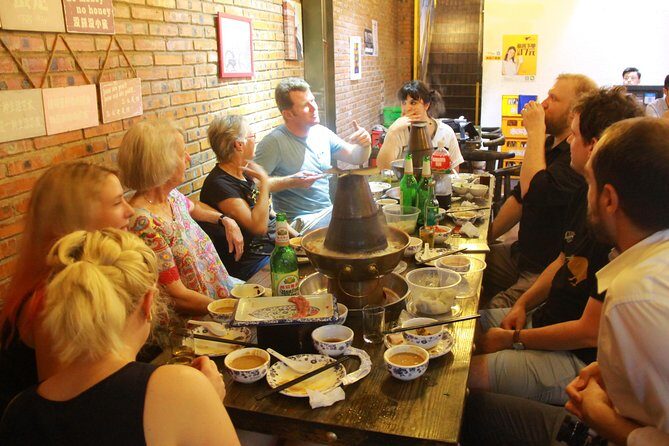
This tour is built for variety, not one “signature” meal. During the night, you’ll sample a range of northern Chinese specialties. The exact menu can vary, but the tour description lists dishes that may include Mongolian-style hotpot, hand-stuffed boiled dumplings, and Beijing’s sauced meats.
Hotpot is a great starter choice because it teaches you how Chinese restaurants build flavor through broth, dipping sauces, and shared cooking. Dumplings matter too: even when you’ve seen them before, you’ll often taste differences in wrapper texture, filling seasoning, and how the shop finishes the dish.
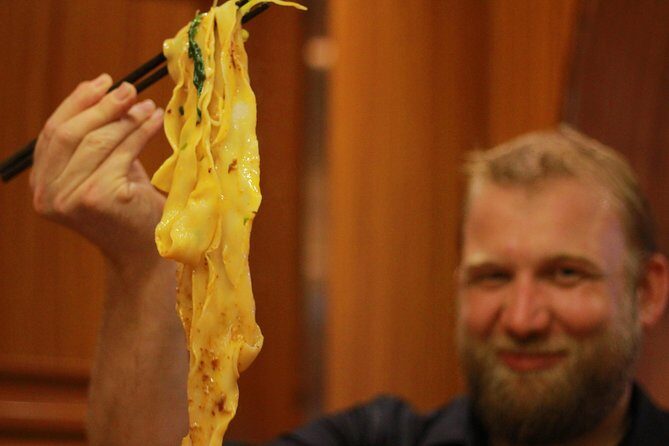
You’ll also likely get at least one moment of street-food style eating. In guide-led Beijing tours like this, that can include things like jianbing (egg crepes), and some previous groups highlighted noodles and crepe-style bites as favorites. If that shows up on your route, it’s the kind of dish you’ll remember because it’s fast, hot, and built for a crowd.
You can also read our reviews of more tours and experiences in Beijing
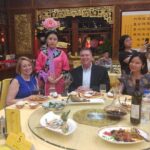
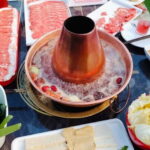


Come hungry. That’s the drawback.
This is worth saying twice, in plain language: you’ll probably eat a lot. The tour specifically notes the tasting stops add up to a very large meal. A few people also wrote that portions felt generous, so if you’re the kind of eater who wants to save room for late-night dessert, pace yourself at the first stop instead of going full speed.
Beer with dinner and the mini-stops that keep you moving
Food tours can turn awkward when you’re waiting around. Here, the drinks are part of the flow. You’ll have bottled water and soft drinks, plus a bottle of local beer paired into the meal experience. Local alcoholic beverages are also listed as included.
That doesn’t just mean more enjoyment. It also keeps the pacing smooth. You’re not stuck thirsty, and you’re not trying to bargain for drinks at each place. For many first-timers in China, it’s also a safety net: you don’t have to figure out what’s safe or what’s included while you’re distracted by menus.
And because you’re with a small group, it’s easier to handle the social side of eating. Everyone’s tasting, reacting, and moving together, which makes the tour feel like a shared night rather than a checklist.
Ghost Street (Gui Jie): a short snack stop that hits the right note
The tour includes a quick 10-minute stop at Ghost Street (Gui Jie), and it’s marked as free (no admission). It’s one of Beijing’s popular snack streets, and that short timing is smart.
In practice, it works like a dessert-and-coffee moment, even if you’re still full. You get a taste of the street vibe—people grabbing bites, shops lit up for evening business—without turning the night into a long wandering session.
Also, because it’s brief, it avoids the downside of some snack streets: you get pulled toward prices or choices that are less controlled. Here, you’re there enough to feel the place, then you move on.
Nuoyan Rice Wine Shop: learning mijiu one tasting at a time
The final food-cultural finish is about drinks, at the Nuoyan Rice Wine Shop, running about 30 minutes. The tour framing is that rice wine (mijiu) has deep roots in China, and you’ll sample a small tasting flight while your guide explains the drink.
This is a good stop for two reasons. First, rice wine is easy to misunderstand if you only encounter it in passing. A tasting lets you notice differences in aroma and flavor rather than treating it like one flat category of alcohol. Second, the guide gives historical and cultural context so it feels tied to local life, not just another bar stop.
Some reviews mention the tour ending with a boutique producer feel—more character, less tourist atmosphere. If you’re the type who likes food tours that also teach you how a local product fits into daily culture, this part is a standout.
Small group logistics: what you get with a max of 12
This tour is designed for a maximum of 12 travelers. The standard group size is 8, and in some cases groups can run up to 12 with a second guide.
That size is the sweet spot for a walking evening in hutongs. You’re not herded. You can hear the guide. And if you have questions about dishes or how to order something similar later, you can ask without feeling like you’re holding up a parade.
It also helps with navigation. Narrow lanes are hard when you’re alone. With a guide, you can focus on the food and the street life instead of spending energy on getting “unlost.”
Price and value: why $75 can work out well
At $75 per person, this isn’t a cheap add-on. But it’s also not paying for one restaurant and a guide standing nearby.
You’re getting:
- a walking hutong tour (with guide support through narrow lanes)
- multiple dinner tasting stops that add up to a large meal
- bottled water, soft drinks, and local alcoholic beverages
- a bottle of local beer
- a rice wine tasting flight
- a post-tour welcome packet with recommendations and local travel tips
If you’ve ever tried to recreate this type of night on your own, you know how long it takes to find good places, figure out ordering, and navigate neighborhoods after dark. This tour compresses all of that into one organized evening. For many people, that alone makes it feel like good value, especially because the tastings cover a range of northern dishes rather than one gamble.
Practical tips to make your night smoother
A few small choices will make a big difference.
- Don’t plan a second dinner. The tour is designed so you probably won’t need it for hours.
- Tell them about dietary needs in advance. Dietary requirements are mentioned as something you should share at booking with advanced notice so they can cater.
- Bring a comfortable walking mindset. Hutong streets are tight; good shoes matter more than stylish shoes.
- Use the mobile ticket. The tour is listed with mobile ticketing, so keep it ready on your phone.
- Book earlier than you think. The tour notes it’s often booked about 24 days in advance, which suggests popular nights can fill.
Should you book the Old Beijing Dinner Tour?
Book this if you want Old Beijing food the easy way—the way locals actually get it: in neighborhood lanes, at family-run spots, with a guide to help you understand what you’re tasting. It’s especially smart for first-time Beijing visitors who want more than a souvenir dinner and who like learning while they eat.
Skip it if you’re very picky, if you hate walking, or if you want a light, cocktail-only evening. The tastings add up, and the schedule is built for steady progress through hutong neighborhoods.
If your goal is a complete night in Old Beijing—food, drink, and street context—this is a strong bet.
FAQ
How long is the Old Beijing Dinner Tour?
The tour is about 3 hours (approx.).
What time does the tour start?
It starts at 7:00 pm.
Where do I meet the guide?
You meet near Beixinqiao Station in Dongzhimen, Dongcheng, Beijing.
Where does the tour end?
The tour ends near the intersection of Dongsi North St and Dongsi 10th Alley, close to Zhangzizhong Rd Metro (Line 5).
What group size should I expect?
The standard group size is 8, with some groups up to 12 if there’s a second guide.
What’s included in the price?
Dinner tasting stops, bottled water, soft drinks, local alcoholic beverages, the guide fee, and a post-tour welcome packet.
Is beer included?
Yes. The tour includes a bottle of local beer.
Does the tour include rice wine tasting?
Yes. You’ll visit the Nuoyan Rice Wine Shop for a small tasting flight.
Is there a snack stop on Ghost Street?
Yes. You’ll spend about 10 minutes at Ghost Street (Gui Jie), and it’s listed as free.
What if the weather is bad or the minimum number of travelers isn’t met?
The experience requires good weather. If it’s canceled due to poor weather, you’ll be offered a different date or a full refund. If it’s canceled because the minimum isn’t met, you’ll be offered a different experience/date or a full refund.