REVIEW · BEIJING
Discover Old Beijing: Hutong Walking Tour & Calligraphy
Book on GetYourGuide →Operated by AUTHENTIC TRAVEL CHINA · Bookable on GetYourGuide
Old Beijing is best on foot. This 3.5-hour Hutong walking tour threads famous downtown sights together with local life, then tops it off with hands-on Chinese calligraphy you can take home.
Two things I really like: the tour includes an authentic courtyard visit (not just a photo stop) and the calligraphy session is real-making, not a demo. One thing to watch: if you expect a super-cheap tip-based vibe, $25 can feel steep for what is still a walking format, so go in knowing you’re paying for a guided route plus included activities and snacks.
In This Review
- Key things to know before you go
- Getting oriented at 北京湖广会馆 and the Hufangqiao meeting point
- Huguang Guild Opera Theatre: where the tour’s mood clicks into place
- Hutongs on purpose: the courtyard visit and the narrow alley moments
- Yangmeizhu Byway and snack breaks: real street life, not just photos
- Daguanlou Cinema: the birthplace angle and a different kind of Beijing history
- Dashilan residential district and Qianmen Street: the city’s edges meet downtown
- The calligraphy studio surprise: create, learn, and take it home
- Local guide energy: storytelling makes the walk feel personal
- Price and value: why $25 can still make sense here
- Who this tour fits best (and who should think twice)
- Should you book this Hutong walking tour and calligraphy?
- FAQ
- How long is the Hutong walking tour and calligraphy experience?
- What is the price per person?
- Where does the tour start?
- How do I find the meeting point?
- Is the tour in English?
- What stops are included during the walk?
- Is there a calligraphy activity, and do I get to take something home?
- Are snacks included?
- What time should I arrive before the start?
- What if I need to cancel?
Key things to know before you go
- Courtyard time: you get inside a real Hutong courtyard setting, not only street-side glimpses
- Calligraphy you keep: create your own Chinese calligraphy artwork and take it home
- Local stories focus: guides explain how old neighborhoods survived—and what changed around them
- Street food included: snack breaks show up during the walk, not as an afterthought
- Downtown landmarks on foot: Qianmen Street and the area around Zhengyang Gate are built into the route
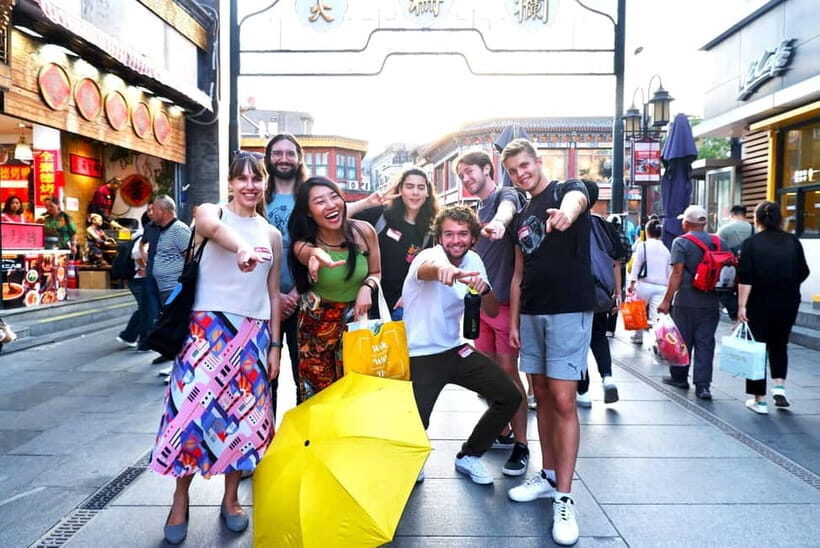
- Easy meeting marker: look for the yellow umbrella near the green space by Hufangqiao Metro Station
Getting oriented at 北京湖广会馆 and the Hufangqiao meeting point
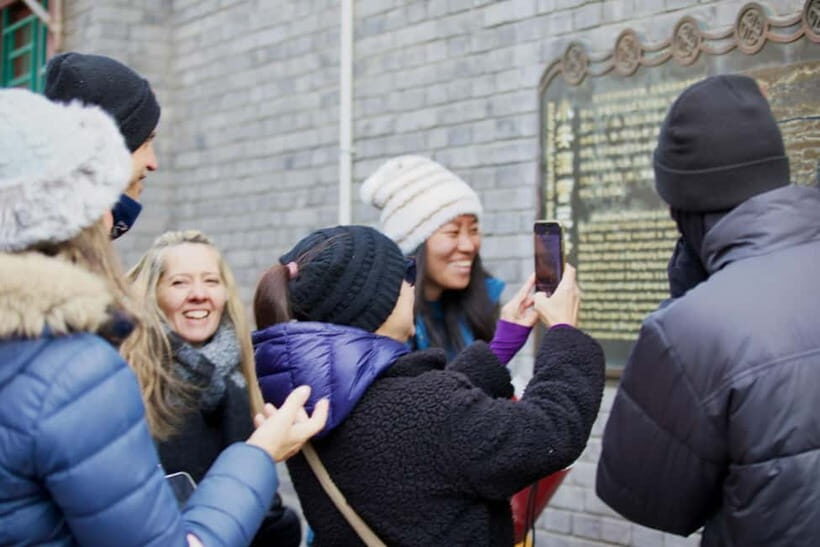
Start by making the meeting spot easy, because the metro station is described as massive. The tour meets at Hufangqiao Metro Station (Line 7), Exit D (South-West Exit). After you exit, head straight to the main road, turn right, walk 60 meters east to the green space at the intersection, and look for the yellow umbrella.
If Google Maps is acting weird, follow the written directions instead. This tour specifically warns that the map pin can be unreliable, so don’t spend your energy hunting.
Plan to arrive 5–10 minutes early. The guide can wait up to 20 minutes at the meeting point, but the tour can’t slow down for late arrivals—so build in buffer time, especially around peak traffic.
You can also read our reviews of more walking tours in Beijing
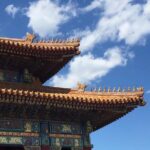
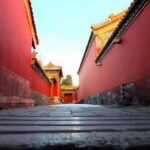
Huguang Guild Opera Theatre: where the tour’s mood clicks into place
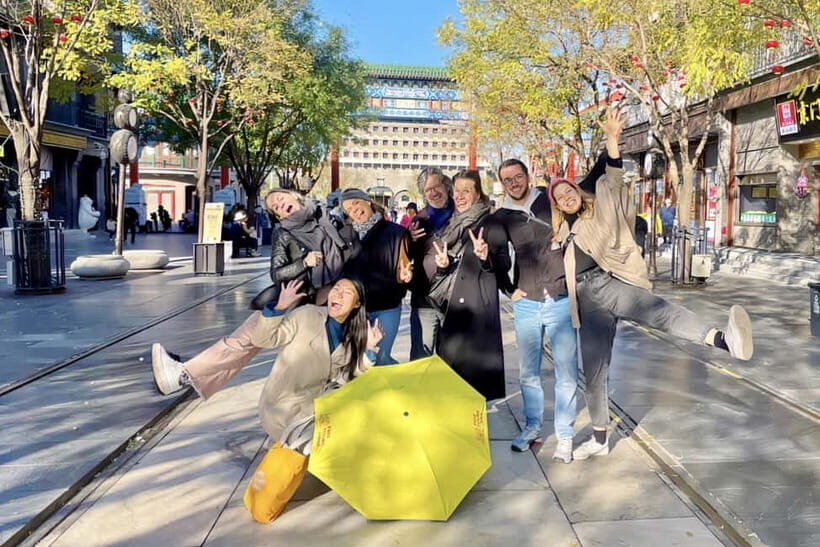
Your walk begins at 北京湖广会馆, and the first stop is the Huguang Guild Opera Theatre (about 30 minutes). This matters because it sets the tone: old Beijing isn’t only about surviving alleys—it’s also about the institutions that once shaped community life.
From here, you transition from major sights to the lived-in fabric of the city. You’ll start hearing the kinds of stories that make Hutongs feel personal, including how residents have adapted as Beijing modernized around them.
One practical upside: this early anchor helps you later understand what you’re seeing. When the streets start narrowing and the lanes turn quiet, you’ll know why it matters.
Hutongs on purpose: the courtyard visit and the narrow alley moments
Most Beijing tours say Hutongs. This one gives you more than signage.
You’ll spend time walking through Beijing Hutongs (around 30 minutes) with a local-style storytelling approach. The emphasis is on what locals have dealt with while living in old neighborhoods, including the pressure of urban development and the ways communities held onto routines and spaces.
A highlight is the secret stop (about 20 minutes) described as an authentic Hutong courtyard. That’s where the experience changes from sightseeing to understanding. Courtyards show how space, family life, and neighborhood order were designed—so you can feel the logic of the neighborhood instead of just walking through it.
You may also pass through themed Hutong segments like the narrowest Hutong in Beijing, plus additional residential areas along the way. Even if you don’t measure the alley width, the point is the same: the city’s history lives in scale, not only buildings.
Yangmeizhu Byway and snack breaks: real street life, not just photos
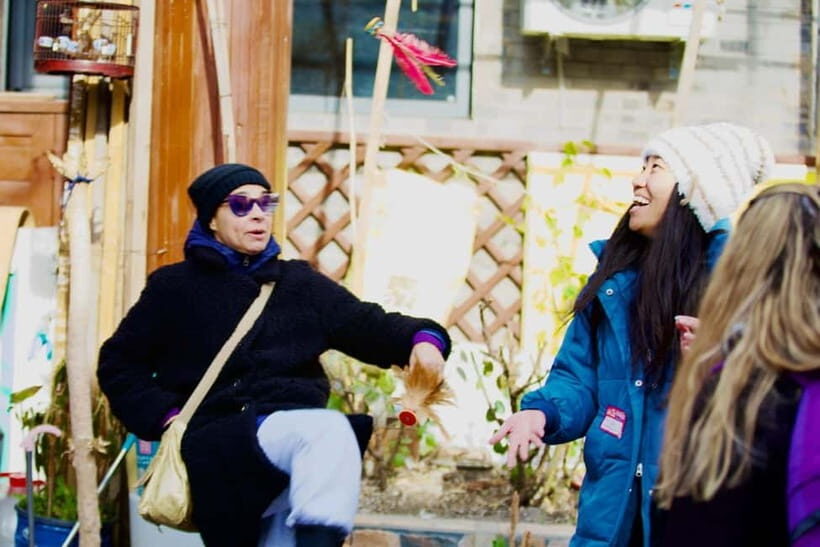
Next comes Yangmeizhu Byway (about 30 minutes). This is a good segment for people who like atmosphere. You’ll get a sense of what a neighborhood corridor looks and feels like when it’s used daily, not just visited.
Along the route, the tour includes a snack break with local street food and drinks. That’s a smart inclusion because Hutongs are walk-heavy, and your energy matters more than squeezing one more stop onto your plan.
You’ll also encounter things like a local antique shopping street. It’s not about buying. It’s about seeing how old Beijing commerce used to run and how it still surfaces in small pockets.
Daguanlou Cinema: the birthplace angle and a different kind of Beijing history
The tour then heads to Daguanlou Cinema (about 20 minutes). One of the stated highlights is the Birthplace of Chinese Cinema, and that gives this stop a stronger meaning than another doorway view.
Cinema is a nice pivot because it connects culture to technology and public life. After walking residential lanes and courtyard spaces, stepping into a historic film-related site shifts you toward Beijing’s modern cultural identity.
This stop is also short enough to stay energetic. You don’t get stuck in one place waiting; you get a clear dose of context and then keep moving.
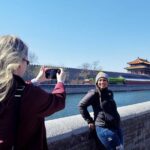

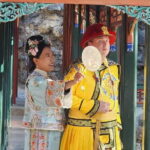



Dashilan residential district and Qianmen Street: the city’s edges meet downtown
After Daguanlou, you’ll walk through the Dashilan Residential District (about 30 minutes). This segment helps explain how neighborhoods functioned beyond tourist landmarks—residential patterns, everyday movement, and the blend of old structures with newer pressures.
Then you hit Qianmen Street (about 40 minutes). Qianmen is one of the best-known downtown walk zones because it sits at the junction of old and new Beijing, where heritage cues are easier to spot and streets feel more public.
You’ll also see the area around Zhengyang Gate & the Arrow Tower, plus you get a view from outside of Tiananmen Square. The value here is scale and orientation. Even without going deep into restricted areas, it helps you connect the Hutongs you walked earlier with the capital’s political center.
If you’re short on time in Beijing, this is a practical payoff: you get both the neighborhood story and the big-sight context in a single half-day.
The calligraphy studio surprise: create, learn, and take it home
The tour’s standout interactive moment is the local calligraphy experience (a special stop designed for you to create artwork). The promise here is simple: you create your own Chinese calligraphy artwork and take it home as a lasting memory, and it’s described as free to take home.
Calligraphy works especially well on this kind of itinerary. After walking through carved stone, old walls, courtyard layouts, and historic streets, you’re ready for a cultural form that turns history into something you can hold.
What to do mentally: treat it like a mini class, not a souvenir grab. Go in with the mindset of trying, even if your strokes look awkward. The whole point is doing something cultural with your hands during your trip, while the city’s stories are still fresh.
Local guide energy: storytelling makes the walk feel personal
This tour includes a local English-speaking tour guide, plus welcome items described as welcome gifts and a China Survivial Guide. That’s useful because it signals the guide isn’t just reciting dates—they’re also helping you understand how to navigate daily life in China.
In the feedback, guides like Carrie get praise for explaining the past, present, and future planning of Hutongs. Another guide name that comes up is Shery, noted for being very friendly and clear while explaining the tour. The takeaway for you: pick a mindset that matches a conversational walk, ask questions, and you’ll get more out of the route.
Price and value: why $25 can still make sense here
$25 for 3.5 hours is not “cheap,” and one review note in particular calls out that the platform price might feel high for a route that still feels like a walking-tour style experience. I get that concern.
But here’s where the value case strengthens based on what’s included:
- You’re getting a guided route through multiple key downtown and Hutong areas
- You have snack breaks built into the walk, not a do-it-yourself scramble
- You get welcome gifts and a China Survivial Guide
- The calligraphy stop includes an artwork you take home
- There’s also a stated emphasis on a courtyard visit and local story context, which tends to be where guided experiences pay off
So the math is less about the walking itself and more about the combination: guide + multiple meaningful stops + interactive activity + snacks. If you want a self-guided loop where you only pay for subway time, this isn’t that. If you want someone to connect the dots, it’s closer to a smart value.
Who this tour fits best (and who should think twice)
This tour is a great fit if you:
- Want a first-timer Friendly Old Beijing plan that hits Hutongs and major downtown sights
- Like history, but only when it’s explained in human terms
- Enjoy practical cultural activities like calligraphy, where you leave with something real
- Prefer a structured walk that also includes street food timing
You might think twice if:
- You hate walking and would rather use taxis nonstop
- You’re traveling with very limited time and need a tighter, shorter stop list
- You’re sensitive to paying for “walking tour” formats and only feel good about tip-based models
Should you book this Hutong walking tour and calligraphy?
If you want a Beijing day that feels grounded—courtyards, narrow lanes, downtown orientation, plus an art-making memory—this is a strong choice for $25. The calligraphy session and the courtyard stop are the two moments that most likely make the experience stick, and the included snack breaks keep it from feeling like a museum marathon.
My recommendation: book it if you can comfortably walk for about 3.5 hours, and arrive on time with the yellow umbrella meeting instructions in mind. If you’re mainly after a self-paced checklist of landmarks with no story context, you may be better off doing your own route.
FAQ
How long is the Hutong walking tour and calligraphy experience?
It lasts about 3.5 hours.
What is the price per person?
The price is listed as $25 per person.
Where does the tour start?
The meeting point is Hufangqiao Metro Station (Line 7), Exit D, near the green space by the intersection.
How do I find the meeting point?
After exiting Exit D, head straight to the main road, turn right, and walk 60 meters east to the green space at the intersection. Look for the yellow umbrella.
Is the tour in English?
Yes, it’s listed as an English live tour guide.
What stops are included during the walk?
The tour includes stops such as Huguang Guild Opera Theatre, Hutongs, Yangmeizhu Byway, Daguanlou Cinema, Dashilan Residential District, and Qianmen Street.
Is there a calligraphy activity, and do I get to take something home?
Yes. There’s a calligraphy studio stop where you create your own Chinese calligraphy artwork and take it home.
Are snacks included?
Yes. The tour includes snack breaks with local street food and drinks.
What time should I arrive before the start?
You should arrive 5–10 minutes early. The guide can wait up to 20 minutes at the meeting point.
What if I need to cancel?
The tour is listed with free cancellation up to 24 hours in advance for a full refund.