REVIEW · BEIJING
Chinese Kungfu Class Beside Fobbiden City
Book on Viator →Operated by Limengrong · Bookable on Viator
Chinese Kungfu Class Beside Fobbiden City: A Practical, Sweat-Heavy Beijing Lesson
Kick back, then learn how to kick.
This is a hands-on kungfu class near the Forbidden City area, taught by a professional teacher trained since age 5. I really like the focus on self-defense instead of movie-style poses, and I also appreciate the way the instructor explains the difference between Chinese kungfu and normal boxing. One thing to plan for: it’s active, and you’ll likely sweat a lot in a one-hour session.
You meet in the Pu Du Si / Donghua Men area and spend about 1 hour practicing and getting coached by the same professional throughout. The setting is described as a historic royal inheritance crossing three dynasties and standing for 1,000 years, which gives the whole class a special sense of place (even if your focus stays on form and technique). Group size is capped at 15, which helps you actually get attention instead of just watching.
In This Review
- Key highlights at a glance
- Training Near the Forbidden City’s Royal-Style Courtyard Setting
- The One-Hour Class: How It Feels and What You’ll Do
- What Makes It Different From a Kungfu Show
- Kungfu vs. Boxing: Why the Differences Matter
- Real-Life Self-Defense Focus (Without the Fantasy)
- Training Pace, Heat, and What to Bring
- Small Group Size: Why Max 15 Helps
- Scheduling It Into Your Beijing Day
- Price and Value: Is $66 Worth It?
- Who This Class Fits Best
- Should You Book This Kungfu Class by the Forbidden City?
- FAQ
- What ticket format do I get, and when will I know it’s confirmed?
- How long is the Chinese kungfu class?
- Where is the meeting point?
- What does the $66 price include?
- Are service animals allowed, and is it easy to reach?
- How many people are in the group?
- Can I cancel for a full refund?
Key highlights at a glance
- Original kungfu over show routines
- Self-defense techniques with real-life use in mind
- A teacher trained since age 5
- Small group size (max 15) for coaching
- Expect a real workout: bring water
- Near public transportation, easy to slot into a Beijing day
Training Near the Forbidden City’s Royal-Style Courtyard Setting
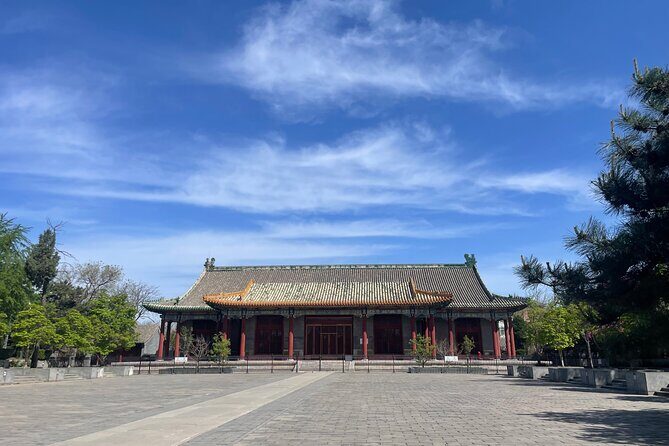
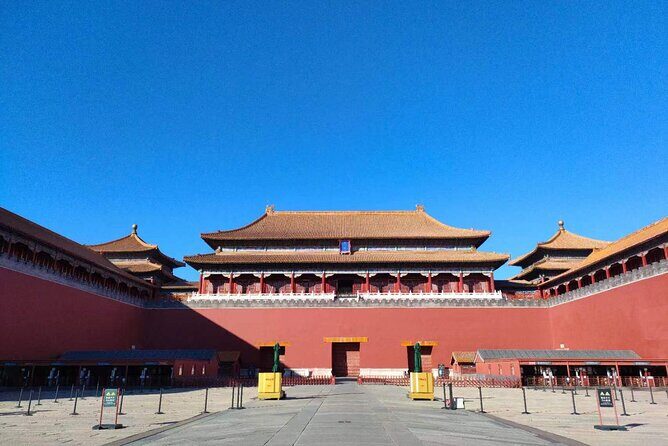
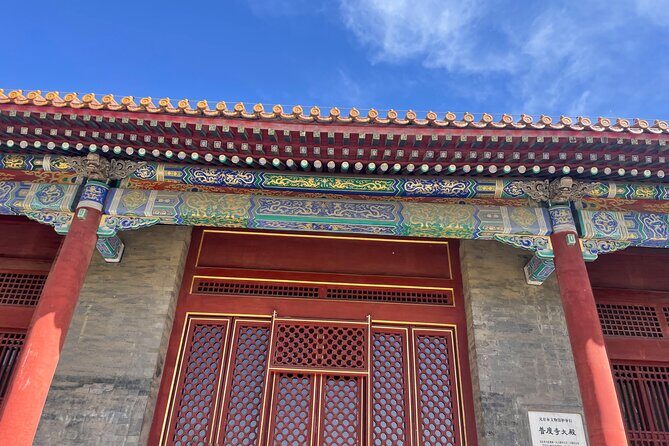
This class happens in the Beijing core, right by the Forbidden City area, at a meeting point in the Pu Du Si / Donghua Men district (the address is Pu Du Si Qian Xiang, 东华门). If you’re already in central Beijing, the biggest win is simple: you don’t have to carve out a whole half-day for “something martial arts-ish.”
What you’re doing is more interesting than just watching kungfu choreography. The pitch here is about original Chinese kungfu and how it differs from typical Western-style boxing. That matters, because most sightseeing martial arts moments are built for performance. This one is built for technique and practical application.
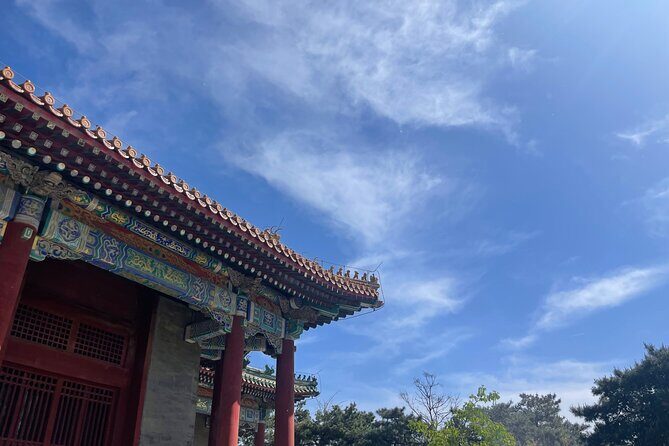
And yes, the location is described as being part of a royal inheritance area that spans “three dynasties” and has been there for 1,000 years. Even if you treat that as a story you’re stepping into rather than a fact you can measure during class, it still works as a mood-setter. You’re practicing movement right in the shadow of Beijing’s old power center, not in a gym corner.
You can also read our reviews of more city tours in Beijing
The One-Hour Class: How It Feels and What You’ll Do
The duration is about 1 hour, and that hour is the whole point. This isn’t a long workshop where you gradually learn five “cool moves” and then leave with a certificate. The class is designed to be fast-paced and instruction-led, with a professional teacher guiding you while you practice.
From the way the class is described and from what people emphasize afterward, you should expect two things to happen during that hour:
1) Concepts you can use, not just demonstrations
You’ll learn the idea behind Chinese kungfu and how it’s meant to work. The teacher specifically frames learning around real usage instead of competition rules or staged matches.
2) Technique you practice immediately
You’re not just listening. You’ll be coached on practical technique, and the goal is that you can keep practicing after you get home.
The vibe is active. One-hour classes like this are where you realize kungfu isn’t only about looking good. It’s also about conditioning, control, and staying coordinated while you’re trying to get the moves right.
What Makes It Different From a Kungfu Show
Here’s the simplest way I’d explain what you’re getting: you’re replacing a passive “performance” with an active learning session.
The class is explicitly pitched as kungfu learning rather than a movie or show. The teacher also contrasts Chinese kungfu with normal boxing, which tells you they aren’t trying to market “martial arts for tourists.” They’re trying to teach a system and its logic.
So you’re not likely to spend your time watching someone do a routine. You’re meant to get instruction and then practice. That’s a big quality-of-life upgrade when you’re on a trip. You don’t just collect photos. You collect skills.
Kungfu vs. Boxing: Why the Differences Matter
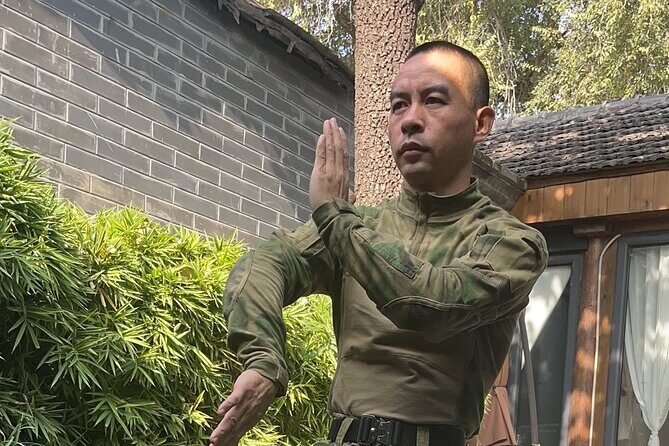
This class highlights the difference between Chinese kungfu and normal boxing, and that clue is more important than it sounds. Boxing is often taught as direct striking with a lot of emphasis on rhythm, distance, and guard. Kungfu systems can include broader movement patterns: shifts in stance, angles of attack, and coordinated use of the whole body.
In a practical class, those differences matter because they change how you respond. It’s not only about throwing punches. It’s about positioning, timing, and structure—things you can actually apply to real-life situations.
The teacher’s approach is also focused on learning usage instead of competing in contests. That usually means less emphasis on rules, points, and ring behavior, and more emphasis on how you might respond when there’s no referee. Even if you never plan to fight, you can still learn control and awareness.
Real-Life Self-Defense Focus (Without the Fantasy)
The self-defense angle here is presented as practical technique, not “hero movie” training. The goal is that you leave with the ability to practice on your own, which is a realistic target for most visitors.
Still, here’s a balanced note: no one can promise that one class makes you safe in every situation. What you can take from this kind of training is better body mechanics, awareness, and a framework for thinking about how movements connect. That’s useful even if you just apply it to confidence, fitness, and self-control.
If you’re the type of traveler who likes skills-based activities—things you can bring home—this is a strong match. It’s not “collect a souvenir.” It’s “gain something you can keep.”
You can also read our reviews of more tours and experiences in Beijing


Training Pace, Heat, and What to Bring
This is the practical part people often learn the hard way: it’s a workout. It’s one hour, and it’s focused on doing, so you should plan to sweat.
My advice is boring on purpose:
- Bring water (you’ll thank yourself halfway through).
- Wear something you can move in easily and that won’t restrict you.
- If you’re going in during warmer parts of the day, plan for the fact you’ll be working up a sweat.
Also, since coffee and/or tea aren’t included, don’t count on a mid-class drink plan. If you want something afterward, you’ll need to find it on your own nearby.
Small Group Size: Why Max 15 Helps
The class caps at 15 travelers. For a skill-based experience, that number matters. In a bigger group, you often get stuck watching from the edge and hoping your instructor notices you. With a small group, you’re more likely to get corrected and guided.
That’s especially important for kungfu, because small adjustments—stance width, arm alignment, timing—can be the difference between awkward movement and something that actually works. A professional teacher trained since age 5 can likely explain things clearly, but you still need chances to practice and be corrected.
Scheduling It Into Your Beijing Day
The activity runs daily within these opening hours: 10:00 AM to 6:00 PM, Monday through Sunday, across the date range 04/27/2024 to 11/25/2026.
In practical terms, I’d schedule this when you have a block of time where you can be a bit flexible afterward. After an hour of kungfu training, you’ll probably want downtime. Also, if you’re the type to take photos around the Forbidden City area, treat the class as a break from pure sightseeing, not something you cram between two nonstop museum marathons.
One more note on demand: the average booking window is about 103 days in advance, which suggests it’s popular enough that you shouldn’t wait until the last week if you’re traveling in peak season.
Price and Value: Is $66 Worth It?
At $66 per person for about an hour, this isn’t the cheapest way to spend money near the Forbidden City. But it can be good value if you care about instruction, not just activities.
Here’s why the price can make sense:
- You’re paying for a professional instructor and a coached, active class.
- The focus is on self-defense and practical technique, not only performance.
- The group is capped at 15, which suggests you’re not just buying a seat in a crowd.
- All fees and taxes are included, so you’re not dealing with surprise add-ons at checkout.
So the value call is simple: if you want a short fitness-and-skills session with real coaching, $66 is reasonable. If you mainly want photos or a “watch and smile” experience, you might prefer a different kind of activity.
Who This Class Fits Best
I’d point this class toward travelers who:
- Want an active, skills-based experience in Beijing
- Like practical topics over performance-only shows
- Enjoy being taught by a professional who corrects form
- Prefer small-group experiences where you get attention
- Don’t mind getting sweaty for a good story
It may feel less ideal for travelers who want a totally relaxed, low-effort activity. This is movement-heavy by design.
Should You Book This Kungfu Class by the Forbidden City?
Book it if you want something memorable that isn’t just another photo stop. The big selling point is the professional coaching and the promise of practical self-defense technique rather than staged routines. If you’re curious about how Chinese kungfu is different from common boxing and you like learning something you can keep practicing, this class fits that mindset.
Skip it if you’re expecting a casual sightseeing walk-through. This is an hour of doing, sweating, and learning fast enough that your body will remember the session.
If you do book, go in ready to practice. Bring water. Wear comfortable clothes. Then treat the class like a short reset in the middle of Beijing sightseeing: you’ll leave with technique and confidence, not just a new hat.
FAQ
What ticket format do I get, and when will I know it’s confirmed?
You’ll receive a mobile ticket, and confirmation is received at the time of booking.
How long is the Chinese kungfu class?
The class lasts about 1 hour.
Where is the meeting point?
The meeting point is PudusiChina, Bei Jing Shi, Dong Cheng Qu, Pu Du Si Qian Xiang, 东华门 邮政编码: 100006.
What does the $66 price include?
The price includes all fees and taxes. Coffee and/or tea are not included.
Are service animals allowed, and is it easy to reach?
Service animals are allowed, and the meeting area is near public transportation.
How many people are in the group?
The class has a maximum of 15 travelers.
Can I cancel for a full refund?
Yes. You can cancel for a full refund if you cancel at least 24 hours before the experience starts. If you cancel less than 24 hours before, it isn’t refunded.