REVIEW · BEIJING
Private Great Wall Hiking Tour: Across The Border of 3 China Provinces
Book on Viator →Operated by Greatwall Trekclub · Bookable on Viator
Sanjiebei feels quietly ancient. This private Great Wall hike follows an unrestored stretch near Jiangjunguan, with a day that connects Beijing with the border areas of Hebei and Tianjin, so you get history without the usual crowd crush. I especially love the chance to see how older layers of the wall survive in the terrain, and I’m a big fan of the homemade lunch in a tiny mountain village after the hike.
The downside is simple: you’re signing up for a real trek, not a stroller stroll. Expect about 3–4 hours of hiking on uneven paths, and come ready with proper footwear and layers.
In This Review
- Key Things to Know Before You Go
- Why This Great Wall Hike Feels Different Than the Big Bus Tours
- The Morning Drive: 8:00 Departure and Scenic Route Choice
- Jiangjunguan to San Jie Bei: The Real Climb and the Big Feeling at the Top
- What makes this route special?
- Crossing Three Provinces in One Day: How the Route Gives Meaning
- The Unrestored Section Factor: Fewer Crowds, More Steps, Real Terrain
- Lunch in a Mountain Village: Why This Stop Matters
- Private Guide and Door-to-Door Transfers: Comfort With a Purpose
- Price and Value: What You Get for $198 Per Person
- Weather, Footwear, and Pace: How to Prepare Smart
- Should You Book This Private Sanjiebei Great Wall Tour?
- FAQ
- What time does the tour start?
- How long is the tour?
- How long is the hiking portion?
- Is this tour private?
- What’s included in the price?
- Is there a vegetarian lunch option?
- Does the tour run in bad weather?
- What should I wear?
- Do I need a ticket?
- What is the cancellation policy?
Key Things to Know Before You Go
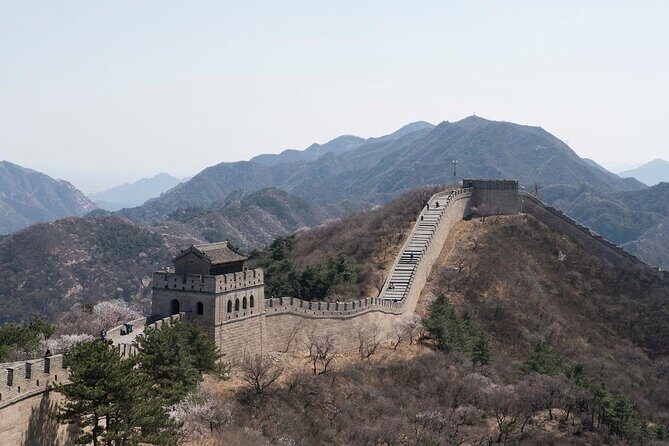
- A rarely visited wall section: you’re aiming for an older, less tour-busy stretch rather than the busiest showpiece sections
- Three provincial themes in one day: Beijing, Hebei, and Tianjin show up in the route and the wall’s “boundary” identity
- North Qi history you can actually see: parts of the structure build on older foundations and survive with an original feel
- Sanjiebei’s “three boundary tablets”: a high point that gives the day its name and meaning
- A village meal after the climb: homemade food is part of the experience, not an afterthought
- Private, door-to-door comfort: your group size is small and your schedule is guided, with hotel pickup included
Why This Great Wall Hike Feels Different Than the Big Bus Tours
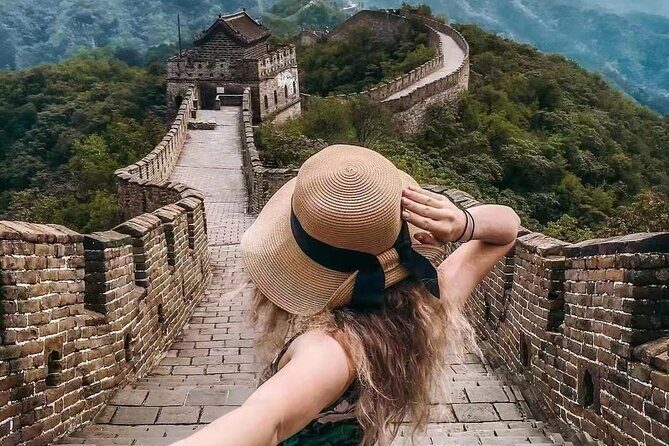
Most Great Wall days in Beijing boil down to: ride up, snap pics, walk a short section, repeat. This one is built around the opposite vibe. You’re headed to a stretch people often skip because it’s not as standardized or heavily promoted. That means you get more of the wall’s “worked into the mountains” character and less of the ticket-line energy.
I like that the day isn’t just about climbing stairs. You’re also looking at how the Great Wall changes over time. The route is designed to bring you in front of a section tied to older foundations, including mentions of North Qi-era history (dating back to the mid–1st millennium). You don’t need to be a wall scholar to appreciate that age—your feet feel it on the uneven steps and your eyes notice the patchwork of old and rebuilt areas.
And then there’s the payoff: after your hike, you end up in a small mountain village for a homemade lunch. It’s the kind of meal that turns a photo day into a real human day.
You can also read our reviews of more private tours in Beijing
The Morning Drive: 8:00 Departure and Scenic Route Choice
Your day starts with a hotel pickup at 8:00 am. The tour is priced as a private experience, with door-to-door round-trip transfers and guiding, and that matters because timing on the Great Wall can make or break your mood.
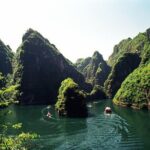
On the way out, you’ll travel via Jinhai Lake and Yangzhuang Reservoir before the wall comes into view. That detail isn’t just scenery filler. It sets expectations: this isn’t a five-minute hop to a roadside walkway. You’re getting an actual out-of-town day, which also helps you feel like you’re leaving the city behind.
It’s also why you should plan to bring what you need for the morning ride. The experience includes an air-conditioned vehicle, bottled water, and entrance fees, but you still want layers. Mountain weather around Beijing can shift, and the tour runs in all weather conditions.
Jiangjunguan to San Jie Bei: The Real Climb and the Big Feeling at the Top
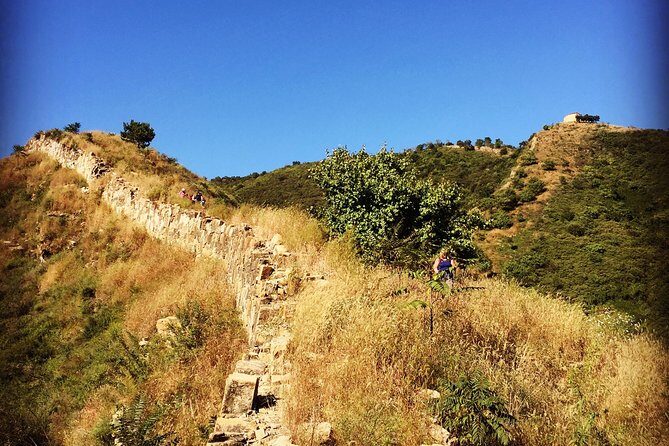
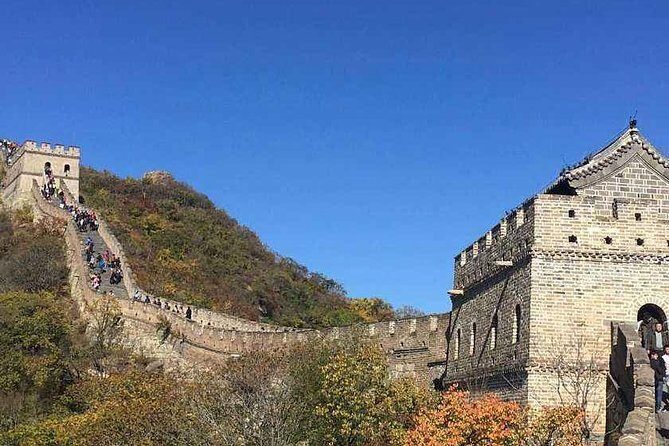
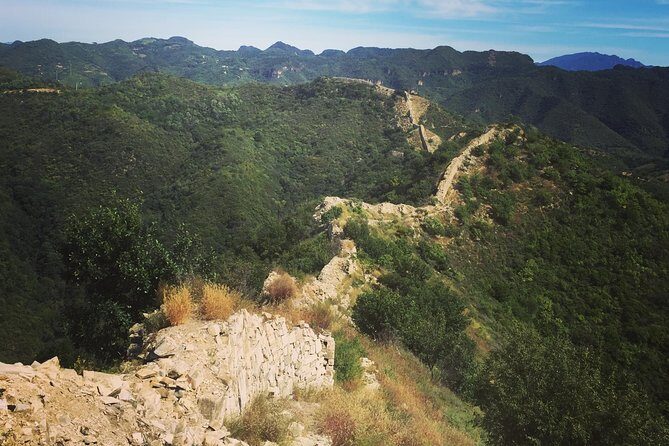
Once you arrive, the hiking starts after a short push—about 10 minutes up a mountain path—before you’re beside the original wall. This section is a key selling point: you’re not just viewing the wall from a platform. You can get close enough to see the texture and feel what it means to have a structure built for defense first, tourism second.
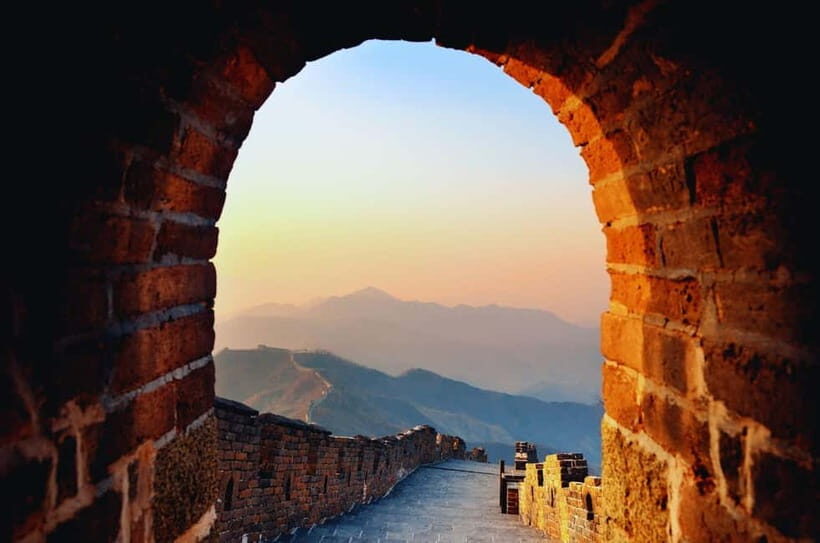
From there, you’re moving at a human pace for roughly 3–4 hours total hiking. The day’s main turning point comes when you reach the highest point of the section at Sanjiebei, literally tied to the idea of “three boundary tablets.” It’s a memorable name and a meaningful one: boundary points were where control and geography met, and this stretch carries that identity in its wayfinding.
A nice detail: after the highest point, there’s still walking left—about 20 minutes—before the mountain village appears. That sequence helps keep the day balanced. You get effort, you get payoff at the top, and then you get into a calmer rhythm as you move toward lunch.
What makes this route special?
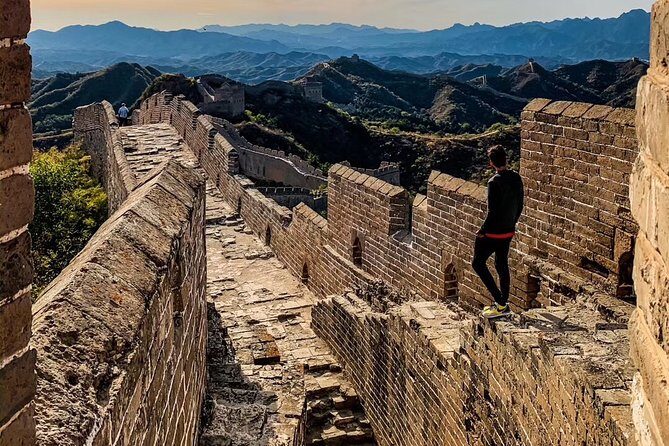
This is the kind of segment that rewards slow looking. The wall’s condition and style can change as you go. You’ll notice it more because the section is described as less restored and more “wild,” so it doesn’t feel like every step was built for mass movement.
Crossing Three Provinces in One Day: How the Route Gives Meaning
The tour is framed as an “across the border of 3 China provinces” experience, and that theme isn’t just marketing. The Great Wall in this region sits near administrative boundaries, and the day’s route ties into that idea.
You’ll see the day anchored in Beijing at pickup and return, while the hiking section and historic framing connect to areas under the administration of Hebei, and the border-region identity that also touches Tianjin in the tour’s concept. In other words, you’re not just walking along a wall segment—you’re moving through the geographic story of how people historically used this line to manage territory.
If you like history that has a physical shape—hills, chokepoints, visibility—you’ll enjoy this part. It’s not an abstract lesson. You’re on the ground where the boundary logic mattered.
You can also read our reviews of more hiking tours in Beijing
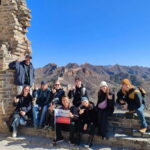
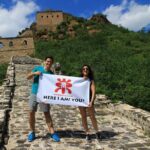
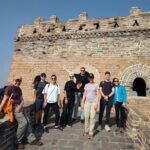

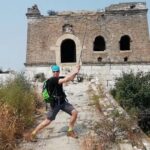
The Unrestored Section Factor: Fewer Crowds, More Steps, Real Terrain
One of the most praised aspects of this tour is the feeling of walking where fewer people go. The wall segment is described as ancient and unrestored, which usually means two things for your day:
First, it’s quieter. You’re not surrounded by constant tour-group noise. Some of the experience’s reviews emphasize a calm pace and long stretches with no other hikers until later in the day.
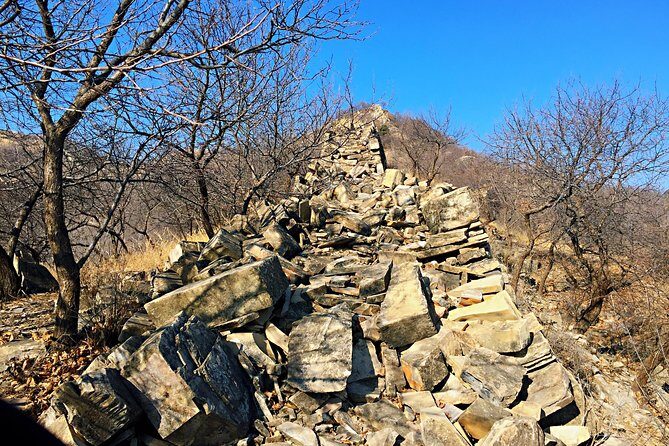
Second, it’s less uniform. You’re more likely to step on uneven stones and rougher surfaces than on the most polished, heavily restored sections. That’s why the tour specifically asks for comfortable hiking shoes and a moderate physical fitness level.
This is still doable for many people, especially with a private guide to help set pace and answer questions. Just don’t treat it like a flat-city walk.
Lunch in a Mountain Village: Why This Stop Matters
A lot of Great Wall itineraries toss in a meal that feels like a stop on the way to something else. Here, the village lunch is part of the day’s arc.
After hiking up to the top point, you’ll walk about 20 minutes into a small mountain village, where you can try traditional homemade delicacies. The tour includes lunch, and vegetarian options are available if you tell them in advance.
I like this structure because it gives your body closure. You don’t have to sprint from viewpoint to viewpoint after exertion. You also get a sense of place. Even if you don’t speak the language, the meal helps you connect to why locals still live with the wall as part of their environment—not just as a background photo spot.
Private Guide and Door-to-Door Transfers: Comfort With a Purpose
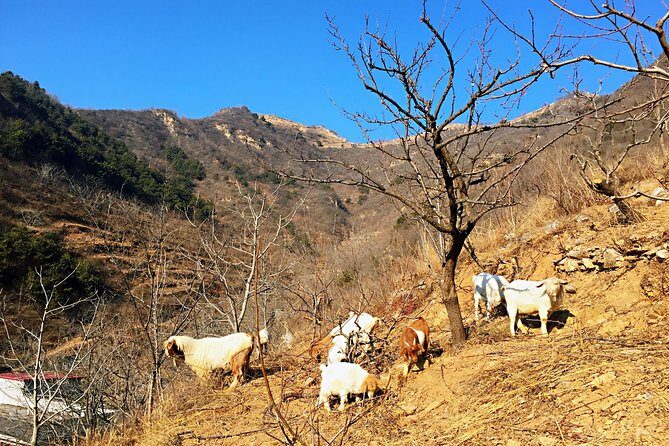
This is a private tour, meaning it’s just your group. That changes everything about the experience. You can ask questions without feeling like you’re holding up a busload. Your guide can also help if someone in your group is unsure about climbing higher sections.
The guiding quality stands out in real-world feedback. Guides such as Peter and Jason are praised for being kind, helpful, and clear about the wall’s background. One review mentioned a guide stepping in to support a child who was scared to climb by herself. That’s the kind of detail that signals this tour is run with people in mind—not just a checklist.
Because transfers are door-to-door, you avoid the friction that often ruins Great Wall mornings: confusing meeting points, waiting in the wrong place, and scrambling for taxis. Your schedule has a clear start at 8:00 am, and you’re back in downtown Beijing at the end.
Price and Value: What You Get for $198 Per Person
At $198 per person, this isn’t a “cheap day trip.” But it also isn’t overpriced for what you’re getting: a private guiding experience, bottled water, lunch, entrance fees, and air-conditioned vehicle support.
The value comes from three places:
- Time efficiency: hotel pickup and return means you spend your energy on the hike, not logistics
- Quality of access: a private guide matters more on an unrestored, less standardized section where questions and footing both count
- A full experience arc: hike plus village lunch gives you a complete day, not a short “see it and leave” loop
If your priority is peace, history you can physically walk through, and a small-group feel, the price starts to make sense quickly.
If your goal is only a quick photo stop with minimal effort, you may decide this is more hike than you need.
Weather, Footwear, and Pace: How to Prepare Smart
The tour operates in all weather conditions, so you should dress like the mountain could change its mind. Wear comfortable hiking shoes (not just sneakers with thin soles). Bring layers you can add or remove as the day warms up.
Because the hike is 3–4 hours, plan for some continuous walking on uneven terrain. This is why “moderate fitness” is part of the requirements. You don’t need to be an athlete, but you should feel comfortable hiking at an active pace for half a day.
Also, pack like you’ll be out and moving for a while. The tour includes bottled water, so you don’t need to carry everything, but you should still have a small day bag with essentials.
Should You Book This Private Sanjiebei Great Wall Tour?
Book it if you want:
- A less crowded Great Wall experience with a quieter feel
- An unrestored, more original style of wall walking
- A day that includes homemade village lunch, not just sights
- A guide who can explain history in a way that keeps the pace human (and who’s been praised for kindness and help, including support for anxious hikers)
Skip it if:
- You want only easy, flat walking or minimal climbing
- You prefer the most restored, heavily signposted wall sections and don’t want to deal with rougher terrain
- Your group can’t comfortably manage about 3–4 hours of hiking
If your plan is to see the Great Wall and actually feel the difference between a main-stage section and a more local, older-feeling one, this tour fits the bill.
FAQ
What time does the tour start?
It starts at 8:00 am, with hotel pickup.
How long is the tour?
The duration is about 9 hours.
How long is the hiking portion?
The hiking time is about 3–4 hours.
Is this tour private?
Yes. It’s a private tour/activity, and only your group participates.
What’s included in the price?
The tour includes bottled water, lunch, entrance fees, and an air-conditioned vehicle.
Is there a vegetarian lunch option?
Yes. A vegetarian option is available if you advise at the time of booking.
Does the tour run in bad weather?
Yes. It operates in all weather conditions, so you should dress appropriately.
What should I wear?
Wear comfortable hiking shoes.
Do I need a ticket?
A mobile ticket is provided.
What is the cancellation policy?
You can cancel for a full refund up to 24 hours before the experience’s start time.