REVIEW · BEIJING
In-depth Forbidden City tour with Royal Icehouse Lunch
Book on Viator →Operated by Wikibeijing · Bookable on Viator
Great city, better guided.
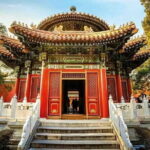
This private Forbidden City tour turns a famous must-see into a walk you can actually follow, with guides like Selina and Helen Zhang bringing context to the halls, screens, and courtyards. I especially like the included Royal Icehouse lunch, served in a former imperial setting, plus the chance to go past the usual highlights into places such as the Imperial Library and the Treasure Rooms (Antiquarium). The result feels thoughtful, not rushed, even when you’re trying to see a lot.
One thing to plan for: you’ll spend about 6 hours on your feet, and the activity lists moderate physical fitness as a requirement. If your group has mobility issues, tell the operator up front so your pace can be adjusted.
In This Review
- Key Things to Love on This Forbidden City + Icehouse Lunch Tour
- Forbidden City, But With a Real Game Plan
- Hotel Pickup and a 6-Hour Window That Actually Feels Doable
- Royal Icehouse Lunch: A Meal in a Former Imperial Setting
- The Route Starts at the Southern Gate and Moves Into Ceremony
- What you’ll likely appreciate here
- Banquets and Imperial Examinations: The Power of Paperwork
- Inner-Court Life: Daily Affairs, Emperor and Empress Spaces
- Imperial Library and Treasure Rooms (Antiquarium): Where Stories Are Stored
- Nine-Dragon Screen and the Palace Garden: Symbolism in Stone and Layout
- Walking Pace, Comfort Tips, and Who This Tour Fits Best
- Price and Value: Why $150 Can Make Sense Here
- Should You Book This Forbidden City + Royal Icehouse Tour?
- FAQ
- What’s included with the $150 per person price?
- How long is the Forbidden City tour?
- Do you get hotel pickup and drop-off?
- Is this a private tour?
- What time does the tour start?
- Do I need to provide passport details?
- Is free cancellation available?
Key Things to Love on This Forbidden City + Icehouse Lunch Tour
- Hotel pickup and drop-off so you spend less time wrangling transport
- Royal Icehouse lunch included, in a palace-linked setting instead of an afterthought meal
- In-depth access that goes beyond the biggest photo spots into the Imperial Library and Treasure Rooms
- Ceremony-focused route, including the palace spaces tied to governance, banquets, and examinations
- Nine-Dragon Screen and palace-garden details, including the four-seasons symbolism
Forbidden City, But With a Real Game Plan
The Forbidden City is huge, and left to your own devices it’s easy to end up with a muddled scrapbook: a few great views, a few big names, then you’re tired and not sure what you just saw.
What changes with a private setup is the flow. You’re not just moving from one must-do to the next—you’re guided through what each space was for, how the palace was laid out, and why certain buildings matter. That matters here, because the tour doesn’t only orbit the main axes and signature halls. It also includes corners of the palace world where you’re meant to slow down and understand how power worked in daily life and public ceremony.
You’ll start early (meeting at 7:30 am) and spend the morning and early afternoon covering major palace zones. In practice, the early start helps you feel less like you’re fighting the crowd and more like you’re working your way through an orderly plan.
You can also read our reviews of more city tours in Beijing
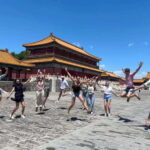
Hotel Pickup and a 6-Hour Window That Actually Feels Doable
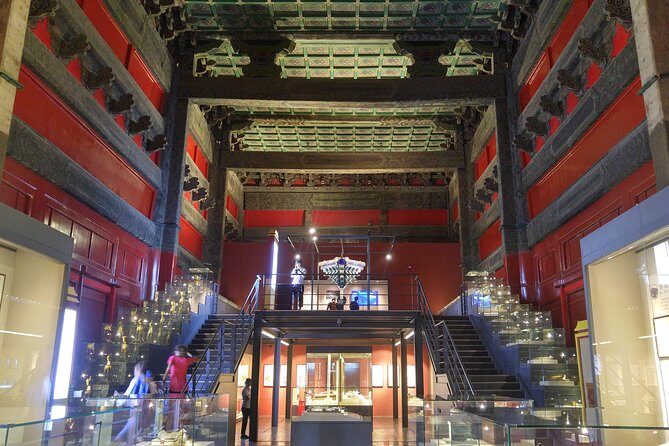
This is the kind of tour that’s easier to do than to explain. Free pickup and drop-off removes one of the biggest stress points in Beijing sightseeing. You don’t have to figure out taxis, where to meet, or how to time your return to the hotel.
The total time is listed at about 6 hours, with entrance included and lunch in the middle. That duration is a sweet spot for the Forbidden City. You’re given enough time to see more than the headline buildings, but you’re not signing up for an all-day marathon that forces you into “see everything, understand nothing” mode.
One small practical note: because the schedule packs in a lot, plan your morning like you would for a long museum day—comfortable shoes, water, and a jacket if the air feels cool early on.
Royal Icehouse Lunch: A Meal in a Former Imperial Setting
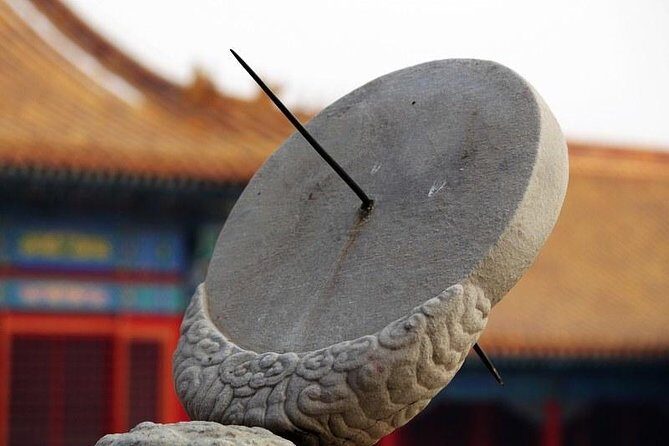
The lunch is one of the biggest reasons to choose this tour. Instead of treating food as a detour, the plan bakes it into the palace story.
You’ll have lunch at a former Icehouse, described as one of the Imperial Ice Houses inside the Forbidden City area. Even if you’re not a history-nerd, that setting changes how the meal feels. It’s not just “food near a landmark.” It’s a break inside the imperial environment, which makes the afternoon sightseeing feel connected rather than stitched together.
In the reviews, people call out lunch as a rare chance—something you’d be unlikely to line up on your own. One traveler also noted it was a nice pause from heat, which is a very real Forbidden City factor. If you’re visiting in warmer months, that built-in break is worth its weight in cooling relief.
The Route Starts at the Southern Gate and Moves Into Ceremony
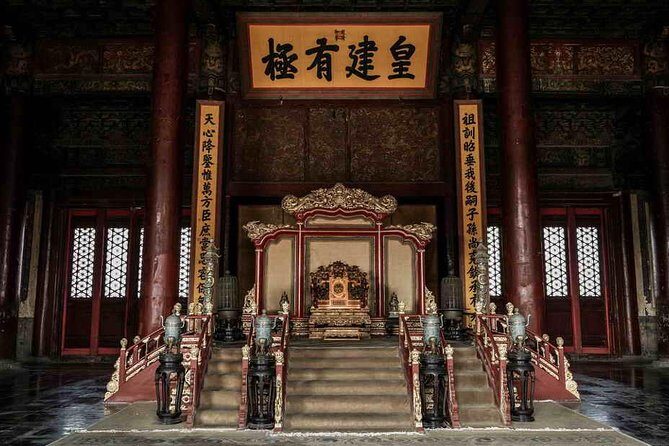
Your tour begins with the Forbidden City’s core palace world—starting where the emperor’s beliefs and symbolism were tied to the layout.
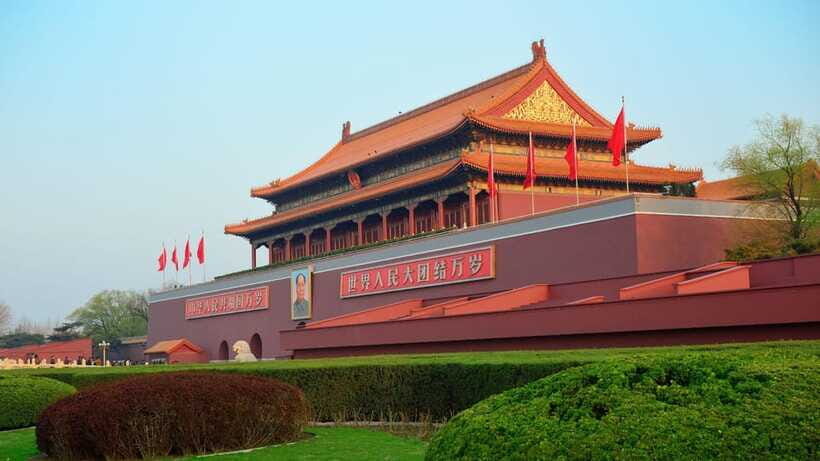
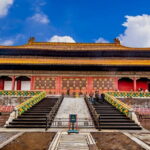
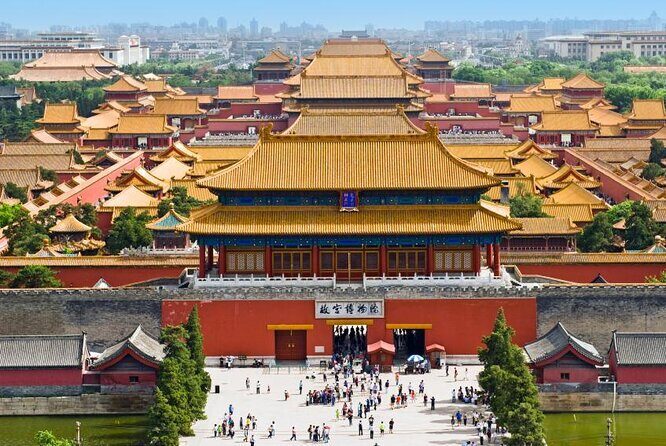
One stop covers the south gate and main entrance, including the idea that the emperor believed the Meridian Line passed right through it. That’s a small detail, but it’s exactly the kind of context that makes a landmark feel purposeful instead of random. You start to notice the geometry of the place: how doors, lines, and axes were used to express order.
Then you move into the most important building in the palace complex, described as the largest wooden structure in the world. The point of this part of the tour isn’t just architecture spotting. You’re guided through how the emperor used the space for work and major ceremonies.
If you like learning by function—what happened there, who used it, and what it signaled—this is where the tour starts paying off. It’s also where you’ll feel why the Forbidden City’s design is so different from other imperial sites. It’s less about variety of scenery and more about formal rules made visible.
What you’ll likely appreciate here
- How the palace “reads” if you understand who used which space
- A guided order that keeps you from skipping key buildings by accident
- Explanations that connect the buildings to daily governance and public rituals
You can also read our reviews of more tours and experiences in Beijing



Banquets and Imperial Examinations: The Power of Paperwork
One of the stops shifts from ceremony to the systems that ran the empire. You visit the hall used for banquets and later for imperial examinations, where the exam was supervised by the emperor and tested classical and Confucian literature.
This is a great moment for anyone who thinks the Forbidden City is only about thrones and costumes. It’s also a place tied to administration, evaluation, and the machinery of state. Seeing it explained this way makes the palace feel less like a relic and more like a workplace—especially when the guide connects the building’s role to the ideas behind the exam system.
If you’re traveling with teens or kids, this topic can land well because it’s easy to grasp: the emperor supervising tests for positions in government. Even if the details are ancient, the concept isn’t.
Inner-Court Life: Daily Affairs, Emperor and Empress Spaces
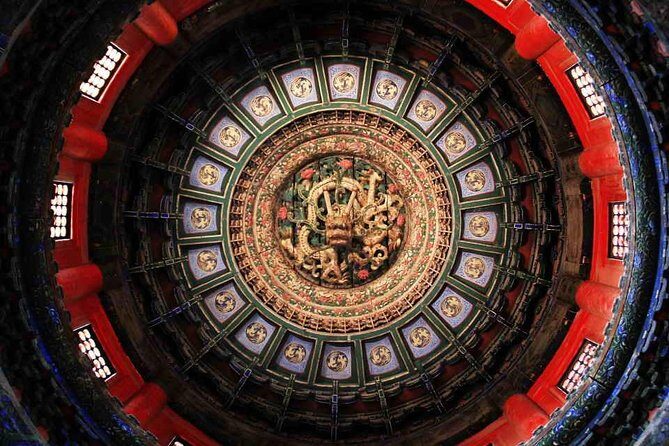
Next, you move into spaces tied to the emperor’s daily routine and domestic imperial life. The itinerary includes a stop described as the place where the emperor handled daily affairs, plus living quarters for the emperor, empress, and imperial concubines.
This is another spot where a good guide matters. Without guidance, you might just see rooms and corridors. With it, you get a sense of hierarchy and privacy—how the palace separated public ceremony from private life.
Another stop focuses on the largest building in the Inner Court, described as the residence of the emperor. The meaning of that description is bigger than it sounds. Inner Court spaces aren’t just “inside the palace.” They’re about intimacy, control, and the center of imperial presence.
If you’re trying to understand why the Forbidden City feels both grand and oddly structured, this is where it clicks.
Imperial Library and Treasure Rooms (Antiquarium): Where Stories Are Stored
Most first-time Forbidden City visits focus on the biggest halls. This tour adds a layer that feels more rewarding for many visitors: learning about the collection and the knowledge side of the palace.
You’ll have access to the Imperial Library and the Treasure Rooms, also referred to as the Antiquarium. The Treasure Hall is described as being built for the abdicated Emperor Qianlong, and the buildings within are used as exhibition rooms with themed halls. This is where you start shifting from “touring architecture” to “viewing the ideas and objects behind it.”
It’s also a smart choice if you’ve got museum instincts. You get a chance to connect physical artifacts to the administrative and ceremonial worlds you’ve been walking through all morning.
One practical benefit: these indoor or gallery-style stops can act as a mental reset. When you’re walking and reading signs for hours, having a portion of the tour that feels like a museum exhibition helps you keep your attention.
Nine-Dragon Screen and the Palace Garden: Symbolism in Stone and Layout
Right near the Treasure Hall, you visit one of the Nine Dragon Screens. The tour description notes that there are three Nine Dragon Screens in China, and this one is part of the set. It also includes a detail that the nine dragons engraved on the screen have different colors.
Even if you don’t think too hard about dragon symbolism, these screens are a visual language. A guide can point out why they were placed where they were and how they fit the palace’s “ordered power” system. It turns the screen from a photo stop into a message you’re learning to read.
Then you move into a garden described as rectangular, containing more than 20 types of buildings, pavilions, terraces, towers, and rockeries. The tour also notes four pavilions symbolizing the four seasons.
That four-seasons structure is the kind of detail that makes a palace garden feel intentional instead of decorative. You’ll likely notice how the layout supports strolling and viewing. It’s a change in pace from the ceremonial halls, and that balance is part of why this tour feels more satisfying than a rush through only the biggest structures.
Walking Pace, Comfort Tips, and Who This Tour Fits Best
This is a moderate-activity tour. It’s listed with moderate physical fitness as the expectation, and the itinerary is packed enough that you should assume sustained walking and stair-and-corridor navigation.
Here’s how I’d prepare:
- Wear comfortable, supportive shoes with good traction.
- Bring water and a light layer you can adjust as you move between open courtyards and indoor galleries.
- If you’re with someone elderly or with limited mobility, this is one of the situations where a private guide is worth it. The reviews include examples of guides pacing patiently for guests who needed more attention.
In other words, this tour is ideal if you want structure, context, and a guide who can keep the day smooth even when your group doesn’t move like a metronome.
Price and Value: Why $150 Can Make Sense Here
At $150 per person, you might wonder if it’s worth it versus buying a standard ticket and hiring a cheaper guide outside the park system.
For this tour, the value case is clear on paper:
- It’s a private tour, not a shared bus ride with a megaphone.
- It includes all entrance fees (so you don’t have to piece together ticket costs).
- Lunch at the former Icehouse is included.
- Free hotel pickup and drop-off is included.
- You also get access beyond the very most basic highlights, including the Imperial Library and Treasure Rooms (Antiquarium).
Private tours often cost more because you’re paying for time and attention. Here, a lot of that attention is focused on translating the palace layout into something you can understand. When you’re visiting a complex site like this, that explanation is the difference between “I went” and “I got it.”
Also, booking timing matters. The experience notes an average booking window of 49 days in advance, which suggests this schedule is popular. If your dates are fixed, it’s smart to lock it in early so you don’t end up settling for a worse time slot.
Should You Book This Forbidden City + Royal Icehouse Tour?
Book it if:
- You want a private guide who can keep you moving in the right order and explain what you’re seeing.
- You care about understanding the Forbidden City’s function—ceremony, governance, examinations, and daily life—not just its look.
- Lunch inside a former imperial icehouse matters to you. It’s a memorable break, not an afterthought.
- You appreciate the added stops like the Imperial Library and Treasure Rooms (Antiquarium) rather than only the big open halls.
Skip it (or consider another option) if:
- You hate long walks and would rather do a shorter, more relaxed selection of palace areas.
- Your group wants total freedom to wander slowly without a planned route.
If your goal is to leave the Forbidden City feeling like you actually understood the place, this is the kind of tour that can make that happen—especially with lunch placed right in the experience.
FAQ
What’s included with the $150 per person price?
The tour includes entrance fees and lunch at the former Icehouse. It also includes a private guided experience and free hotel pickup and drop-off.
How long is the Forbidden City tour?
It runs for about 6 hours.
Do you get hotel pickup and drop-off?
Yes. Free hotel pickup and drop-off are included for convenience.
Is this a private tour?
Yes. It’s a private tour/activity, meaning only your group participates.
What time does the tour start?
The start time is listed as 7:30 am.
Do I need to provide passport details?
Yes. The passport name and number are required at the time of booking for all participants.
Is free cancellation available?
Yes. You can cancel for a full refund up to 24 hours before the experience’s start time.