REVIEW · BEIJING
Beijing:Drum and Bell Towers Entry Ticket- Cultural Treasure
Book on GetYourGuide →Operated by Hua Hua Explore China · Bookable on GetYourGuide
You can hear history in these towers. Beijing’s Drum and Bell Towers sit on the northern end of the city’s central axis and were built as the capital’s time-telling hub for centuries.
What makes this visit especially interesting is that it is not just scenery. The complex was used to mark the rhythm of the day—a dusk drum and a morning bell—and the towers themselves reflect how the city planned time and order.
I like that your entry is handled with e-tickets plus a ready-made English guide, so you can move at your speed. I also love the specific design details here, like the bell tower sitting slightly north of the drum tower, and the fact that the famous bell was cast in the Yongle era. The only drawback to plan around is physical: the towers involve steep, long stairs, and that can be a problem if you have limited mobility.
In This Review
- Key things to know before you go
- Why Beijing’s Drum and Bell Towers Still Tell Time
- Ticket Value: What You Get for $13 and What You Don’t
- The Arrival Plan: Passport Names, e-Tickets, and Fast Entry
- Bell Tower in Practice: The 63-Ton Yongle Bell Moment
- Drum Tower in Practice: From 25 Drums to Dusk Beats
- Use the English Guide Like a Pro (No Live Guide Needed)
- Pairing the Towers with Nearby Hutongs and Local Food
- How Long Is 2 Hours, Really?
- Who This Ticket Suits Best (and Who Should Rethink It)
- Should You Book This Ticket for Your Beijing Stop?
- FAQ
- What is included with the ticket?
- Do I get a live tour guide or an audio guide?
- How do I use the ticket at the towers?
- What details do I need to provide when booking?
- How far in advance are tickets reserved?
- How long is the visit?
- What language is the guide?
- What do I need to bring to enter?
- Can I cancel if my plans change?
Key things to know before you go

- Skip queues with e-tickets you enter directly with at the towers
- Self-guided with an English textual and visual guide (no live or audio guide included)
- Yongle-era bell weighs 63 tons, often called the King of Ancient Bells
- The towers formed a time system across Yuan, Ming, and Qing dynasties
- The complex covers 12,597 square meters and is protected as a historic site
- It’s paired well with nearby hutongs, especially if you use the guide’s added area notes
Why Beijing’s Drum and Bell Towers Still Tell Time
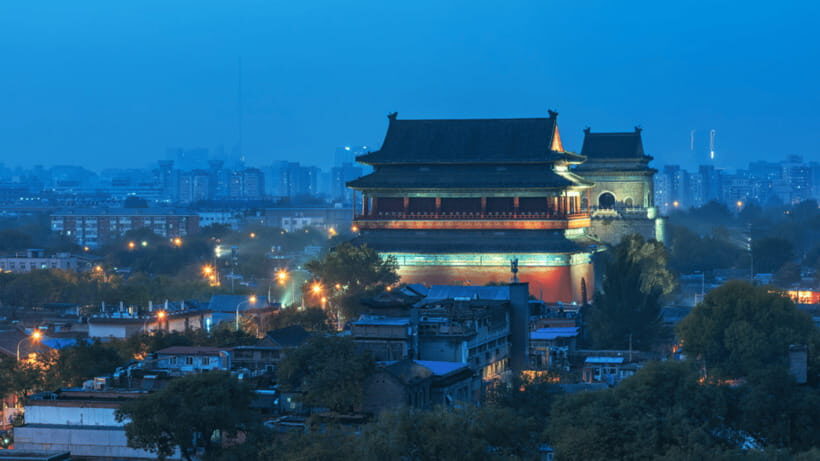
Even if you never study Chinese history in detail, you’ll feel the logic of these towers the moment you understand their job. These weren’t just towers for views. They were the city’s public clock system, built for the kind of daily routine an old capital needed.
The Drum and Bell Towers originally date to the Yuan Dynasty (1206–1368). From there, the function and importance carried through the Ming (1368–1644) and Qing (1644–1911) periods. In other words, multiple dynasties kept relying on this pair of buildings as the place where time was announced—dusk drum, morning bell.
What’s cool is how the pair works together in layout. The bell tower is slightly north of the drum tower, and the complex sits right by Beijing’s central axis. So when you visit, you’re stepping into a plan that was meant to run the city on schedule—not random, not decorative.
You can also read our reviews of more tours and experiences in Beijing



Ticket Value: What You Get for $13 and What You Don’t
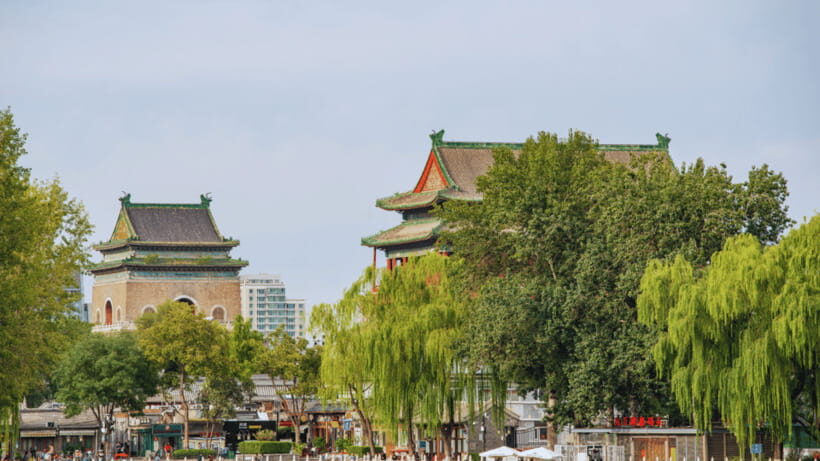
At about $13 per person for a 2-hour visit, the big question is whether you want convenience and context—or just the bare entry.
Here’s what’s included:
- A ticket for Bell Tower
- A ticket for Drum Tower
- An English textual and visual guide to help you interpret what you’re seeing
What’s not included:
- No live tour guide
- No audio guide
That’s a good match for people who like to wander and read at their own pace. You get help understanding what matters, without paying for a group guide to herd you through.
Now for the balanced reality check: one booking experience flagged that the online price felt high compared to what they would have paid on-site. I can’t tell you the on-the-spot price from the information provided here, but I can say this: if you’re comfortable waiting in lines and you mainly want photos, you might feel the cost more. If you’re traveling at a busy time, the “pre-book to avoid queues” part can be worth it.
The Arrival Plan: Passport Names, e-Tickets, and Fast Entry

This is a straightforward, self-guided setup, and it starts with your details. After you order, you’re asked for your passport name, passport number, and date of birth. Then the reservation is made 3 days prior to your visit.
If the reservation is successful, you receive e-tickets by email or WhatsApp. The key point is that you can enter directly using the e-tickets you’re sent—no paper ticket needed.
Before you go, plan around one practical requirement: bring your passport or ID card. These towers are strict about identity checks, and you don’t want to waste time searching for a document at the last second.
You also get the advantage of skipping the ticket line. In practice, that means less time waiting and more time climbing, looking, and reading. And since your booked duration is 2 hours, it helps to have a plan for how you’ll spend that time.
Bell Tower in Practice: The 63-Ton Yongle Bell Moment

The Bell Tower is the one people often associate with awe. It’s also the one where the story becomes concrete, because the tower connects to a specific bell that is famous for its weight and era.
The information you’ll see emphasizes that the bell cast during the Yongle era (1403–1424) is said to weigh 63 tons, earning the nickname King of Ancient Bells. That detail matters. It turns a “beautiful building” visit into a “how did they do that?” visit.
When you’re inside, focus on two things:
- Relating the bell to the time system. These weren’t just bells for sound. They were part of a public schedule.
- Noticing the tower’s purpose-built structure. The layout supports its role as a time landmark on the central axis.
You’ll also appreciate the pairing with the Drum Tower. The bell marks morning, while the drum marks dusk. So even if you’re not deeply into sound symbolism, you can read the complex as a designed system: evening warning, morning reset.
One more practical note from real-world booking feedback: stairs are a major factor. If you’re planning the Bell Tower climb, take it seriously. People have flagged that the stairs are steep and quite long, and it may not be a good fit for anyone with mobility limits.
Drum Tower in Practice: From 25 Drums to Dusk Beats

The Drum Tower is the other half of the time equation, and it adds a different energy. Instead of the “morning bell” focus, you get the evening side of the system.
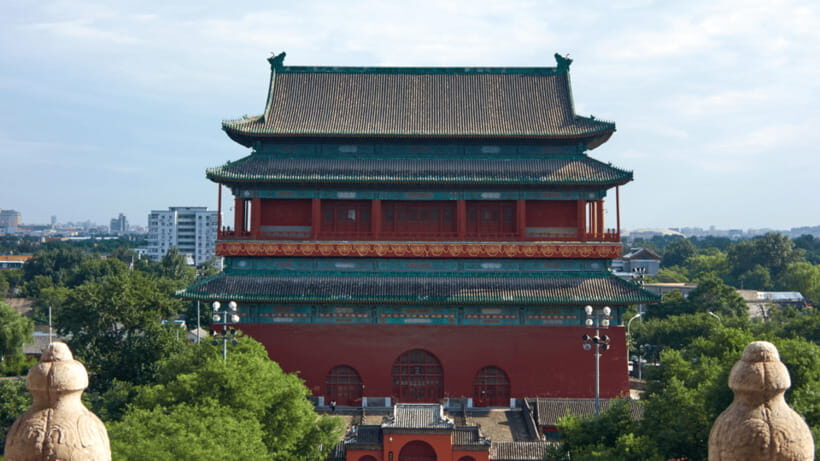
A standout fact tied to the Drum Tower is that there used to be 25 drums here. That’s a lot, and it signals how serious the city’s timekeeping was. One drum alone would be manageable. Twenty-five means this was designed for public impact—meant to carry the message across daily life.
As you look around, try to connect what you see to the original job description: dusk drum. The goal wasn’t only to make noise. It was to communicate a shift in the day, the way old cities needed a shared rhythm.
The tower’s placement also helps you understand the complex. Because the Bell Tower sits slightly north of the Drum Tower, you can feel like the architecture has a “forward direction” for morning and a counterpart position for evening. It’s a small detail, but it makes the whole complex click.
Again, plan your energy. Between both towers, you’ll likely spend more energy than you expect on steps. If you’re visiting with anyone who needs easier walking, bring that into your day plan early.




Use the English Guide Like a Pro (No Live Guide Needed)

This is a self-guided entry with an English textual and visual guide included. That’s not just a nice extra. It’s the difference between “I saw two towers” and “I understood what I was looking at.”
Here’s how to get the most out of it without needing a live guide:
- Scan the guide before you enter the first tower, so you know what key facts to hunt for.
- While you’re there, match the guide’s visuals to what you see in front of you.
- Don’t rush. The guide is doing real work: it helps you interpret timekeeping design, major historical references, and the logic of the paired towers.
One of the strongest signals from real booking experiences is how much the guide can expand the visit beyond the towers themselves. In at least one case, the included English PDF brochure added context on the hutongs near the towers and even included suggestions for local restaurants nearby. That turns your visit into more than monument time.
Pairing the Towers with Nearby Hutongs and Local Food
The towers sit next to real everyday Beijing. In particular, you can connect the visit to the hutongs right near the complex, which are the older, smaller lanes and neighborhoods that make Beijing feel like a city with layers.
If you use the English guide’s added area notes (like the hutong context and restaurant suggestions), you can build a simple plan:
- Do the towers first, while you still have your “timekeeping” story fresh.
- Then walk into the hutongs nearby so the contrast feels intentional, not random.
- If the guide suggests places to eat, treat that as a shortcut to local-friendly decisions rather than gambling on whatever is closest.
This is also where the skip-queue advantage helps. When you don’t waste time waiting, you have more daylight hours to walk, read, and then find food.
How Long Is 2 Hours, Really?
The ticket duration is listed as 2 hours, and that’s a helpful constraint. But “2 hours” can mean two totally different visits depending on your pace.
If you’re someone who reads and climbs carefully, expect your time to break down roughly like this:
- Entry + orientation: quick
- Bell Tower: time for structure, bell-story details, and photos
- Drum Tower: time for the drum-count story and layout details
- Buffer: a few minutes to catch your breath and re-check the guide
If you’re fast-moving and mostly photo-focused, you may finish earlier. If you’re slower and want to really absorb the English guide and take breaks, 2 hours can feel tight but still workable—especially if you’re mindful about stairs.
Either way, it’s worth planning your day so you’re not rushing into the next stop. These towers are a “keep your eyes open” kind of site, not a blur-and-go checkpoint.
Who This Ticket Suits Best (and Who Should Rethink It)
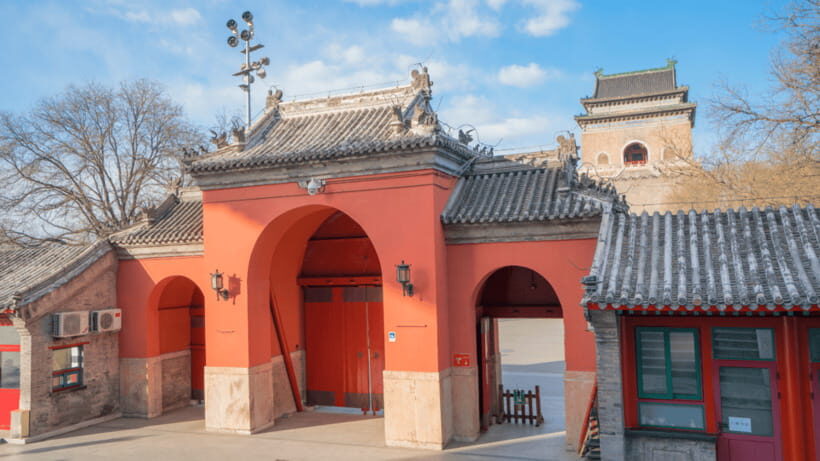
This entry ticket works best if you like structure without crowds. You get:
- Two tower entrances
- English interpretive help
- Fast entry with e-tickets
- A self-paced flow with a 2-hour window
It’s a great pick if:
- you’re visiting during busy seasons and want to reduce line time
- you prefer reading over listening to a group guide
- you want a cultural stop with concrete details (dynasty timeline, the Yongle bell, the timekeeping system)
Reconsider if:
- you have mobility limitations or you know steep, long staircases are hard for you. Feedback specifically flagged this concern.
- you’re looking for a guide-led experience with explanations in real time. This option does not include a live tour guide or audio guide.
Should You Book This Ticket for Your Beijing Stop?
Book it if you want a clean, organized way to hit two major monuments fast, with an English textual and visual guide that helps you understand why the towers mattered. At this price, you’re mostly paying for the convenience and context, not just the door entry.
Skip-or-compare if you’re price-sensitive and you’d rather gamble on on-the-spot options. One review experience complained about the price feeling far above the on-site equivalent. If you’re the kind of traveler who can handle waiting and you don’t need the guide extras, you might find a better deal elsewhere.
My practical rule: if you’re traveling when lines can get ugly, the pre-booking angle is the deciding factor. And if stairs are a challenge for you, plan extra time—or choose a different activity.
FAQ
What is included with the ticket?
You get entry tickets for the Bell Tower and the Drum Tower, plus an English textual and visual guide.
Do I get a live tour guide or an audio guide?
No. The activity includes no live tour guide and no audio guide.
How do I use the ticket at the towers?
After your reservation is confirmed, you’ll receive e-tickets by email or WhatsApp. You can enter the Bell Tower and Drum Tower directly with those e-tickets.
What details do I need to provide when booking?
You need to provide your passport name, passport number, and date of birth so the tickets can be reserved.
How far in advance are tickets reserved?
Your tickets are reserved 3 days prior to your visit date.
How long is the visit?
The duration is 2 hours.
What language is the guide?
The guide included is in English.
What do I need to bring to enter?
Bring your passport or an ID card.
Can I cancel if my plans change?
Yes. Free cancellation is offered up to 24 hours in advance for a full refund.