REVIEW · BEIJING
Beijing: Private Layover Tour with Optional Duration
Book on Viator →Operated by Catherine Lu Tours · Bookable on Viator
Beijing at night changes fast. This private layover tour turns a long airport transfer into real city time, with a guide and driver ready to meet you and carry you into the lights. You’ll choose from several after-dark options, from Tian’anmen-area landmarks to hutong neighborhoods.
I like that it’s a truly private setup, so the pace fits your schedule instead of forcing a rigid group run. I also like the English-speaking guide, who can steer you between big-ticket sights and quieter streets without making you guess.
The main catch is simple: entrance tickets aren’t included, and a few stops are short or view-based, so plan for some extra costs if you want to go inside.
In This Review
- Key things that make this layover tour work
- Why a private Beijing night tour helps on a layover
- Pickup, timing, and the real value of a tight schedule
- Tian’anmen at night: the main landmark, without the day-trip stress
- The National Center for the Performing Arts: the Egg Building after dark
- Qianmen Main Street: narrow lanes, big night energy
- Bell and Drum Towers: view them lit, then decide
- Hutong tour after dark: Shishahai and Nangluguoxiang lanes
- Food and extra costs: roast duck, dumplings, and what to plan for
- Price and value: is $176 per person worth it?
- Who this tour suits best (and who might not love it)
- Should you book this private Beijing layover tour?
- FAQ
- How long is the private layover tour in Beijing?
- What does the $176 per person price include?
- Do I need to buy entrance tickets for the stops?
- Is pickup available from the airport only?
- Does the tour include meals?
- Is the tour private for my group?
- What’s the cancellation window?
Key things that make this layover tour work
- Airport meet-and-go that saves time: your guide meets you at the airport exit and gets you moving quickly.
- Private vehicle, not crowded transit: you get door-to-door transfers from the airport or your hotel.
- Multiple nighttime itineraries: you’re not stuck with one route—choose the mix that fits your interests.
- Landmarks plus lived-in streets: you can pair Tian’anmen-area sights with hutong lanes.
- Bell and Drum Towers on your terms: you can view them from the outside when lit and decide on-site.
Why a private Beijing night tour helps on a layover
If your layover in Beijing feels like a chore, this is the kind of fix that actually helps. The idea is straightforward: you don’t spend your best evening sitting in the airport or wandering alone in transit-heavy areas. Instead, you get a guide, a driver, and a vehicle ready to whisk you into the city for a compact, high-impact night.
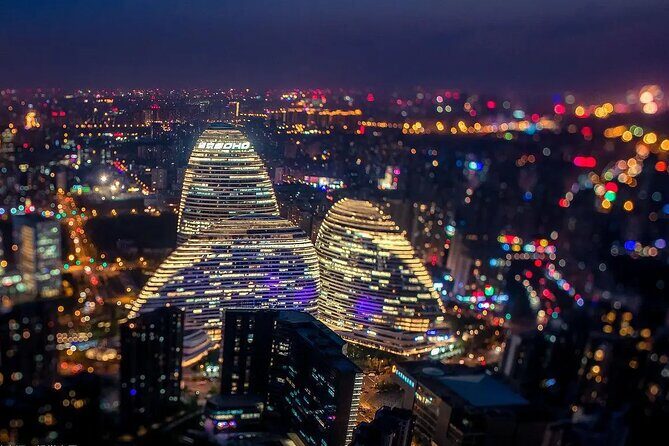
Beijing after dark is also a different city than what you see in daytime photos. Lights make big monuments more dramatic, and lantern-like illumination helps smaller streets feel more atmospheric. With a private driver, you spend less time in seat-grinding logistics and more time actually looking.
One more practical win: it’s built for a flexible layover window. The tour runs about 5 to 8 hours, so it fits many arrival patterns—early landing, late landing, or that awkward in-between time when you still want to see something real.
You can also read our reviews of more private tours in Beijing
Pickup, timing, and the real value of a tight schedule
This tour is set up as a round-trip transfer plan. You can start at the airport (meet your guide directly there) or arrange pickup from your hotel, and you’ll end back at the airport or your hotel. That door-to-door structure matters in Beijing, where crossing distances can eat up an evening fast.
In the field, the difference between a tour that starts on time and one that starts late is huge. A strong part of this experience is how efficiently it gets rolling once you land. One key detail I’d treat as a big deal: your guide waits at the exit, and the handoff to the van is meant to be quick. When your flight just landed, that kind of smooth start keeps you from burning your first hour on sorting phones, finding people, and decoding arrival gates.
The drive to the city center is about an hour, so you’ll want to think of the night as a sequence rather than a long wandering day. Even with a few stops, everything stays compact: you’ll be in and out, moving to the next viewpoint or street before the clock gets tight.
Tian’anmen at night: the main landmark, without the day-trip stress
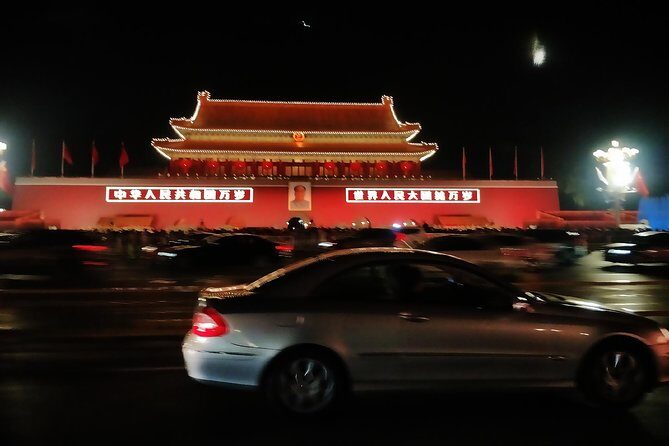
Tian’anmen is the anchor stop, and it’s scheduled first after pickup. Expect a drive of roughly an hour into the city center, and then you’ll have about 30 minutes for the Tian’anmen area. The admission ticket here is listed as free, which is helpful for controlling costs.
What makes this stop work during a layover is that you’re not trying to make it a full-day, slow sightseeing project. Instead, you get the core experience: standing in the general area, absorbing the scale, and getting that Beijing landmark feeling right when you’re most awake.
Do keep expectations realistic. The time is short, so the focus is on seeing and orienting, not doing everything you could do on a multi-hour visit. If you’re the type who loves photos, this is still a good window, because nighttime lighting can make the setting feel more striking than it does in harsh midday light.
Practical tip: wear shoes that handle pavement and small crowds. You’ll likely do some walking and standing, and the whole point is to stay comfortable so you don’t spend your only night in Beijing thinking about your feet.
The National Center for the Performing Arts: the Egg Building after dark
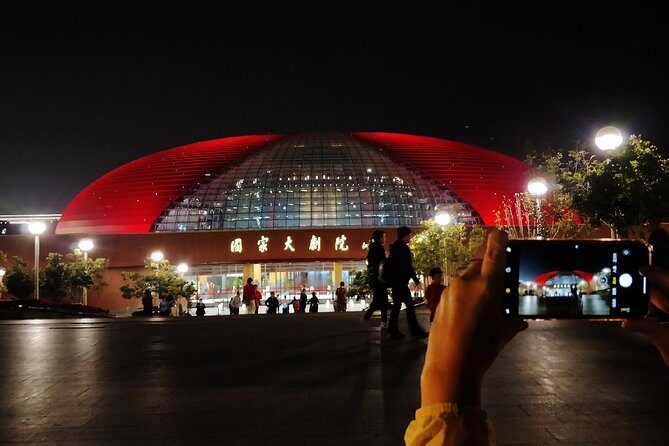
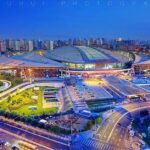
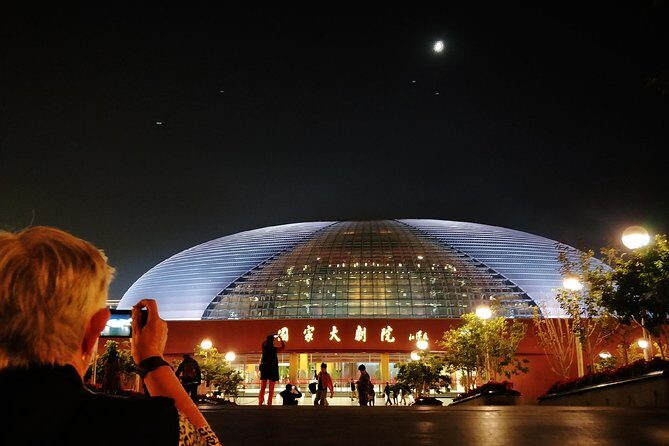
Next up is the National Center for the Performing Arts, commonly nicknamed the Egg Building. It’s designed by French architect Paul Andreu, and it’s a great example of how Beijing mixes modern architecture into an itinerary that also includes older neighborhoods.
Your time here is short—around 20 minutes—and admission isn’t included. That’s not a problem if your goal is to see the building and surroundings rather than plan an in-and-out performance or deep museum-style visit. At night, the architecture can look especially sleek, and even a brief stop can feel worthwhile.
Why I like including this: it breaks up the itinerary. After Tian’anmen’s monumental feel, you get something more sculptural and futuristic. It’s a visual palate-cleanser, and it makes the entire layover night feel like more than just a checklist.
If you’re the type who likes architecture, you’ll probably enjoy this stop even more. It’s one of the few major modern landmarks that can deliver strong photo results without demanding a long time investment.
Qianmen Main Street: narrow lanes, big night energy
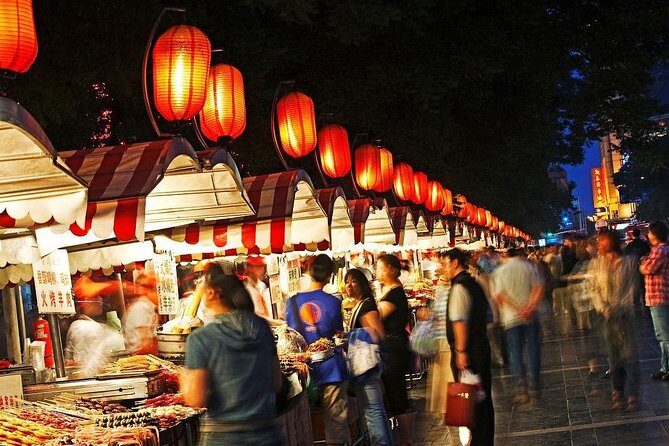
After the Egg Building, you’ll head to Qianmen Main Street Mall and walk Qianmen Street. You’ll have about 45 minutes here, and it’s listed as free. This is a classic Beijing nightlife pairing: big landmark area, then a pedestrian-feeling street scene.
Qianmen is described as a busy, narrow street in Beijing’s Xuanwu District that’s about 300 meters long. That length matters because it helps you understand the pace. You’re not committing to a long trek across a huge area; you’re doing a focused stroll with lots of storefront energy on both sides.
This stop is where your night starts to feel more lived-in. You’ll see visitors, shops, and street atmosphere in a compact radius. If your layover includes jet lag, this is also an easier mental transition than another major monument: instead of huge spaces, you get a walkable, human-scale street.
A small but important reality check: this is a shopping district atmosphere. If you want quiet, you might not love it. If you want energy, snacks (food costs extra), and a sense of evening city life, it’s a smart use of limited time.
Bell and Drum Towers: view them lit, then decide
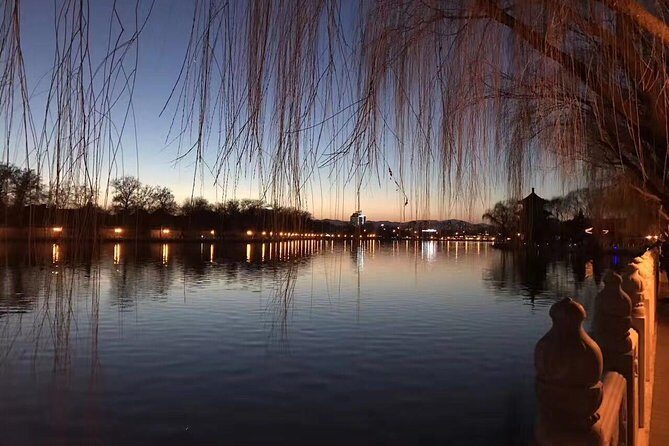
From Qianmen, you can choose how to handle the Bell and Drum Towers. Your scheduled time is about 30 minutes, and admission is not included. The key point is that you can visit from a distance when they’re lighted, which helps keep the stop flexible.
Night lighting is the main draw here. Rather than pushing you into an indoor ticketed visit, the tour design leaves room for you to decide on the ground. That’s useful when you’re working with a layover clock.
What you should do: treat this as a decision point, not a must-do. If you’re tired, the distance-view option keeps things manageable. If you’re energized and want to spend a little extra time in the area, you can spend more time on-site depending on what you want to see.
Even if you only see them illuminated from outside, this stop adds variety. Your night won’t feel like it’s all about one huge square and one modern building. It’s more layered, with a transition from monumental to neighborhood-scale visual interest.
Hutong tour after dark: Shishahai and Nangluguoxiang lanes
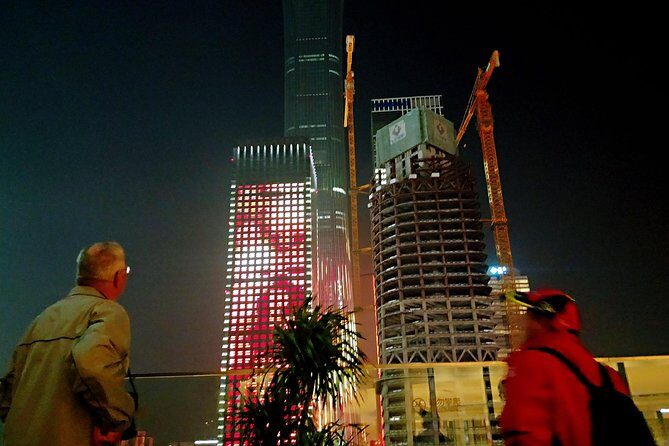
The final major block of the itinerary is a hutong tour. You’ll have about 30 minutes for wandering in older residential areas, with options that can include Shishahai Lake hutong or Nangluguoxiang hutong.
This is the part of the tour I’d treat as the most memorable for many people, because it shifts from city landmarks to everyday-style streets. Hutongs are Beijing’s older lane neighborhoods, and at night they can feel especially intimate compared to the wide-open monument zones.
The tour’s description frames this as exploring the old residential area and wandering the lanes. That means the main value is the feel of the place: tight street geometry, a different pace, and a chance to see how neighborhoods look when they’re not reduced to a daytime sightseeing show.
There’s also a hint of optional depth if time permits. The tour notes that you may be able to add other sights such as the Bird Nest and the Water Cube area when time allows, and it also mentions optional rickshaw-style hutong experiences and night market time in some itinerary choices. In other words, the hutong portion isn’t just a quick photo grab; it can be part of a richer nighttime neighborhood plan when your schedule allows.
Practical tip: this is where comfortable walking shoes matter most. Even a short hutong walk can involve uneven pavement and lots of turns.
Food and extra costs: roast duck, dumplings, and what to plan for
Food is handled in a sensible way: meals and drinks are not included. That includes the option for traditional roast duck and dumplings, which is listed as food you pay for yourself.
I like this approach for layovers because it gives you control. If you’re hungry, you can choose what you want and match it to your schedule. If you’re not hungry—because jet lag or a light appetite—then you aren’t forced to spend time on a meal stop.
However, it does mean you should plan your budget with flexibility. The base price covers guide and transport, but food is on you. If you want roast duck and dumplings, consider treating that as a planned add-on rather than an afterthought.
A good strategy for Beijing nights: decide your food goal before you go. For example, if you truly want dumplings and roast duck, keep your walking pace steady so you don’t get rushed at the end of the evening when you’re trying to get back to the airport or hotel.
Price and value: is $176 per person worth it?
At $176 per person for a private nighttime layover tour, the value comes down to what you’re buying: time and stress reduction. You’re paying for English-speaking guidance, a professional driver, and round-trip transfers between the airport or your hotel and the city sights.
For many layovers, the hidden cost is not just money—it’s the energy drain of figuring out transit routes, finding meeting points, and managing changing schedules. Here, you avoid most of that by keeping everything organized around a single pickup and drop-off plan.
Also, the itinerary isn’t just one stop. You’re stacking several high-recognition places—Tian’anmen area, the Egg Building, Qianmen street, and hutong lanes—within a 5 to 8 hour window. That makes the total cost feel more reasonable because you’re getting multiple distinct experiences, not a single photo stop and a quick goodbye.
One more detail that can affect value: group discounts are mentioned. Even though it’s private and only your group participates, the operator’s pricing can work better if you’re traveling with others and can take advantage of any discount structure available at booking.
If you’re solo with a short layover, the biggest question is how much you care about comfort and efficiency. If you’re the kind of traveler who enjoys planning on your own, you might do okay with independent transit. But if you want a low-friction evening that starts quickly after landing and ends with you safely back on schedule, this price structure makes sense.
Who this tour suits best (and who might not love it)
This is a great fit for three kinds of travelers.
First, it’s ideal for anyone with limited time who still wants a genuine Beijing night experience. The mix of landmarks plus hutongs gives you more than just one famous spot.
Second, it’s a strong choice if you dislike negotiating transit while jet lagged. Private pickup and drop-off can remove a lot of stress, and the guide handoff is designed to be quick.
Third, it’s a good match if you like flexibility. The tour is described as flexible with multiple itinerary options, including the possibility of hutong/rickshaw and night market time depending on what you choose.
Who might not love it: if you want a slow, deeply guided history lesson with lots of museum time, the short time slots at each stop may feel too tight. Also, if you’re trying to control every penny, remember that entrance tickets and meals are not included, and some stops are more about viewing than touring.
Should you book this private Beijing layover tour?
Book it if your priority is an efficient, well-organized evening that gets you from the airport to real Beijing sights without turning your layover into a logistics puzzle. The private vehicle, English-speaking guide, and the quick guide-to-van start are exactly what you want when time is limited.
Skip it or reconsider if you’re looking for long indoor visits or a fully ticketed experience with meals included. You’ll want to plan for extra entrance fees and food, and you should be comfortable with short stops designed for a layover schedule.
If you’re traveling with a mix of interests—big monuments, modern architecture, and older lanes—this format lets you blend them into one night. For many layovers, that’s the difference between seeing Beijing and just passing through it.
FAQ
How long is the private layover tour in Beijing?
The tour runs approximately 5 to 8 hours.
What does the $176 per person price include?
It includes an English-speaking tour guide, transport by private vehicle with a private driver, and airport pickup and drop-off.
Do I need to buy entrance tickets for the stops?
Entrance tickets are not included. Some stops are listed as free, but others are not included, so you should expect extra costs if you want to go inside where applicable.
Is pickup available from the airport only?
Pickup can be from the airport (with the guide meeting you at the exit) or from your hotel, and the tour can return you to either your hotel or the airport.
Does the tour include meals?
Meals and drinks are not included. Traditional options like roast duck and dumplings are mentioned as food you pay for yourself.
Is the tour private for my group?
Yes. It is a private tour/activity, and only your group will participate.
What’s the cancellation window?
Free cancellation is offered up to 24 hours in advance for a full refund.