REVIEW · BEIJING
Beijing: Private Biking Tour Along Central Axis of Beijing
Book on GetYourGuide →Operated by JTB Travel Agency · Bookable on GetYourGuide
Pedal Beijing’s main spine. This private bike tour follows the Central Axis idea—Beijing’s Fengshui line—and ties it to today’s landmarks and street life. You start with the big national icons, then roll into side lanes where regular people live, and you end up around the Drum and Bell Tower area and historic water routes.
I especially love how the ride is designed to help you understand what you’re seeing, not just pass it in a blur. Two standout moments for me are the Tian’anmen Square / gate area (with the Chairman Mao portrait and the grand government buildings around it) and the way the tour links that spectacle to the Forbidden City’s formal entrance and moat zone. One consideration: the bikes are shared, and one rider noted that the bikes felt a bit small—so taller riders may want to speak up right away about fit.
In This Review
- Key takeaways before you ride
- Beijing Central Axis on a bike: why this route feels different
- Meeting at Ci Qi Kou Line 5: where the ride actually starts
- Tian’anmen Square and the gate: the state center, in motion
- Forbidden City formality: moat, corner turrets, and the big entrance
- Ancient commercial streets and the China you smell
- Jing-Hang Canal: temples, stores, and a long water story
- Drum & Bell Towers: “time announcer” energy, not just a photo stop
- Hutongs off the central line: real neighborhoods, not just backstreets
- Pace, bike fit, and what “3 hours” really means
- Price and value: what $67 gets you (and what it doesn’t)
- Who this tour suits best
- Should you book this Beijing Central Axis bike tour?
- FAQ
- How long is the Beijing Central Axis biking tour?
- Where is the meeting point, and is pickup included?
- What’s included in the price?
- How many people are in the group?
- Is the guide English-speaking, and is the tour wheelchair accessible?
- Are entrance tickets included for tourist sights?
- What are the cancellation and reserve options?
Key takeaways before you ride
- Central Axis route logic: A clear, emperor-to-everyday-beijing route along Beijing’s symbolic north-south spine
- Tian’anmen and Forbidden City exteriors: Big moments without wasting your time hunting entrances
- Hutongs on the connection streets: Side lanes that show how normal Beijing life runs nearby
- Drum & Bell Tower time markers: Twin towers that shaped the city’s daily rhythm
- Jing-Hang Canal scenery: Historic waterway views with temples and shops along the way
Beijing Central Axis on a bike: why this route feels different
Beijing’s Central Axis is not just an interesting map line. It’s a 7.8-kilometer axial line through the old city that connects key points from north to south, starting at the Bell and Drum Towers and running down through places like Wanning Bridge, Jingshan Hill, the Imperial Palace area, and toward Yongdingmen Gate. The point is alignment: imperial Beijing built a lot around formal symmetry and planned sightlines.
Cycling turns that idea into something you can feel. Instead of standing in one crowded spot, you move at street pace and keep the axis concept in your head. You’ll see national power monuments up close, then transition—almost naturally—into quieter historic commercial streets and residential hutong connections.
The tour is also framed as a “dragon’s backbone” ride. That’s not just poetic marketing. The central axis is the city’s long formal spine, and moving along it by bike helps the sequence click: towers and city gates up north, state buildings and imperial gateways in the middle, and the city’s older layers as you keep rolling.
You can also read our reviews of more cycling tours in Beijing

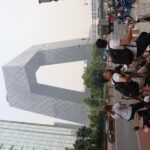
Meeting at Ci Qi Kou Line 5: where the ride actually starts
The meeting point is at Exit D of Ci Qi Kou station (Line 5). Pickup is included from this meeting point, so you’re not left guessing where the guide will appear. If you’re using a taxi, the simple approach is to set your destination to Exit D of Ci Qi Kou station of Line 5 in the app, then show the taxi driver the Chinese text 磁器口地铁站D出口.
Small practical tip: be at the meeting spot a few minutes early. The tour is a tight 3-hour window, and you’ll want time for a proper bike check before you start turning lanes and crossing busy intersections.
Tian’anmen Square and the gate: the state center, in motion
You’ll spend time in the Tian’anmen zone—one of the most iconic places in China. Expect to take in the wide square setting first, then focus on Tian’anmen Gate itself, with the Chairman Mao portrait and the grand government buildings around it (including the kind of institutions you’d recognize as major national landmarks).
What I like about seeing this area on a bike is pacing. You can get a clear view of the scale without constantly stopping, and your guide can point out the logic of the buildings surrounding the gate. It’s the kind of place where it’s easy to feel like you’re just looking at a monument. A good guide helps you read the layout: why these buildings face the axis, why the square feels like a stage, and how that whole zone fits into the north-south imperial plan.
A quick reality check: this area can be busy and heavily controlled. Your best move is to follow your guide’s timing and stay flexible on where you pause for photos.
Forbidden City formality: moat, corner turrets, and the big entrance
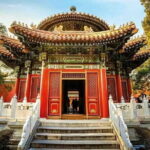
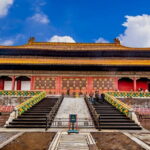
Next is the area that many visitors notice mostly from the outside—yet it matters. You’ll look at the huge formal entrance associated with the Forbidden City, plus the city moat and the corner turrets that create those sharp, defensive angles around the complex.
This is a smart part of the tour because it teaches you what to look for later if you decide to visit deeper. When you’re cycling along the axis, the entrance reads as part of a whole composition: walls, turns, the geometry of gateways, and those corners that guide your eye.
Also, the moat and turrets give you visual breaks from the heavy, monumental square experience. Instead of one giant open space, you shift into layered architecture—stone textures, angled outlines, and the kind of built rhythm that makes the Forbidden City feel intentional rather than just famous.
Tickets are not included for tourist sights on this tour, so you should plan on viewing key parts from the route. If you want to go inside the Forbidden City itself, you’ll likely need your own ticket time.
Ancient commercial streets and the China you smell
One of the best surprises on this kind of ride is how quickly the “grand Beijing” vibe turns into human-scale street life. Along the central way, you’ll pass ancient commercial streets—the in-between spaces where you can sense trade, daily errands, and the kind of long-running city habits that don’t need royal approval.
Even if you don’t stop for shopping, you get a sense of how Beijing worked as a living city, not just a ceremonial one. This is also where biking helps you see the transitions: the axis isn’t a museum belt. It’s a route that connects institutions and neighborhoods.
If you’re the type who loves small details—shopfronts, signage styles, and street layout—this segment is a nice payoff. Just be ready for traffic and keep close to the guide’s instructions.
You can also read our reviews of more private tours in Beijing
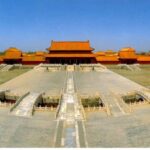
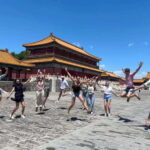
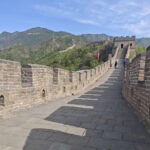
Jing-Hang Canal: temples, stores, and a long water story
The tour also includes the Jing-Hang Canal, described here as the longest manmade canal in the world. Seeing it as part of your ride adds context: Beijing wasn’t only about emperors and ceremonies. Water routes moved goods and people, and they shaped the city’s economy and growth.
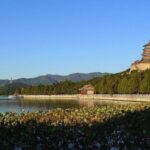
What you can expect along this stretch are beautiful canal-area views, including temples and stores beside it. The key value is the contrast. After Tian’anmen and the Forbidden City formal zones, the canal brings you back to daily life and practical city history.
I recommend slowing down mentally here. Don’t just glance at the water—treat it as a “pause point” that connects architecture and logistics. Canals are the hidden backbone of many civilizations, and the Jing-Hang Canal is one of Beijing’s big threads.
Drum & Bell Towers: “time announcer” energy, not just a photo stop
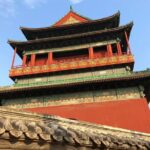
You’ll also see the Drum and Bell Towers, described as a “time announcer in ancient time” using twin towers. It’s the kind of landmark that makes sense when you stand near it and imagine how the city used to run: a shared time signal, the daily rhythm, the public schedule built into architecture.
From a biking perspective, you get two benefits. First, you’re not stuck in one narrow viewing spot. Second, the towers act like a mental anchor—north Beijing’s historical “clock center”—so the whole axis route has a clear beginning or ending point in your mind.
If you’re a first-time visitor, towers like these help you understand Beijing as more than a set of must-see buildings. It’s a place that organized time, movement, and authority through architecture.
Hutongs off the central line: real neighborhoods, not just backstreets
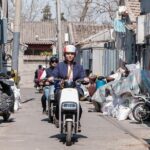
A huge part of the experience is riding into hutongs—the narrow lanes connected with the central way—where ordinary people live. Hutongs can be touristy if you only see the most photographed lanes. Here, the tour’s value is the connection: you’re cycling from the axis into the residential fabric that sits beside it.
This is also where your guide matters. In a city like Beijing, a good guide can steer you toward the kind of lane views that feel lived-in rather than stagey. One English-speaking guide you might encounter is Amber, who has been praised for being fun and communicative, and for handling changes smoothly when timing doesn’t go perfectly.
Another guide name you may hear is Jacky, who led a tour that focused on interesting areas you might not find without a guide—especially around how the city’s historic areas connect back to everyday life.
A practical note: hutongs can mean tight turns and uneven surfaces. Your job is to take it easy on speed. Your guide will keep you on a route designed for cycling rather than random wandering.
Pace, bike fit, and what “3 hours” really means
This tour runs for 3 hours, and the ride distance is described as about 20 kilometers. That’s a fair amount, but it’s paced with stops for viewing and explanations.
Shared bike per person plus mineral water are included. You’re not paying extra for basic comfort, which makes a 3-hour loop feel more like a planned experience and less like a rental-and-hope situation.
About that bike sizing consideration: one rider noted the bikes were too small. If you’re taller, you might want to check seat height and handlebar fit immediately after meeting. Don’t wait until you’re rolling hard—quick adjustments save your back and wrists for the later parts of the ride.
Also plan for city conditions. Even if the route tries to keep things manageable, you’re still cycling in a real urban environment, so you’ll want sturdy shoes and a calm, predictable riding style.
Price and value: what $67 gets you (and what it doesn’t)
At $67 per person for a 3-hour private biking tour with an English-speaking guide, pickup from the meeting point, shared bike, and water, the value is mostly about time and interpretation.
In Beijing, the hard part isn’t getting to a landmark. The hard part is connecting the dots quickly: why these buildings face the way they do, how the central axis concept links imperial spaces to hutong life, and what you’re seeing along the canal and toward the drum/bell towers.
What you should factor in: tickets for tourist sights are not included. So if you want to go inside places rather than view them from the route, budget extra time and money for entries separately.
Also note: meals are not included. With only three hours, you can usually plan to eat before or after without turning the tour into a schedule mess.
Who this tour suits best
This tour fits best if you want:
- A structured Beijing Central Axis experience without doing everything on foot
- Big-name landmarks plus less-famous hutong connections
- A guide who can explain layout and meaning, not just point at buildings
It’s also a good fit for couples, small groups, and first-time visitors who want a “most important sights, connected by a theme” day. With the group limited to 8 participants, you should feel more like you’re riding with a real guide team than getting herded through a checklist.
If you’re sensitive to bike fit or you’re picky about comfort, speak up early about bike size during setup. That one detail can make or break how enjoyable the ride feels.
Should you book this Beijing Central Axis bike tour?
I’d book it if you like your sightseeing with a plan and you want to connect monuments to real neighborhood life. The central axis concept makes the day feel coherent, and the mix of Tian’anmen, Forbidden City exteriors, hutongs, drum and bell towers, and the Jing-Hang Canal gives you variety without chaos.
Skip it or at least prepare for extra comfort planning if you’re tall or you’ve had issues with bike rentals feeling too small. Also remember that tickets are not included, so if your dream day is mostly about entering major sites, you’ll need to add those separately.
If you want a smarter way to see Beijing’s spine in a single afternoon—and you’d rather ride than stand in crowds—this is a solid choice.
FAQ
How long is the Beijing Central Axis biking tour?
It’s a 3-hour tour.
Where is the meeting point, and is pickup included?
You meet at Exit D of Ci Qi Kou station (Line 5), and pickup service from that meeting point is included.
What’s included in the price?
Included are an English-speaking guide, pickup from the meeting point, a shared bike per person, and mineral water.
How many people are in the group?
The tour is limited to a small group of up to 8 participants.
Is the guide English-speaking, and is the tour wheelchair accessible?
Yes. The guide is English-speaking, and the tour is listed as wheelchair accessible.
Are entrance tickets included for tourist sights?
No. Tickets for tourist sights are not included.
What are the cancellation and reserve options?
You can cancel up to 24 hours in advance for a full refund. There’s also a reserve now & pay later option (pay nothing today).