REVIEW · BEIJING
Beijing: Night Tour Of Peking Opera Show / Transfer
Book on GetYourGuide →Operated by Private China Trips · Bookable on GetYourGuide
Beijing at night is pure theater. This tour pairs hotel pickup with a live Peking Opera show from 19:30 to 20:40, guided in Chinese or English so you can follow the action. What I like most is the smooth, on-time transport and the way Peking Opera blends grand drama with dance, martial arts, and mime. The only caveat: at $166, it can feel steep if you’re only shopping for a quick ticket and not factoring in private transfers and a live guide.
You’ll meet your guide and driver at 18:20, and they’ll hold a sign with your name to make the handoff easy. From there, it’s a direct ride to the theater, and you’re back at your hotel after the show. You’ll want your passport with you, and you should plan on dinner being separate.
In This Review
- Key Points That Matter Before You Go
- Hotel Pickup at 18:20: The Easiest Way to Do a Night Show
- The 19:30–20:40 Show Window: What You’re Actually Buying
- Before the Music Starts: How to Read Peking Opera Fast
- The Orchestra and Percussion Details That Make It Feel Real
- Costumes on Oil-Lamp Stages: Why the Visuals Are So Bold
- A Quick Time Machine: How Peking Opera Formed
- Guide Support in English and Chinese: What You Can Expect
- Price and Value: Is $166 Reasonable?
- How to Prepare: Passport, Photos, Dinner, and the Comfort Stuff
- Should You Book This Beijing Night Tour?
- FAQ
- What time do I get picked up?
- What time is the Peking Opera show?
- How long is the tour total?
- Which languages will the guide speak?
- What’s included in the price?
- What is not included?
- Do I need to bring anything?
- Is there a cancellation option?
Key Points That Matter Before You Go
- Hotel-to-theater pickup at 18:20: You skip the hassle of figuring out timing and transport for a night performance.
- A real Peking Opera format: Dance, martial arts, and mime built into one performance style.
- Two-part music setup: You’ll hear both the orchestral side and the percussion side, each shaping the mood.
- Watch the band placement: The music group sits on the left side of the stage in most setups.
- Timing that respects the show: The performance window is 19:30–20:40, so you’re not stuck waiting all night.
Hotel Pickup at 18:20: The Easiest Way to Do a Night Show
This experience starts with a practical idea: get you to the theater without stress. Your guide and driver meet you at 18:20 at your hotel lobby with a sign that has your name, then head out directly to the theater. It’s simple, but it matters in Beijing, where a delayed start can turn a calm evening into a frantic one.
I also like that the guide and driver handle the handoff cleanly. One person with you and a single plan means less confusion about where to go and when to be ready, especially if your Chinese is limited. And if you’re staying downtown, they may pick you up from another downtown hotel, which can save you a separate taxi trip.
The biggest reason to choose a private transfer is peace of mind. You’re paying for coordination, not just a seat in a theater.
You can also read our reviews of more evening experiences in Beijing


The 19:30–20:40 Show Window: What You’re Actually Buying
The Peking Opera performance runs from 19:30 to 20:40, and the full experience is listed as 3 to 10 hours depending on timing and logistics. That range is basically your “door-to-door” buffer: time to ride, find your area inside, and then get back afterward.
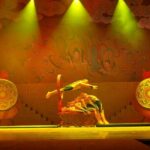
You’re not just watching singing. Peking Opera is a blend of forms: grand opera storytelling plus ballet-like movement, martial arts gestures, and mime. The result is theatrical even when the language is hard to catch, because the body language and staging do a lot of the work for you.
If you’re hoping for a super-modern show with cinematic special effects, you might find it more traditional than expected. But if you like performance craft—music cues, movement precision, and symbolic gestures—you’ll likely feel right at home.
Before the Music Starts: How to Read Peking Opera Fast
If this is your first Peking Opera, you’ll get the most out of it by watching for patterns. Here’s what pays off quickly:
First, listen for how the music changes the scene. The band generally has two main parts: an orchestral side for calmer, reflective moments, and a percussion side that heightens tension, conflict, and action. When the percussion ramps up, the performance almost always shifts into something more dramatic.
Second, watch the physical vocabulary. Martial arts elements are not just “fighting”—they’re part of the acting system. Mime helps the story land even when you don’t catch every line, because actions are stylized and repeatable.
Finally, give yourself permission to enjoy the performance as a whole. Even if you don’t understand every word, you can still track the mood and the narrative through movement and music.
The Orchestra and Percussion Details That Make It Feel Real
This show isn’t “background music.” It’s part of the storytelling engine.
Your band mainly includes an orchestra and a percussion group. The orchestra frequently supports peaceful scenes, while percussion sets the right atmosphere for battle scenes. Common percussion instruments include castanets, drums, bells, and cymbals—and in the setup described for Peking Opera, one performer can play castanets and drums at the same time, helping drive the rhythm for the whole ensemble.
On the orchestral side, you may hear instruments such as the Erhu, Huqin, Yueqin, Sheng (a reed pipe), and Pipa (lute). The musicians typically sit on the left side of the stage, which means your listening experience can feel spatial—like the sound has a home and moves with the performance.
This matters for your enjoyment. If you go in expecting only vocals, you’ll miss half the show. If you listen for the music’s “signals,” the performance becomes much easier to follow.
Costumes on Oil-Lamp Stages: Why the Visuals Are So Bold
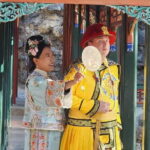
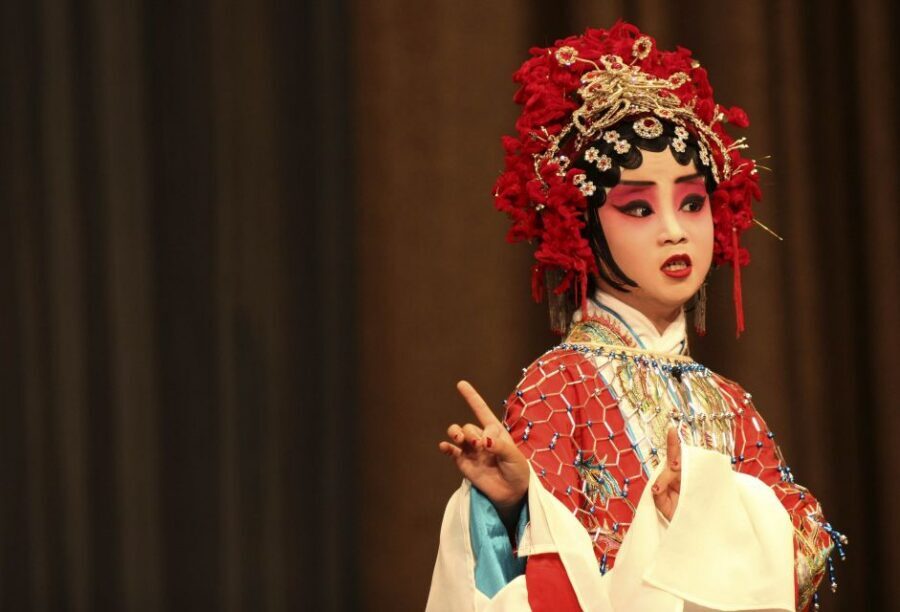
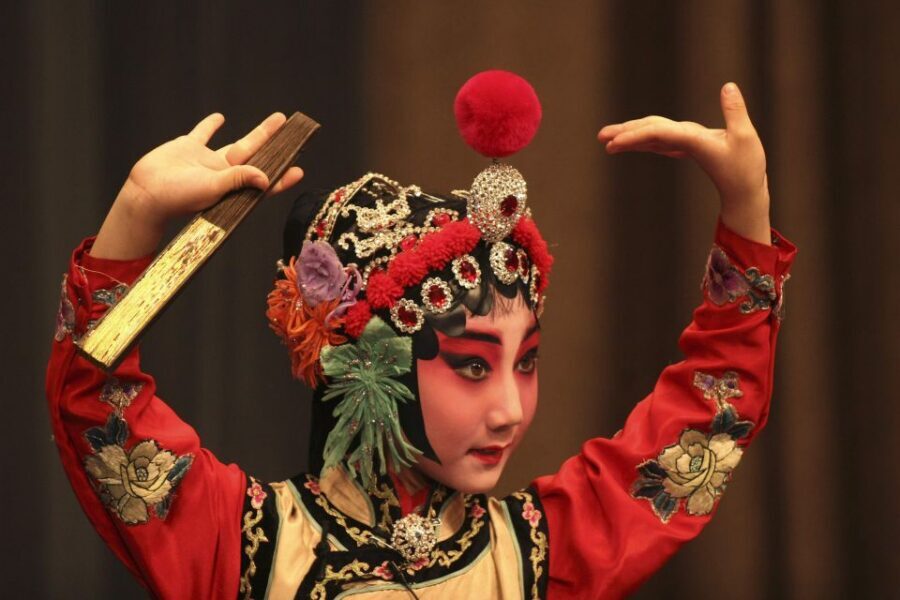
One of the coolest historical details about Peking Opera is how the look evolved for a very specific viewing world. In earlier times, costumes were described as sharply contrasting colors—perfect for being seen on a dim stage lit by oil lamps. That’s part of why the costumes still feel graphic and high-contrast today.
When you watch the show, you’ll notice that costumes and makeup aren’t just decoration. They’re information. Colors and styling can signal character type, mood, or role within the performance system. Even without a full translation, your eyes will start picking up cues faster as the night goes on.
If you’re a visual person, this is the part you’ll remember later. The clothes, the movement, and the music all work together in one language.
You can also read our reviews of more tours and experiences in Beijing
A Quick Time Machine: How Peking Opera Formed
Peking Opera didn’t appear out of nowhere. It’s believed to gradually come into being after 1790, when the famous four Anhui Opera troupes came to Beijing. That’s the kind of detail that makes the show feel bigger than one evening—it’s connected to how regional opera traditions were reshaped in the capital.
From there, Peking Opera developed quickly during the imperial era, especially under Emperor Qianlong and Empress Dowager Cixi. The tradition eventually became more common to common people over time, not only tied to the highest ranks.
So when you watch tonight’s performance, you’re seeing a style that was shaped by palace patronage and public popularity. That mix explains why it can feel both formal and theatrical at once.
Guide Support in English and Chinese: What You Can Expect
This is a live guided experience with language support in Chinese or English. Your local guide and driver also help you move through the night with confidence, starting from the hotel lobby pickup.
What I like here is that you’re not left alone with a ticket and a prayer. Even if your understanding is partial, having a guide makes it easier to connect the performance movements to what’s happening in the story and tone.
Also, the vehicle is private, so you’re not dealing with a crowd of people funneling through different timing. That can be a big quality-of-life factor when you’re trying to enjoy the show instead of managing logistics.
Price and Value: Is $166 Reasonable?
$166 per person is not “budget,” and one caution from a recent booking is that someone felt it was too expensive for what they saw as a roughly one-hour show plus translation. It’s a fair question.
Here’s how I’d judge value based on what’s included:
- You’re getting hotel pick-up and drop-off via a private vehicle.
- Your ticket charge for the Peking Opera show is included.
- You have a local guide and driver handling the timing and language.
The show itself runs 19:30–20:40 (about 70 minutes). So if you’re comparing only “minutes of performance,” it might feel pricey. If you compare the whole package—private transport, included tickets, and guided support—the price starts to look more like convenience plus access, not just entry.
If you want the lowest cost possible, you might compare other public options. If you want an easy evening that starts on time and ends with a driver waiting, this one can be a strong fit.
How to Prepare: Passport, Photos, Dinner, and the Comfort Stuff
Bring your passport. It’s listed as required, and it’s one of those details that can turn a smooth evening into a delay.
Plan on dinner being separate. The dinner fee is not included, and your night starts with pick-up at 18:20, so you likely won’t want to schedule a long sit-down meal right before the theater.
Gratuities are recommended, so budget a little extra if you want to be polite to your guide and driver. Souvenir photos may be available to purchase, so if that matters to you, keep a bit of cash or card space.
Finally, this tour is not suitable for pregnant women, so if that’s relevant for you, you’ll want a different plan.
Should You Book This Beijing Night Tour?
I’d book this if you want a stress-free night out and you care about understanding what you’re watching—music, movement, and the character system. The included private transfer and guided support make it a good option when you don’t want to wrestle with timing or transportation after dark.
I would hesitate if your priority is lowest cost or if you’re expecting a long show with lots of backstage extras. The performance is the main event, and the value depends on whether you count the private transfers and guided context as part of what you’re paying for.
If you love classic performance arts and want one strong Beijing night that’s planned end-to-end, this is a sensible choice.
FAQ
What time do I get picked up?
Pickup is at 18:20 from your hotel lobby. Your guide and driver will hold a sign with your name and then drive you directly to the theater.
What time is the Peking Opera show?
The show runs from 19:30 to 20:40.
How long is the tour total?
The total duration is listed as 3 to 10 hours, depending on your starting time and the full schedule from pickup to return.
Which languages will the guide speak?
The live tour guide provides support in Chinese and English.
What’s included in the price?
Included are a local guide, driver/guide, hotel pick-up and drop-off, private vehicle transport, and the charge for Peking opera show tickets.
What is not included?
Dinner fees are not included.
Do I need to bring anything?
Yes—your passport.
Is there a cancellation option?
Free cancellation is available up to 24 hours in advance for a full refund.