REVIEW · BEIJING
Beijing: Natinonal Center For The Peformance Arts Ticket
Book on GetYourGuide →Operated by PANDA HAPPY JOURNEY IN CHINA · Bookable on GetYourGuide
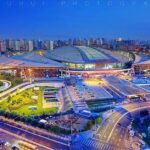
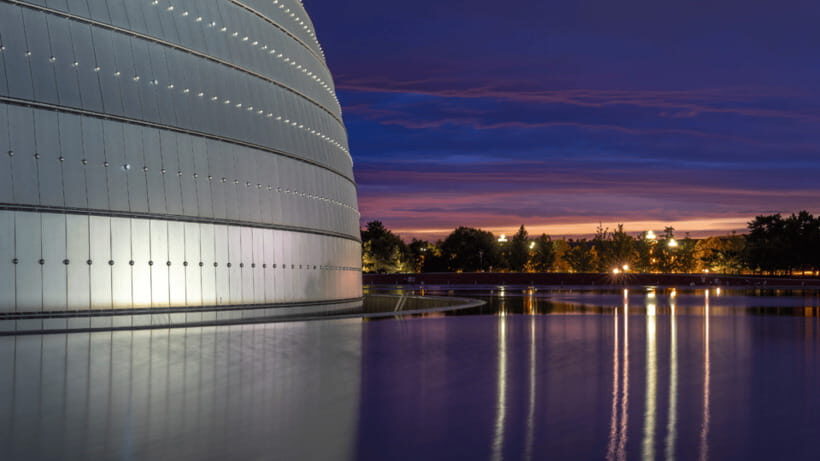
Beijing gets serious about the arts. The National Centre for the Performing Arts (NCPA) is one of China’s biggest performance landmarks, and it’s built like a futuristic egg-shell over a treated lake. I love how the titanium-and-glass design makes the building feel alive as the sky changes. You can also mix practical self-guided time with a more structured option, which works well if you like to control your pace.
One cool thing for you: the NCPA isn’t just a photo spot. You’re visiting a real cultural hub with multiple performance spaces—opera, symphonic concerts, and drama/dance—so the architecture connects to what happens inside. A possible drawback is that if your timing lands when no show is running, some areas may look dim because the light program depends on the schedule.
In This Review
- Key highlights worth knowing before you go
- Why the NCPA’s egg-shell design feels like a Beijing landmark
- Meeting at the North Gate and planning your 4-hour visit
- What you’ll actually do inside: tour access without a live guide
- The three venues: opera, concert hall, and theatre
- The artificial lake and where photos tend to get better
- Evening light show and performances: how to avoid disappointment
- Price and value: is $20 worth it?
- Who this NCPA visit suits best
- Book this tour or skip it?
- FAQ
- How long is the NCPA visit?
- What does the ticket include?
- Are performance tickets included?
- Where do I meet for the activity?
- What should I bring?
- Is the venue wheelchair accessible?
- What’s the cancellation policy?
Key highlights worth knowing before you go
- Egg-shell exterior over an artificial lake: the reflections are part of the experience, not just decoration.
- Designed by Paul Andreu: you’re stepping into one of Beijing’s most recognizable modern architectural statements.
- Three major venues in one ticketed stop: opera (over 2,000 seats), concert hall (over 1,200), and a theatre (around 1,000).
- English PDF guide is included: you’ll have context for what you’re looking at, even without a live guide.
- Evening light show possibilities: if it’s on during your visit window, it can add a whole extra layer.
- Simple access point: you meet at the north gate of the NCPA, so you’re not hunting around the campus.
Why the NCPA’s egg-shell design feels like a Beijing landmark
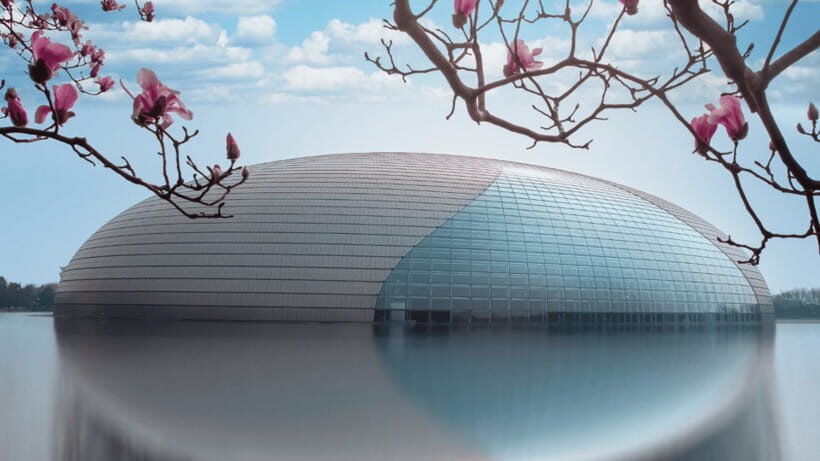
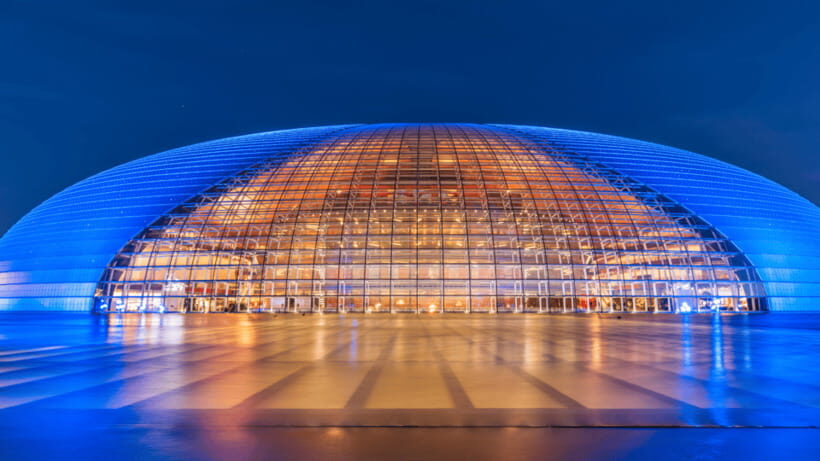
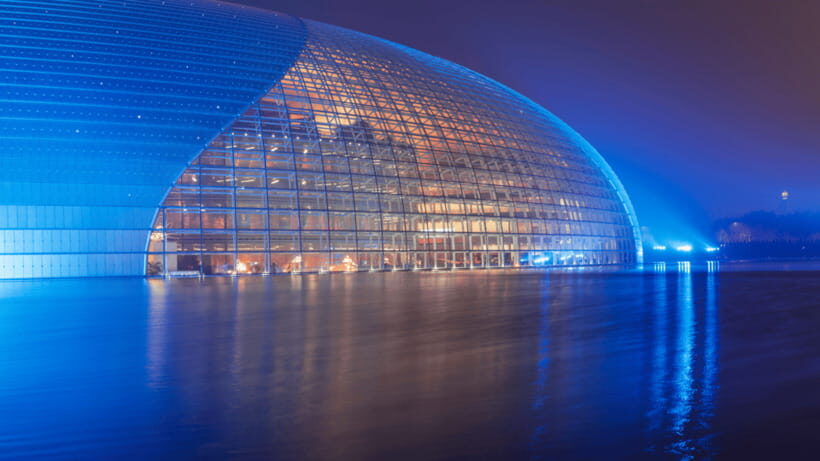
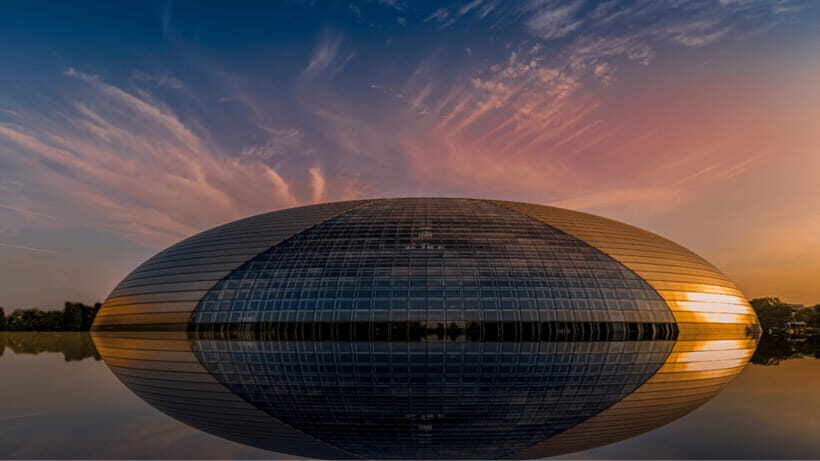
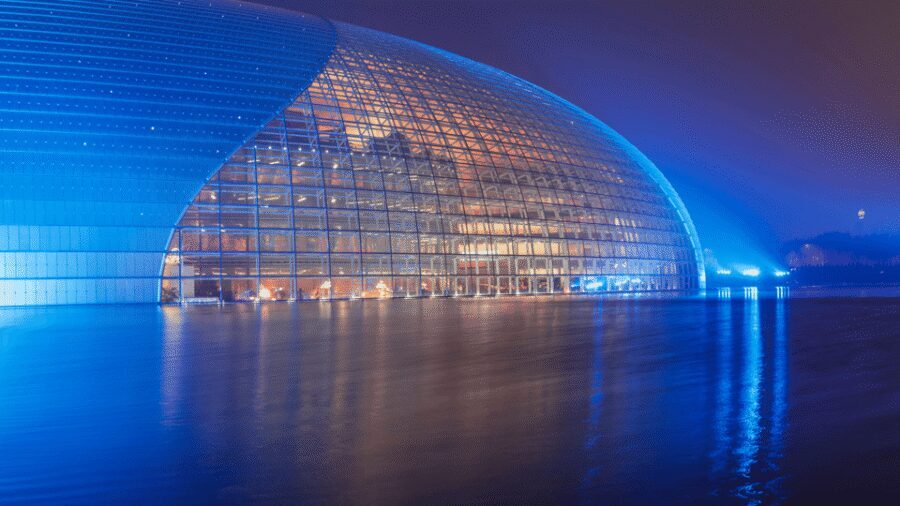
The National Centre for the Performing Arts sits in the heart of Beijing’s cultural map, and it does not try to be subtle. French architect Paul Andreu designed the building to look like a giant elliptical egg-shell floating above water. The exterior wraps in a massive curved titanium skin, with glass and curved glazing built into the form so daylight can reach the interior.
What makes it interesting isn’t only the shape. It’s how the building connects to its setting: the NCPA is surrounded by a large artificial lake (100,000 square meters) where the water is treated to create different reflections depending on light and weather. In real life, that means your photos and your impressions will shift throughout the day.
If you like modern architecture, you’ll probably find yourself slowing down at corners, because angles change fast. And if you’re more arts-focused, the design still matters—the building is clearly meant to signal that performances here are a big deal.
You can also read our reviews of more tours and experiences in Beijing
Meeting at the North Gate and planning your 4-hour visit
This ticket is built around a 4-hour visit window, and you start at the North Gate of the National Centre for the Performing Arts. That’s a gift for you, because you can plan like an adult: arrive, check in, and then spend your time where you want most.
Also note what you’re not getting. Your ticket includes entry to the NCPA building visit and an English PDF guide book. You are not buying performance seats with this price, so if you want an opera, concert, drama, or a show ticket, you’ll need to arrange that separately.
Practical tip: bring your passport or ID card. Access at the NCPA is controlled, and having the right ID helps avoid last-minute friction. It’s also wise to build in time before sunset if you’re hoping for that dazzling evening vibe, because schedules can affect what feels “show-like” versus museum-like.
What you’ll actually do inside: tour access without a live guide
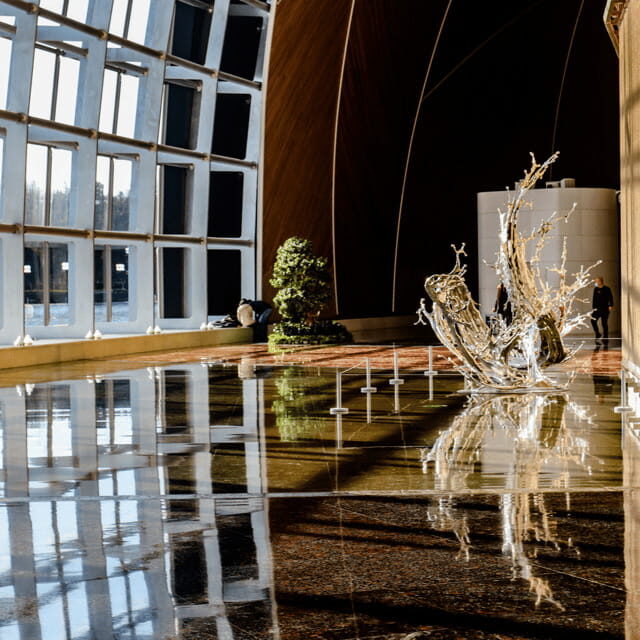
The entry ticket is for visiting the building and learning about its design concept and background. Since the experience does not include a live tour guide or an audio guide, the PDF guide becomes your best friend. It helps you connect what you see—materials, curvature, and layout—with why it was designed that way.
Inside, the big story is how the curved glass and titanium shell shape your experience. Even before you reach the main performance spaces, you’ll likely get the sense that the building is engineered to feel spacious but also enclosed—like you’re inside a form, not just walking through rooms. That’s one reason the NCPA works as both an architecture visit and a cultural stop.
Here’s how to use your time well. Spend the first part of your visit orienting yourself: take a few minutes to spot where the different venues connect, then follow the flow that matches your interests. If you’re most excited by architecture, linger near the best viewpoints for the shell and glazing. If you care more about performance, prioritize the opera/concert/theatre areas as you move through the building.
The three venues: opera, concert hall, and theatre
A huge value of visiting the NCPA is that you get a taste of its scale. The building houses three main performance venues:
- The Opera House: seating capacity over 2,000.
- The Concert Hall: seating capacity over 1,200, commonly for symphonic concerts and musical performances.
- The Theatre: designed for drama and dance, with seating around 1,000.
Even if you don’t attend a performance that day, you’re still stepping into spaces that are built for specific kinds of art. You may feel the difference in how each venue is shaped for its purpose. Opera spaces, for example, typically demand strong audience sightlines and acoustical thinking, while drama and dance often emphasize stage-to-audience visibility and movement.
One useful angle: if you’re deciding whether to add show tickets later, visiting first helps you understand what kind of performance you’d enjoy most. That’s not a small thing. It’s easier to choose when you’ve seen the scale and atmosphere of the spaces you’re booking.
The artificial lake and where photos tend to get better
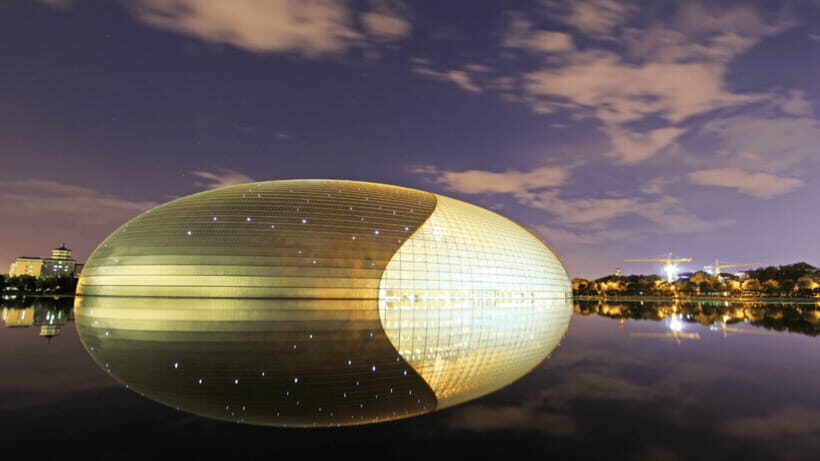
The NCPA’s “egg” doesn’t exist alone. The lake is part of the product. With treated water designed to create varying reflections, the surroundings can look totally different depending on sun angle and cloud cover. On bright days, you’ll often get crisp reflections. On overcast days, the building can look more dramatic because the light softens.
If you’re photo-minded, treat the lake as an attraction with its own mini-itinerary. Walk around the exterior viewpoints and notice how the shell shape stretches when seen at different distances. The egg effect can look stronger from certain angles near the waterline, and the curved titanium surface can glow subtly when the sky brightens.
One caution from real-world timing: if you’re visiting when show lighting isn’t running, the opera and theatre areas can feel a bit gloomy. That doesn’t ruin the architecture, but it does mean your “wow” moment may be more about daytime glass and exterior form than interior sparkle.


Evening light show and performances: how to avoid disappointment
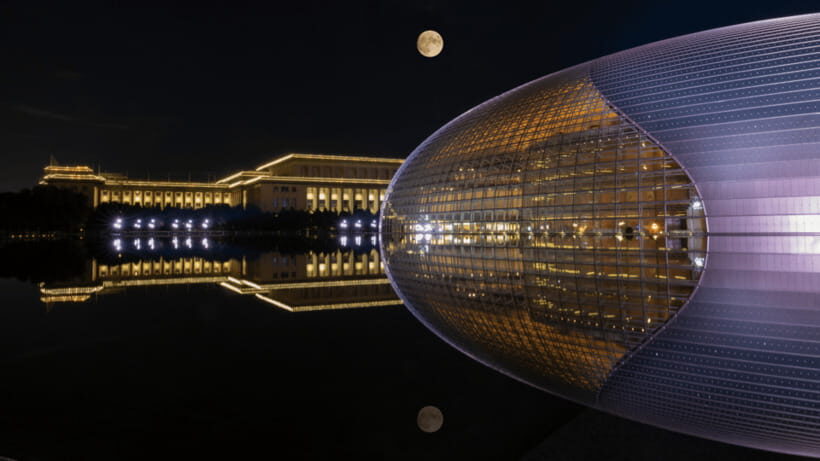
The highlights promise a stunning light show & cultural performance. That’s a fair expectation, but here’s how I’d manage it for your best outcome: treat the light show as schedule-dependent. If your visit lines up with an active program, the building often feels more theatrical—like the architecture is part of the show.
If there’s no performance running during your window, the interior lighting in the opera and theatre areas may be off or reduced, which can make those spaces look darker than you hoped. Still, the core experience stays valuable: you’ll be inside one of Beijing’s most recognizable contemporary buildings. But your evening “cinema moment” might be quieter.
So the smart move is simple. If you have flexibility, aim for an evening window for the best chance at lights and a more animated atmosphere. And if you don’t see the big show elements, don’t panic. Use the time to focus on materials, views, and the venue scale you can’t get from outside alone.
Price and value: is $20 worth it?
At about $20 per person, this is a pretty reasonable entry ticket for a major Beijing cultural landmark—especially because your price includes building access plus an English PDF guide. The value is strongest if you want the architecture and the venue scale without committing to a performance seat.
But be clear on the trade-off. This ticket does not include performance tickets. If you’re planning on seeing an opera, concert, or theatre show, your total trip cost will rise once you add those separate tickets.
From a decision standpoint, I’d call it a strong “architecture-and-venues” buy. If your primary goal is a specific staged performance, you’ll likely want to plan that first, then treat this as the perfect pre-show or standalone visit when schedules allow.
Who this NCPA visit suits best
This is a good match for you if any of these ring true:
- You’re a modern architecture fan and like seeing how design choices work in real spaces.
- You want a cultural anchor in Beijing that ties directly to major performing arts.
- You enjoy self-paced exploring, since there’s no required live tour and you’ll have an English PDF guide.
- You’re planning an evening around the NCPA and want time to see the building before lights and performances take over.
It also works well as a “cross-interest” stop. Even if you’re traveling with someone who cares more about shows than buildings (or the other way around), the NCPA gives both sides something to focus on.
Book this tour or skip it?
I’d book this NCPA visit ticket if you want a high-impact Beijing stop for your time, especially for the egg-shell architecture, the lake reflections, and the chance to see how the opera/concert/theatre venues feel as spaces. The included English PDF guide helps you get context without needing a live guide.
Skip it or reconsider if you’re mainly chasing a specific performance and your dates are tight. Since performance tickets aren’t included here, you’ll still need to plan show seats separately. Also, if you’re visiting at a time when no lighting or programming is running, some interior areas may look darker than you might expect—so set your expectations around what your visit window can deliver.
FAQ
How long is the NCPA visit?
The visit duration is listed as 4 hours.
What does the ticket include?
It includes tickets for visiting the National Centre for the Performing Arts and an English PDF guide book.
Are performance tickets included?
No. Tickets for performances at the NCPA are not included with this visit ticket.
Where do I meet for the activity?
The meeting point is the North Gate of the National Centre for the Performing Arts.
What should I bring?
You should bring a passport or ID card.
Is the venue wheelchair accessible?
Yes, the experience is listed as wheelchair accessible.
What’s the cancellation policy?
Free cancellation is available up to 24 hours in advance for a full refund.