REVIEW · BEIJING
Beijing: Lama Temple (Yonghe Temple) Admission Ticket
Book on GetYourGuide →Operated by PANDA144 experience · Bookable on GetYourGuide
A calm, sacred maze in Beijing. A ticket here is really about walking through Tibetan Buddhist grandeur at your own pace.
I especially like the fast-track entry that gets you past the main ticket line, and the way the complex gives you clear, logical stops—from the gate courtyards into the major halls. One thing to consider: even with an easy ticket, you still go through security checks, and on big prayer days the temple can feel crowded.
The Lama Temple—also called Yonghe Temple—is a Tibetan Buddhist site in Beijing that’s famous for architecture that blends multiple traditions and for one statue you won’t forget.
In This Review
- Key things I’d focus on before you go
- Lama Temple in a Ticket: what you’re really buying
- Before you enter: ID matching and the QR-code gotcha
- From Yonghe Gate onward: how the complex is laid out
- A note on styles
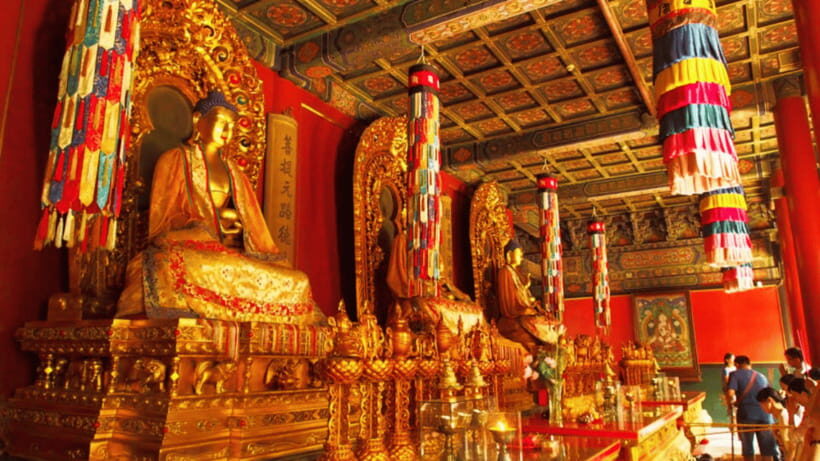
- Yonghe Palace Hall: where scale and symbolism hit
- The Four Learning Halls: a self-guided route with built-in meaning
- The 18-meter sandalwood Buddha (Guinness-record famous): why it matters
- Incense, prayer, and crowds: how to time your visit for better calm
- Price and logistics: is it worth $10?
- Who this self-guided Lama Temple ticket suits best
- The practical way to plan your day inside the temple
- Book it or skip it? My take on whether you should go
- FAQ
- What is the duration of the Lama Temple (Yonghe Temple) ticket?
- How much does the ticket cost?
- Does fast-track entry skip security checks?
- Are guided tours or audio guides included?
- What do I need to bring to enter?
- Is the GetYourGuide QR code valid as a ticket?
- Do I need a real-name booking with passport details?
- What are the entry and exit timing rules?
- Is wheelchair access available?
- Is cancellation free?
- What items are not allowed?
Key things I’d focus on before you go
- Fast-track ticket line, not security: you’ll still pass checks at the entrance channel
- Real-name ID matching: your name and passport number must match what’s booked
- A self-guided route through the big hitters: Yonghe Gate, Yonghe Palace Hall, and the Four Learning Halls
- The 18-meter sandalwood Buddha: a Guinness-record statue you’ll see up close
- Prayer atmosphere is real: incense burning and worship activity are part of the experience
- WhatsApp/confirmation support from PANDA144: helpful for first-time Beijing visitors
Lama Temple in a Ticket: what you’re really buying
For about $10 per person, this ticket is all about getting you inside Beijing’s Lama Temple (Yonghe Temple) with fast-track entry. That matters more than you might think in Beijing—ticket lines can be a slow grind, and temples are best enjoyed when you can actually start walking and looking.
What you get is access to all major temple buildings and cultural exhibitions, plus a reservation fee. What you don’t get is the thing many people assume they’re purchasing: no guided tour and no audio guide. That turns this into a self-guided visit, which is great if you like to set your own pace—slow down for a hall, then move on when you want air and space.
One practical takeaway: fast-track helps you with the ticket step, but it does not remove security screening. So treat this like a “quicker start,” not a “no checks” pass.
Also, bring your passport. This is a real-name ticket experience, and the gate expects ID info exactly as booked.
You can also read our reviews of more tours and experiences in Beijing
Before you enter: ID matching and the QR-code gotcha
This is the part that can make or break a smooth visit.
First: the GetYourGuide QR code is not a valid ticket. You’ll need to communicate via WhatsApp or wait for the confirmation email. If you arrive relying on the QR alone, you’re likely to waste time at a desk.
Second: your booking requires real-name ticketing. You must send your full name exactly as it appears on your passport and your passport number. If that information doesn’t arrive on time, the booking can be canceled and a cancellation fee may apply.
When you arrive, show your ticket at the designated entrance channel, then proceed through the security checks before you enter the temple grounds. That’s why it’s smart to arrive with a little buffer—queue-juggling at gates is not the vacation style you want.
From Yonghe Gate onward: how the complex is laid out
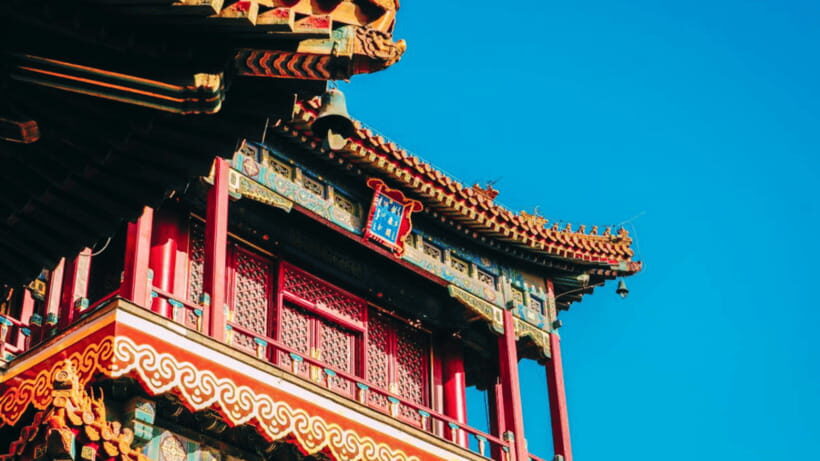
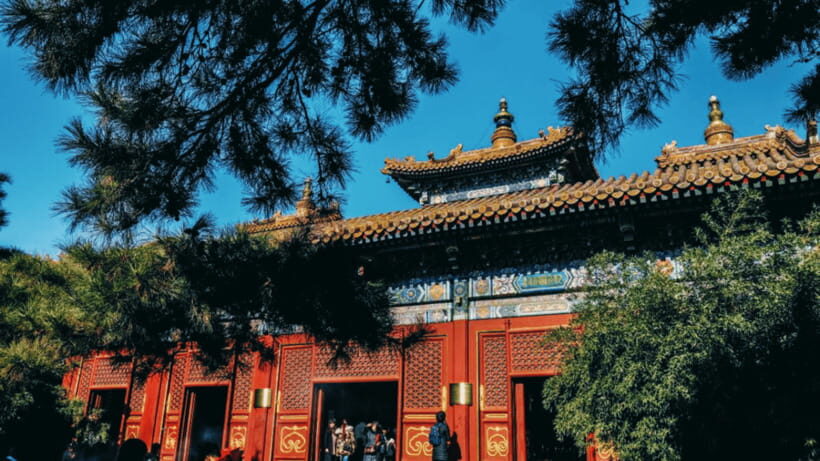
The Yonghe Temple complex is designed like a sequence of thresholds. You don’t just wander into random buildings—you move from archway to hall, and each step shifts the mood from “city” to “ritual space.”
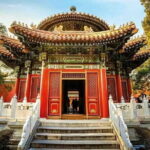
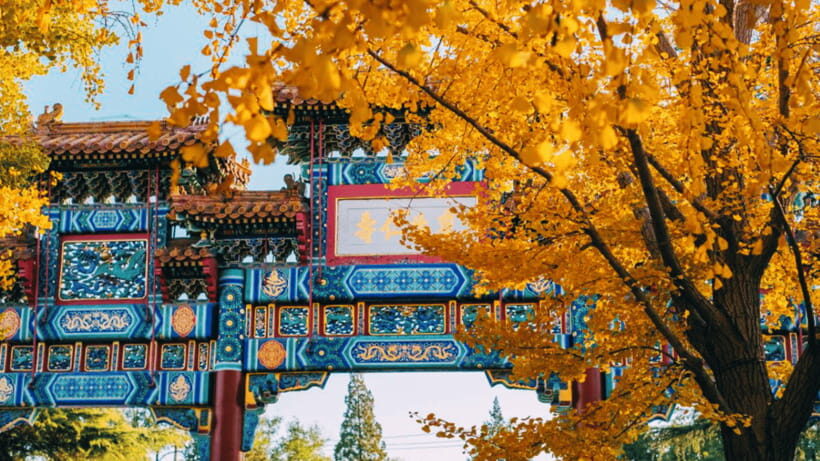
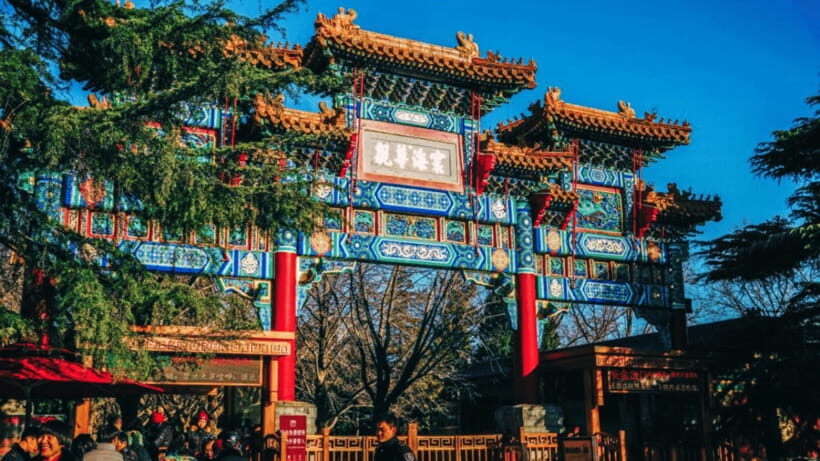
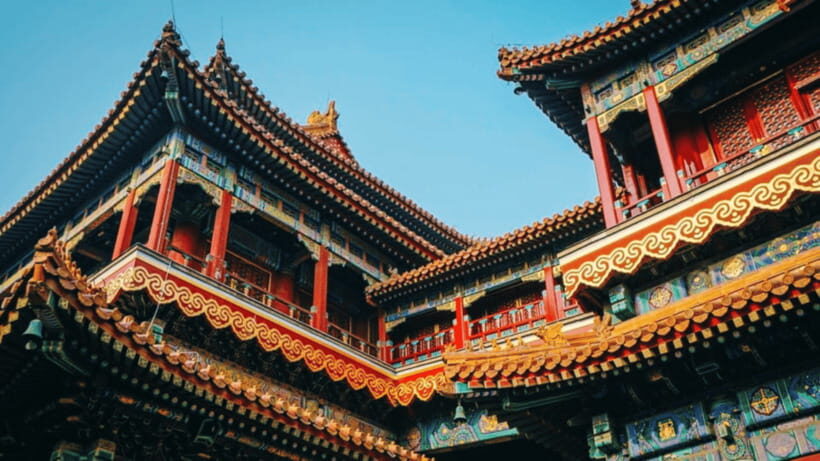
A key detail: the temple is known for its three intricately designed archways, including the Yonghe Gate. You’ll also find the Yonghe Palace Hall and the Four Learning Halls (Hall of Medicine Buddha, Mathematics Hall, Tantric Hall, and Lecture Hall), plus three exhibition rooms.
Why this layout works for you:
- It gives you natural “stop points” when you’re traveling solo.
- It prevents the visit from feeling like one long hallway.
- It helps you notice how Tibetan Buddhist devotion is expressed through architecture, not just statues.
Even if you don’t read every label inside, you’ll feel the shift in space—courtyards open up, halls get darker and more ceremonial, and your attention settles on the objects of worship.
A note on styles
The architecture reflects a blend of Han, Manchu, Tibetan, and Mongolian influences. That mix is part of what makes this temple so compelling: you see how different traditions were translated into a single, highly intentional imperial religious setting.
Yonghe Palace Hall: where scale and symbolism hit
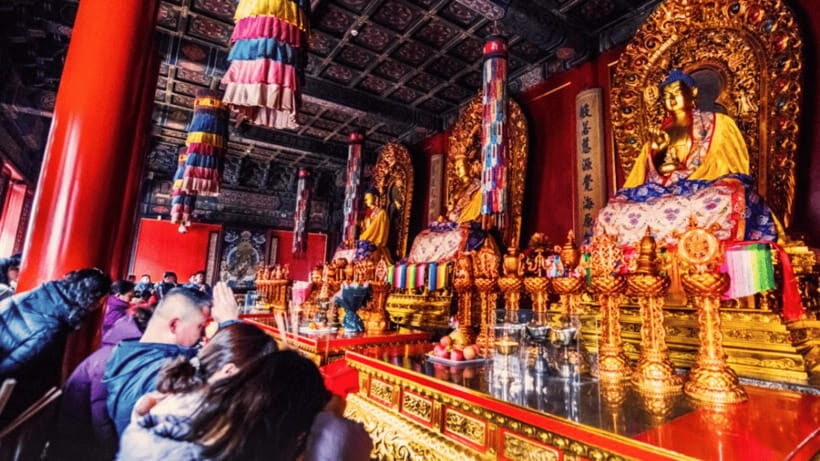
The Yonghe Palace Hall is one of the main draws, and it’s usually where your sense of scale becomes real.
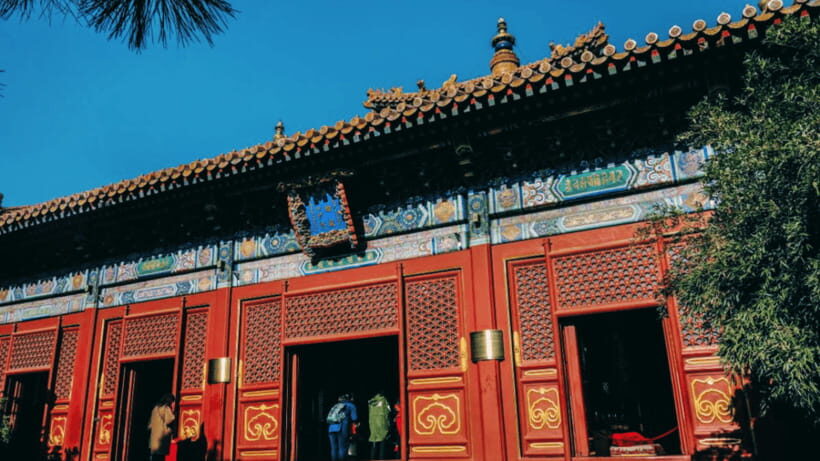
This is where you’ll find many Buddha statues and significant religious artifacts inside the hall spaces. The temple’s reputation isn’t just about being “old”—it’s about being designed to be awe-inducing without needing modern lighting tricks. You’re looking at carefully preserved architectural features and religious displays that were meant to guide worshippers’ focus.
If you like photography, this is also one of the places where you’ll notice the limits of lighting. Halls tend to feel deeper and more shaded than outdoor courtyards, so plan to move slowly and shoot only when you have a clear line of sight. You’ll also likely share space with worshippers.



The Four Learning Halls: a self-guided route with built-in meaning
The Four Learning Halls are a strong reason to choose a ticket that covers the major buildings. Even without a guide, this part of the visit works like a mini curriculum.
Here’s how they map to your experience:
- Hall of Medicine Buddha: expect a space tied to healing and spiritual protection themes. Even if you don’t know the details, the devotion feels focused and everyday.
- Mathematics Hall: this one surprises people. It’s a sign that temple learning historically wasn’t only religious text—it also included disciplines connected to knowledge and teaching.
- Tantric Hall: this is where the temple’s ritual character becomes more explicit. You’ll likely notice the ceremonial atmosphere and the way people behave differently in the space.
- Lecture Hall: a space tied to teaching. It’s a good moment to slow down—stand back, observe the flow, and let the building’s intent land.
Because you’re going without an audio guide, your best move is to pick one hall to linger in longer than the rest. You’ll get more from the experience that way than sprinting through all four in a single sweep.
The 18-meter sandalwood Buddha (Guinness-record famous): why it matters
One statue is specifically called out as famous: the 18-meter-tall sandalwood Buddha. It has held a place in the Guinness World Records since 1990.
You’ll feel why this matters the second you realize it’s carved from a single piece of sandalwood. A lot of famous statues are impressive because of size or craftsmanship. This one is impressive because of the material constraint—carving such a large figure from one piece is not a casual feat.
Even if you aren’t a “big statue” person, this is worth your time because it changes how you see the whole complex. After you’ve seen something this large, smaller details—incense smoke drifting, wall carvings, offerings—start to feel like part of the same devotional system.
Incense, prayer, and crowds: how to time your visit for better calm
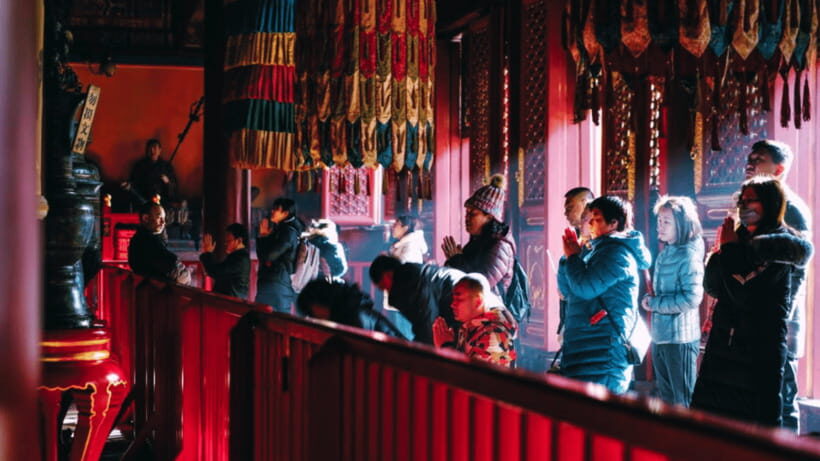
This temple isn’t a museum. People come here to pray, and that shows.
On busy days—like New Year’s Day—the complex can be crowded because worshippers come for the ritual. One visitor notes that it was crowded but still beautiful, with incense burning and prayer happening in everyday rhythm.
So here’s my practical advice:
- If you want quieter photos and more breathing room, avoid major holiday peaks.
- If you’re okay with more people, plan for a more intense atmosphere—worship is the point here, and the crowd can feel like part of the experience.
Also, don’t fight the environment. Keep moving with intention, and accept that incense smoke and chanting-style prayer activity are part of the real deal.
Price and logistics: is it worth $10?
Let’s talk value like a skeptic.
For $10, you’re paying for:
- Fast-track entry (saving time at the ticket line)
- Access to major temple buildings and cultural exhibitions
- A reservation fee
What you’re not paying for is guidance. No guide means you won’t get someone standing beside you explaining each artifact. That’s not a downside if you like self-guided sightseeing. It is a downside if you want interpretation without doing any reading.
Is it worth it? For most people, yes, because the temple itself is the main event. You’re not paying for transportation, a themed itinerary, or a production. You’re paying to walk through a major Beijing religious site quickly and legally—with your entry sorted ahead of time.
Who this self-guided Lama Temple ticket suits best
This works especially well if you:
- Want a focused half-day to full-day temple visit without being tied to a group schedule
- Prefer exploring on your own pace through multiple halls
- Like architectural details and religious artifacts enough to spend real time inside
- Appreciate practical support that helps you avoid booking mistakes
It may not be ideal if you:
- Need a full guided explanation to understand what you’re seeing
- Get stressed by real-name ID rules and gate procedures (because you do need everything matched)
- Want guaranteed quiet on peak days (the temple is actively used for prayer)
The practical way to plan your day inside the temple
Because this is self-guided, I’d plan your visit like this:
- Start at the front sequence (gate → main hall areas). Give yourself time to orient.
- Choose one hall to linger before moving on. The Four Learning Halls are easier to enjoy when you aren’t treating them as a checkbox list.
- Make the 18-meter sandalwood Buddha a top stop. Once you’ve seen it, your “wow level” is set, and everything else feels more meaningful.
- Use the exhibition rooms as your “recharge” breaks if the main halls feel crowded.
A small mindset shift helps: think of the temple as a flowing ritual space. Move when it makes sense, pause when your attention lands, and let the incense-and-prayer atmosphere do what it does.
Book it or skip it? My take on whether you should go
If you want Beijing’s Lama Temple experience without the hassle of wrestling with lines and unclear entry steps, I’d say book this ticket. The combination of fast-track entry and real access to major buildings is a practical win, especially if you’re short on time.
Skip it only if:
- You specifically need a guided tour with narration (this doesn’t include one),
- You know you’ll have trouble with real-name passport matching rules, or
- You’re planning to arrive right at the last possible moment and hate the idea of timed entry windows.
If you’re flexible and can follow the entry process, this is a strong, straightforward way to see one of Beijing’s most distinctive sacred complexes—complete with the hall-scale details and the Guinness-record sandalwood Buddha people remember long after they leave.
FAQ
What is the duration of the Lama Temple (Yonghe Temple) ticket?
The duration is listed as 1 day. You’ll check availability to see starting times.
How much does the ticket cost?
The price is $10 per person.
Does fast-track entry skip security checks?
Fast-track helps with skipping the ticket line, but it does not skip security checks. You still need to go through security after entering via the designated entrance channel.
Are guided tours or audio guides included?
No. This ticket includes access and fast-track entry, but it does not include guided tours or audio guides.
What do I need to bring to enter?
You should bring your passport.
Is the GetYourGuide QR code valid as a ticket?
No. The GetYourGuide QR code is not a valid ticket. You need to communicate via WhatsApp or wait for the confirmation email.
Do I need a real-name booking with passport details?
Yes. Real-name ticket booking is mandatory, and only genuine ID information is accepted at the ticket gate. Your full name (as on your passport) and passport number must be provided.
What are the entry and exit timing rules?
Final entry is one hour before closing, and visitors must exit 30 minutes before closing.
Is wheelchair access available?
Yes. The experience is listed as wheelchair accessible.
Is cancellation free?
Yes. You can cancel up to 24 hours in advance for a full refund.
What items are not allowed?
The ticket info lists no pets, no weapons or sharp objects, and no explosive substances.