REVIEW · BEIJING
Beijing Forbidden City Ancient Ruins Ticket Pass
Book on Viator →Operated by 北京周游研学旅行社有限公司 · Bookable on Viator
Beijing’s royal sites are easier with a smart ticket pass. This one is a mobile ticket concept with a useful pile of free ePDF prep guides, and you can mix-and-match major sights like the Forbidden City, Great Wall, Temple of Heaven, and more. I like the flexibility to choose your day plan, and I really like the extra pre-trip PDF tips that help you shop smarter and understand what you’re looking at. One drawback: if your entry expectations don’t match the exact option you select, you could get stuck at the gate, so double-check the reservation details before you go.
You also get a practical safety net: 7*24 service support and emergency-style planning guidance. For certain choices (like the Forbidden City or Tiananmen Square options), you may add a private English guide to help with on-the-ground context and taxi or Didi logistics (you pay the ride). The catch is simple: there’s no pick-up and no transport included, so you’ll be doing your own getting-around.
In This Review
- Key highlights to know before you book
- A $5 ticket pass that feels like a choose-your-own-day plan
- How the mobile ticket and passport entry works in practice
- The free ePDFs you get before you arrive (and how to use them)
- Price and logistics: what $5 covers and what it does not
- Your route options across Beijing’s biggest ancient sites
- Jingshan Park: the quick imperial-view payoff (and why it helps your photos)
- Mutianyu Great Wall: scenic Ming section, plus shuttle-only entry
- Forbidden City (Palace Museum): top priority, strict prebooking, optional private English help
- Temple of Heaven: UNESCO serenity with iconic echo acoustics
- Summer Palace and Beihai: where parks help your legs recover
- National Museum of China: a planning option for rainy days and history lovers
- Timing, weather, and the simple reality of Beijing
- Who this ticket pass is best for
- Should you book this Beijing Forbidden City Ancient Ruins Ticket Pass?
- FAQ
- What’s included in the Beijing Forbidden City Ancient Ruins Ticket Pass?
- Do I get a mobile ticket?
- How do I enter the sites?
- Do I need to submit my passport details when booking?
- Is pick-up or drop-off included?
- Is an English tour guide included?
- What’s included for the Mutianyu option?
- Do I need to reserve the Forbidden City in advance?
- Do I need to reserve the National Museum of China in advance?
- What if the weather is bad?
Key highlights to know before you book

- Mobile ticket + passport swipe at the sites, so you’re not carrying paper all day
- Free ePDFs before you arrive, including city-walk ideas, shopping spots, special foods, and Chinese history notes
- Choose your own route across major Beijing landmarks instead of one fixed guided day
- Mutianyu option is entry + shuttle only, while cable car/chairlift/toboggan need separate planning
- Optional private English guide may be available for the Forbidden City/Tiananmen Square choices, but transport stays on you
- Prebooking needs your passport details, especially during peak season
A $5 ticket pass that feels like a choose-your-own-day plan

For $5 per person, this pass is priced like it’s focused on access, not a full escorted tour. The real value is that it lets you pick the place you want by selecting different options, which is handy when Beijing days can get messy with weather, jet lag, and real-life timing.
The time window listed for this experience can stretch a lot (roughly 1 to 18 hours). That’s your hint that you’re not locked into one rigid schedule. You can build a quick “highlights loop” or take a slower approach—especially on days when your energy is higher than your Google Maps battery.
The other big advantage is prep. Before you arrive, you’re sent free ePDF tips online, including a city-walk guide, shopping places, Modern Beijing places, special foods, and an intro to Chinese history. It’s the kind of offline-and-on-the-move help that makes your first hour in Beijing less confusing.
You can also read our reviews of more tours and experiences in Beijing
How the mobile ticket and passport entry works in practice
This product uses a mobile ticket format. In many checkpoints, the basic move is: swipe or show your passport to staff and then you’re in. That sounds simple because it is, but it’s worth planning for because peak season rules can be strict.
You’ll also need your booking details submitted in advance. The provider asks for first name, last name, and passport number for the group so they can prebook tickets. In peak season, they note that tickets for the Forbidden City are hard to get and may require prebooking at least 7 days in advance.
One important mindset shift: treat this as a ticket service with some smart extras, not a “show up and solve everything” plan. If you pick the wrong option for the day you’re traveling, or if you don’t have the right reservation tied to your details, you can end up unable to enter.
The free ePDFs you get before you arrive (and how to use them)

The free online PDFs are genuinely useful because they reduce the usual Beijing friction: figuring out what to see, how to group it, and what to eat.
Here’s how I’d use them:
- Start with the city-walk ideas. Pick one “walkable cluster” so you’re not bouncing across town every hour.
- Use the shopping places list to set expectations early. You’ll know where you’re going, and you’ll waste less time comparing places with no plan.
- Read the Chinese history intro fast, not deeply. You’re aiming for context that helps you decode signs and storylines while you’re there.
- Scan the modern Beijing suggestions if you want a day that feels less like only palaces and temples.
This is especially helpful if you’re traveling with kids or if you prefer to understand what you’re looking at before you stand in line.
Price and logistics: what $5 covers and what it does not
The headline price looks like a bargain because the ticket fee is included. But the excluded parts matter just as much.
Not included:
- private transportation (no pick-up or drop-off from station or airport)
- car rental
- a tour guide as part of the separate “ticket price option”
What you should confirm in your chosen option:
- For the Mutianyu choice, the option includes entrance fees and a shuttle bus back and forth.
- Cable car/chairlift and the toboggan run way are not included for Mutianyu. If you want those, you need to plan separately and tell the provider in advance if you need them.
So the value equation becomes: you’re paying for access, prep PDFs, and flexible options—not for comfort transportation. If you like using public transit or short taxi rides to connect sites, this fits well.
One more practical detail: the sites are described as near public transportation. That doesn’t mean they’re “walk everywhere” close, but it does mean you’re not relying on a private vehicle to make the plan work.
Your route options across Beijing’s biggest ancient sites

This pass is built for flexibility, so you can combine multiple stops depending on how you select your options. The included stops list covers a broad sweep: Jingshan Park, Mutianyu Great Wall, the Forbidden City (Palace Museum), Temple of Heaven, Summer Palace, Beihai Park, and the National Museum of China.
A smart strategy is to avoid making all your “big walking days” fall on the same morning. Beijing can stack up steps fast—especially at the Forbidden City and on Great Wall sections. If you mix one heavy walking stop with one park or museum stop, your day feels more human.
Below is how each location fits into a good day plan.
You can also read our reviews of more city tours in Beijing
Jingshan Park: the quick imperial-view payoff (and why it helps your photos)
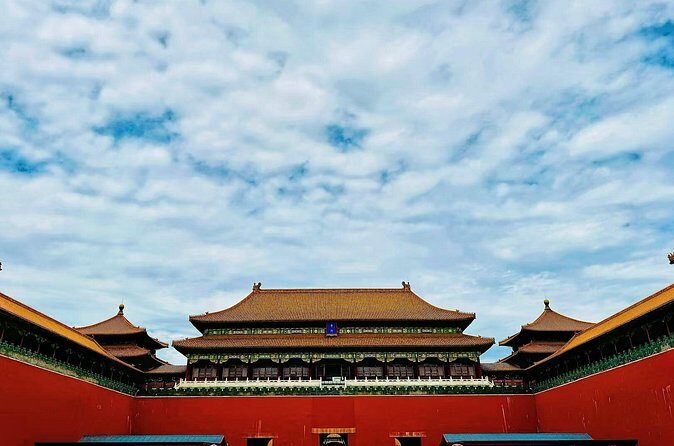
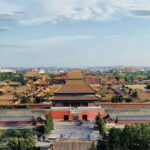
Jingshan Park is a historic oasis in the city center. It was once an imperial garden during the Ming and Qing dynasties, and it’s built with earth taken from the construction of the Forbidden City. That means you’re standing on material literally tied to the palace project, and the view from up top gives you a feel for the Forbidden City’s scale.
Time-wise, it’s listed at about 2 hours, and it’s admission-free within this pass concept. You can use it like a warm-up: arrive, get oriented, and then tackle the larger sites with better context.
The best part: it’s an easier “stand back, look, and understand” moment before you go into dense ticketed areas.
Mutianyu Great Wall: scenic Ming section, plus shuttle-only entry
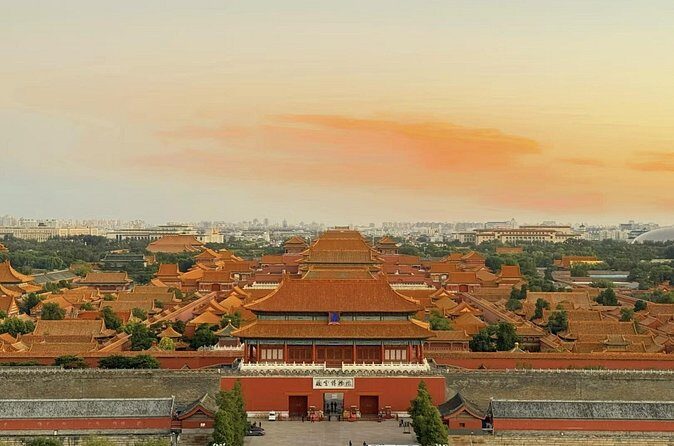
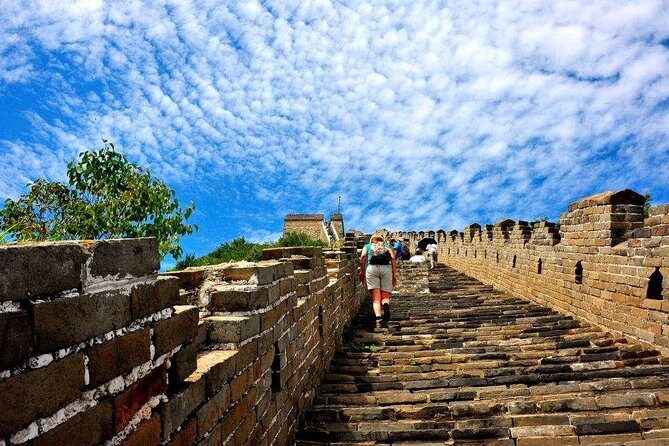
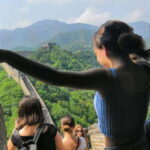
Mutianyu is about 70 km northeast of Beijing and is known in this pass description as one of the best-preserved Ming Dynasty sections. It has dense watchtowers—22 in a 2.5 km stretch—and a feature called three-watchtowers-in-one. You also get forests around the wall, and it’s described as offering hiking and stunning views.
Your practical planning depends on how you manage the wall ascent and descent:
- You can access it by cable car or chairlift (but those rides are not included in the Mutianyu option).
- If you want toboggan fun, that run way is also not included.
What the Mutianyu option does include is your entrance fees and shuttle bus back and forth. That’s a big help because getting out to the Great Wall on your own can be time-consuming.
Reality check: the Great Wall is never a quick stop. Even with shuttle access, you need time for walking, breaks, and photos. Plan for weather too. If it’s too wet or windy, the wall can feel long.
Forbidden City (Palace Museum): top priority, strict prebooking, optional private English help
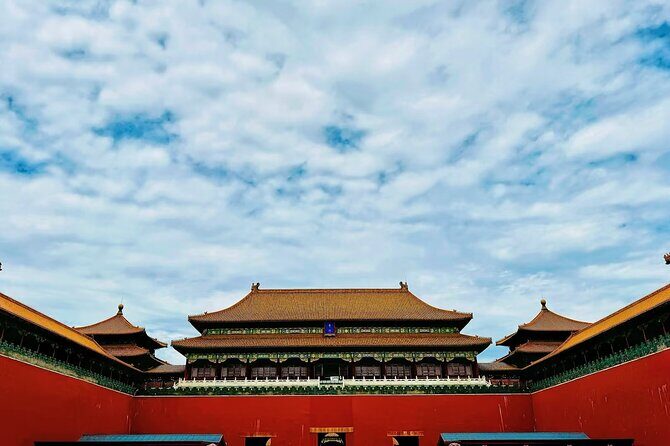
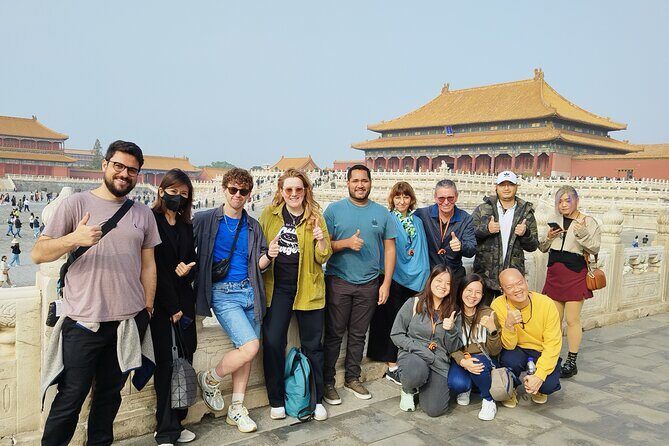
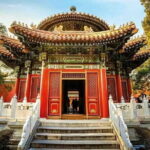
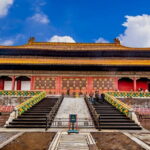
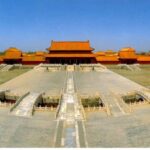
The Forbidden City is the Beijing centerpiece in this pass. The description calls it the world’s largest imperial palace complex, with 980+ buildings. It served as the seat of power for the Ming and Qing dynasties from 1420 to 1912 and it holds centuries of treasures and imperial artifacts.
Because it’s the most in-demand site, reservations matter a lot. The provider notes that you should reserve at least seven days in advance, and reservations made within seven days may require an additional tour guide fee (in certain cases tied to the reservation timing).
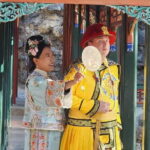
Also: the pass can be paired with a private English tour-guide option for the Forbidden City choice. That could help if you’re the type who wants the story of what you’re seeing—who lived where, what symbols meant, and how to navigate efficiently. You still pay your taxi or Didi if you need help with transportation, but the guide support can remove stress.
One caution from the overall experience: there’s an indication that entry problems can happen when ticket expectations don’t match the exact reservation/option. So I’d treat your confirmation as sacred. If you booked the Forbidden City option, make sure your ticket is actually tied to your passport details and the correct site.
Temple of Heaven: UNESCO serenity with iconic echo acoustics
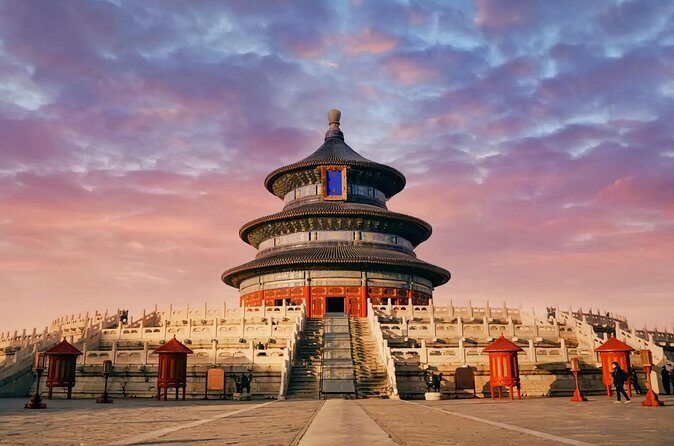
Temple of Heaven is listed as a UNESCO site and it’s one of the calmer, more reflective breaks you can take between palace and wall days. The complex was built in 1420 and it’s described as the Ming emperors’ sacred sacrificial altar complex.
Two named highlights you should look for:
- Hall of Prayer for Good Harvests
- Echo Wall
There’s also a lot of space in this park setting—273 hectares—so it doesn’t feel like you’re trapped indoors. Plan for about 1 hour in your day if you’re moving efficiently, but give yourself slack if you like wandering and taking your time with architecture and open areas.
The best use of your ePDF history notes here is simple: you’ll understand why this place is structured the way it is, not just that it looks pretty in photos.
Summer Palace and Beihai: where parks help your legs recover
Summer Palace (Yiheyuan) is another UNESCO imperial garden and a classic “slow down” stop. It was built in 1750 and rebuilt in 1886, and it features Kunming Lake and Longevity Hill. The pass description points out key sights like Marble Boat, Long Corridor, and Seventeen-Arch Bridge.
If your Great Wall day leaves your knees unhappy, Summer Palace is a good counterbalance. You’ll still walk, but you can pace yourself across viewpoints, lake areas, and scenic corridors rather than climbing.
Beihai Park is described as an ancient imperial garden dating to the 10th century. It includes the White Dagoba, Nine-Dragon Wall, and Jade Flowery Islet. It’s positioned as a serene public park near the Forbidden City.
A smart pairing is to use Beihai Park after your Forbidden City block. You get a change of scenery, a place to sit, and a calmer atmosphere to reset for evening meals.
National Museum of China: a planning option for rainy days and history lovers
The National Museum of China is included as another stop option. The description explains that its predecessor dates to 1912, and in 2003 it was established through a merger of museum institutions focused on Chinese history.
In a trip packed with outdoor walking, museums can be a lifesaver. If the weather turns or you just want a break from crowds and long lines outside, this is a good “lower-stress” anchor point.
Just note the provider’s reservation guidance: for the National Museum of China, it says you should reserve at least seven days in advance, and reservations within seven days may require an additional tour guide fee. So treat it like a timed-plan item, not a casual drop-in.
Timing, weather, and the simple reality of Beijing
The experience notes that it requires good weather. If it’s canceled due to poor weather, you should be offered a different date or a full refund.
So don’t build your whole trip like a museum clockwork project. Keep one day more flexible if possible, especially if you’re planning Mutianyu, where conditions can affect the wall experience.
The duration range (up to 18 hours) also tells you the plan isn’t just one appointment. You’re choosing a stack of sights. Build in breaks. Beijing is not a sprint town.
Who this ticket pass is best for
I’d aim this at people who want:
- flexible sight choices across Beijing’s top names
- mobile ticket simplicity
- free pre-trip guidance that helps you understand what you’re seeing
- the option of adding private English help if you pick the Forbidden City or Tiananmen Square choices
It may be less ideal if you want:
- a fully guided, door-to-door service with transport included
- a single fixed schedule where you don’t need to manage reservations tightly
Because the price is low and the structure is flexible, you’re trading some handholding for control.
Should you book this Beijing Forbidden City Ancient Ruins Ticket Pass?
Yes, if you’re organized, you like flexible itineraries, and you’re comfortable handling transport and ticket timing on your own. The free ePDF prep tips are a real benefit, and the mobile ticket approach can make your day smoother.
Hold off or be extra careful if:
- you don’t plan to reserve at least 7 days ahead for high-demand options like the Forbidden City or National Museum
- you’re tempted to mix-and-match with other ticket sources without confirming the exact option tied to your passport
- you need pick-up or full transport included (it isn’t)
My practical advice: treat your booking confirmation as the main event. Save it, double-check the option you selected, and make sure your passport details were used for prebooking. If you do that, you’ll likely get a lot of value for $5 plus useful prep help.
FAQ
What’s included in the Beijing Forbidden City Ancient Ruins Ticket Pass?
It includes the ticket fee and useful ePDF tips to help you learn more about Beijing.
Do I get a mobile ticket?
Yes. This product uses a mobile ticket format.
How do I enter the sites?
You can swipe or show your passport to staff to get in.
Do I need to submit my passport details when booking?
Yes. You need to provide first name, last name, and passport number so tickets can be prebooked.
Is pick-up or drop-off included?
No pick-up is included. No private transportation is included.
Is an English tour guide included?
A private English tour-guide may be available for separate Tiananmen Square or the Forbidden City options. For the separate ticket price option, an English tour guide is not included.
What’s included for the Mutianyu option?
Mutianyu includes the entrance fees and the shuttle bus back and forth. Cable car/chairlift and the toboggan run way are not included.
Do I need to reserve the Forbidden City in advance?
Yes. Please make a reservation at least seven days in advance. Reservations made within seven days may require an additional tour guide fee.
Do I need to reserve the National Museum of China in advance?
Yes. Reserve at least seven days in advance. Reservations made within seven days may require an additional tour guide fee.
What if the weather is bad?
The experience requires good weather. If it’s canceled due to poor weather, you’ll be offered a different date or a full refund.