REVIEW · BEIJING
Beijing: Confucius Temple and the Impercial College E-ticket
Book on GetYourGuide →Operated by PidanTravelAgency · Bookable on GetYourGuide
Beijing quietly teaches you how exams shaped China. This Yuan-era Confucius Temple and Guozijian Imperial College pair big architecture with very concrete history.
I love the calm, ordered layout—temple on the left, college on the right—because it helps you understand what you’re looking at. I also love the stone tablet details from the imperial examination world, including carved Jinshi names you can actually read your way through. One thing to consider: you’ll want to pace yourself, because there’s a lot to take in across multiple courtyards and halls.
In This Review
- Key points I’d prioritize
- Left Temple, Right College: Why the Layout Matters
- Enter Fast: QR Code and Passport for Smooth Admission
- Confucius Temple Courtyards and the Central Axis You’ll Follow
- The Stone Tablets: 198 Pieces and 51,624 Carved Names
- Three Exhibitions Inside the Temple: What Each One Adds
- Guozijian (Imperial College): State Education in Yuan, Ming, Qing
- How to See Both in One Day Without Feeling Rushed
- Price and Value: What About $7 Gets You
- Who This Is Best For (and Who Might Not Love It)
- Should You Book the Beijing Confucius Temple and Imperial College E-ticket?
- FAQ
- What do I need to bring to enter?
- How do I enter—do I need paper tickets?
- How long does the experience take?
- What are the main sights included?
- Is the ticket valid for more than one day?
- Is it wheelchair accessible?
- Is there free cancellation?
Key points I’d prioritize
- QR code + passport gets you in, with ticket-line skipping built in
- Stone tablets with Jinshi names offer a rare, research-friendly look at the exam system
- Three-courtyard layouts make both sites easy to navigate even without a map-heavy plan
- Three temple exhibitions help connect architecture to story, not just scenery
- Guozijian’s main-axis halls show how the state ran education in Yuan, Ming, and Qing
Left Temple, Right College: Why the Layout Matters
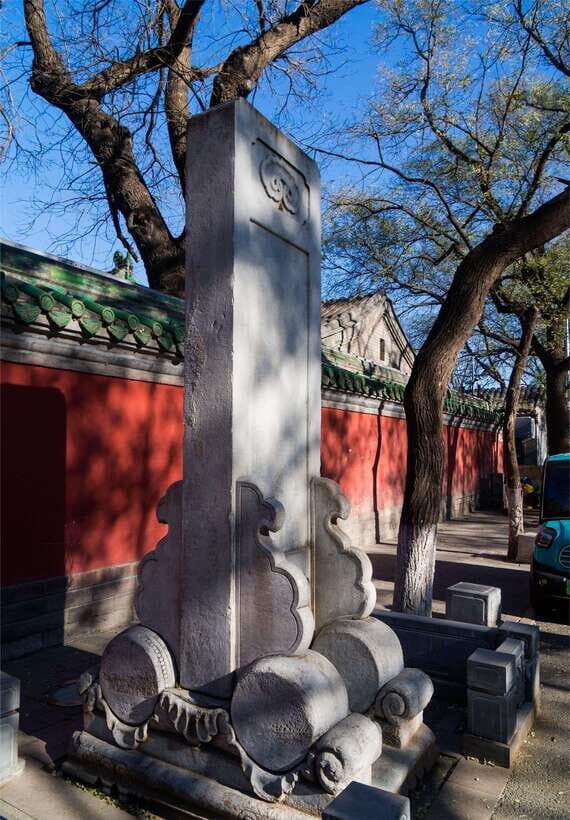
The Confucius Temple and Guozijian (the Imperial College) are designed as two matching halves. You’ll see the rule of temple on the left and college on the right, and that makes a huge difference when you’re trying to follow what’s happening.
Think of it this way: the temple side is about reverence and ritual—memorial ceremonies for Confucius held over many dynasties. The college side is about training and administration—education as a state system. When you walk the two spaces in sequence, it clicks. It’s not just pretty courtyards; it’s a functional map of ideas.
Also, this pairing is a smart one-day plan. You get both the memorial world and the education world without bouncing across Beijing neighborhoods all day.
You can also read our reviews of more tours and experiences in Beijing
Enter Fast: QR Code and Passport for Smooth Admission
This experience is built for quick entry. You use a QR code and your passport or ID card to enter, and it’s set up so you don’t waste time at the ticket line.
You’ll want your passport ready in hand, plus the electronic ticket on your phone. The site also specifically asks for your original passport and electronic tickets when you arrive, so don’t rely on a screenshot or secondary ID. (If you plan to carry a bag, keep your passport in an easy-to-reach pocket—trust me, this is one of those moments where small friction becomes a big annoyance.)
For planning, it’s valid for 1 day, and you check starting times based on availability. Since it’s a private-group format, you’ll also feel less rushed than standard group tours, even though the site itself is still large.
Confucius Temple Courtyards and the Central Axis You’ll Follow
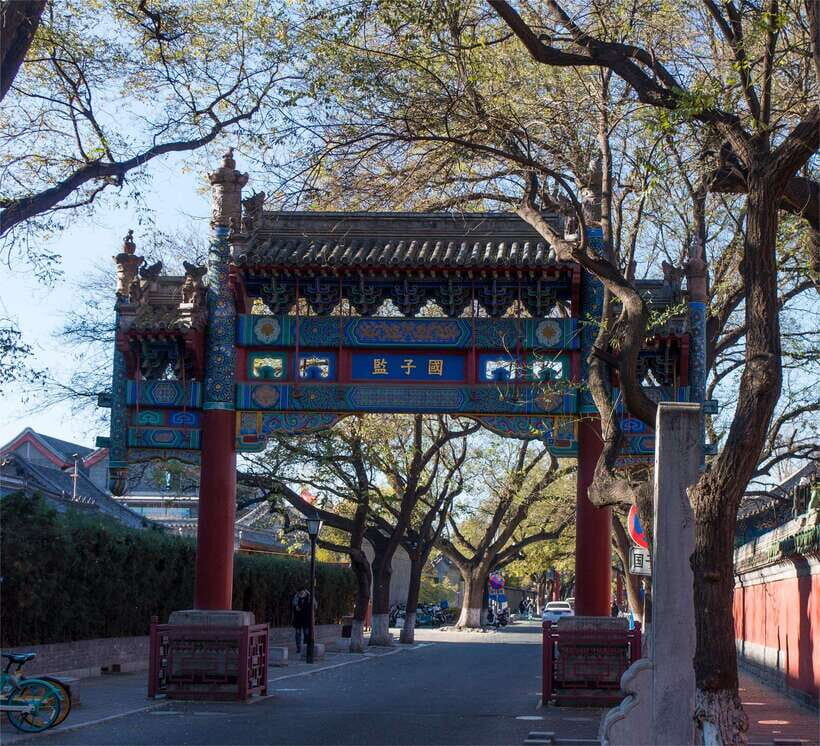
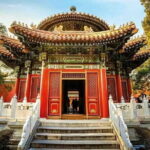
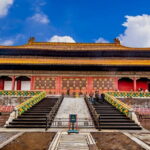
The Confucius Temple you’ll see in Beijing was built in the Yuan Dynasty, in 1306 (the 6th year of Emperor Dade). Even if you don’t read Chinese, the layout tells the story: the buildings sit along a strict south-to-north axis, like a ceremonial spine.
On that axis, you’ll move past key gates and halls in order:
- Teacher Gate
- Dacheng Gate
- Dacheng Hall
- Chong Sheng Temple
The temple covers over 22,000 square meters, with construction area around 7,400 square meters, and it’s organized into three courtyards. Three courtyards may sound simple, but here it’s the rhythm of the place: first you orient, then you approach the main ceremonial spaces, then you go deeper into the temple’s core meaning.
Also worth noticing: the temple’s big collection of stone steles isn’t placed randomly. They’re positioned in structured groupings that mirror how the imperial exam and scholarly recognition were treated—official, formal, and meant to last.
The Stone Tablets: 198 Pieces and 51,624 Carved Names
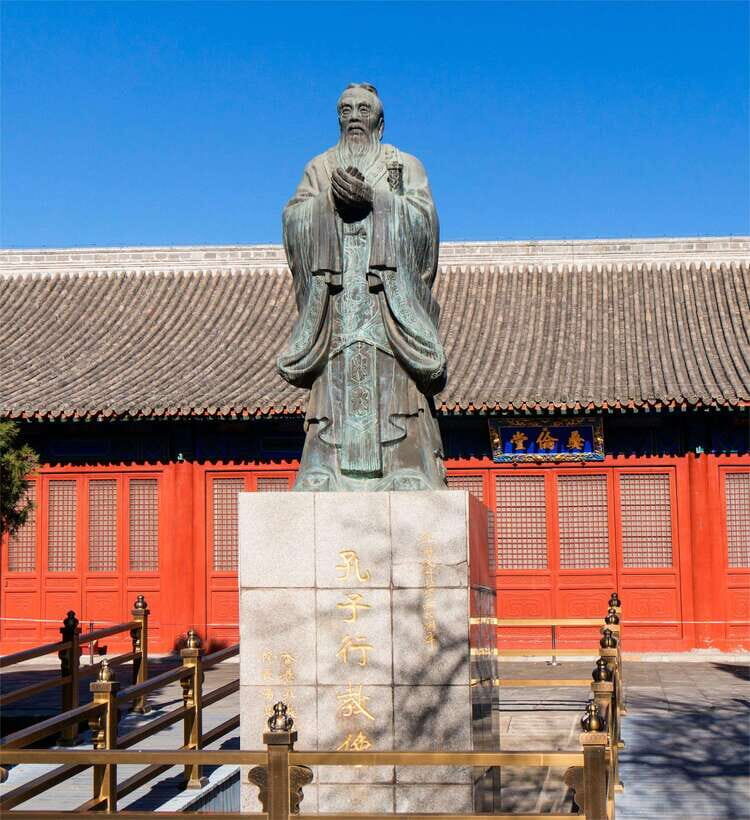
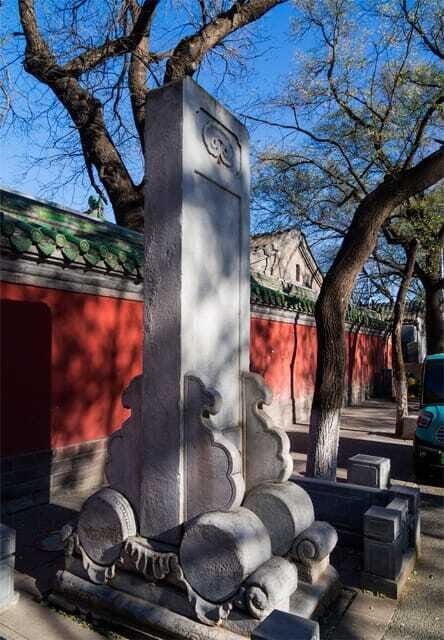
Here’s the part I think most visitors underestimate: the temple’s stone tables (steles) are not just decorative. There are 198 stone tablets, arranged into four groups on either side of the front courtyard.
And the real eye-opener: a total of 51,624 names, along with birthplaces and ranks of Jinshi, were carved into these stone tablets. That’s the kind of detail that turns a “temple visit” into something closer to history you can literally trace.
Why does this matter for you?
- It connects Confucian ceremony to the imperial system that rewarded scholars.
- It gives the visit a factual, grounded feeling. You’re not only seeing architecture—you’re seeing record-keeping made permanent.
- It helps you understand why education, exams, and status were tightly linked for centuries.
If you like slowing down, this is your place to do it. Spend time scanning and reading patterns. Even if you can’t translate everything, you’ll get the scale immediately.
Three Exhibitions Inside the Temple: What Each One Adds
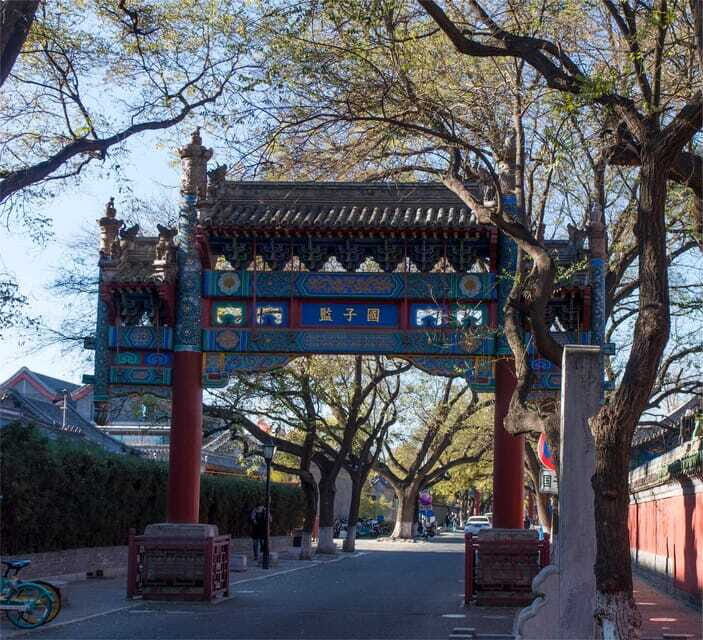
At present, the Confucius Temple includes three exhibitions, and using all three makes the architecture much easier to understand.
- Exhibition of the Restored Dacheng Hall
This helps you connect the main ceremonial hall to what restoration work can reveal. You’ll get more clarity on what the building was meant to communicate.
- Exhibition of the Great Confucius
This one gives you the biographical and cultural context that can otherwise feel too abstract when you’re looking at stone and gates.
- Exhibition of the History of Beijing Confucius Temple
This ties the temple to Beijing and to long continuity, including the fact that memorial ceremonies were held for Confucius during Yuan, Ming, and Qing.
If you’re the type who walks in, snaps photos, and moves on, I’d still recommend budgeting real time for at least two of these. It’s the difference between seeing buildings and understanding why these buildings exist.
One small practical tip: the review feedback I saw includes the idea that you can buy an audioguide at the entrance of the temple. If you want help reading the story quickly while keeping your pace, an audioguide can be a useful shortcut.




Guozijian (Imperial College): State Education in Yuan, Ming, Qing
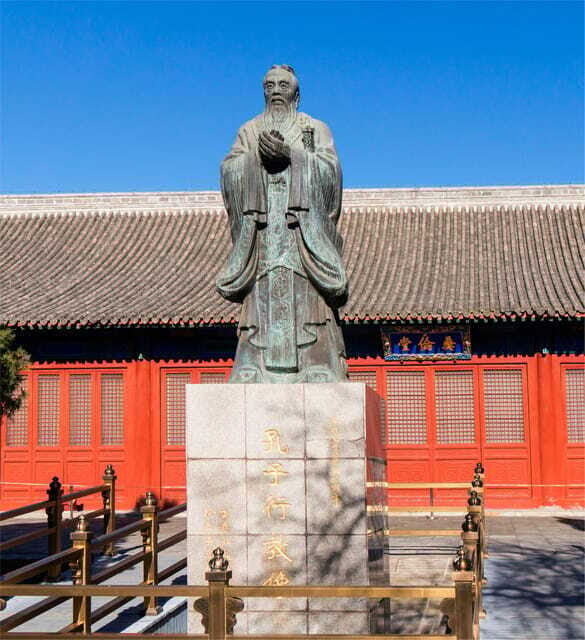
Now you pivot from ceremony to the system behind education. Guozijian, or the Imperial College, was the highest educational institution and an administering organ of education set up by the state during the Yuan, Ming, and Qing Dynasties.
This complex was built in 1308 (the first year of the Zhida reign) in the Yuan Dynasty. It covers about 28,000 square meters and also uses a three-courtyard layout.
Like the temple, it’s organized along a central axis, which is great news if you hate getting lost in large historic sites. As you progress, you’ll run into major points on that axis:
- Jixian Gate
- Taixue (Imperial College) Gate
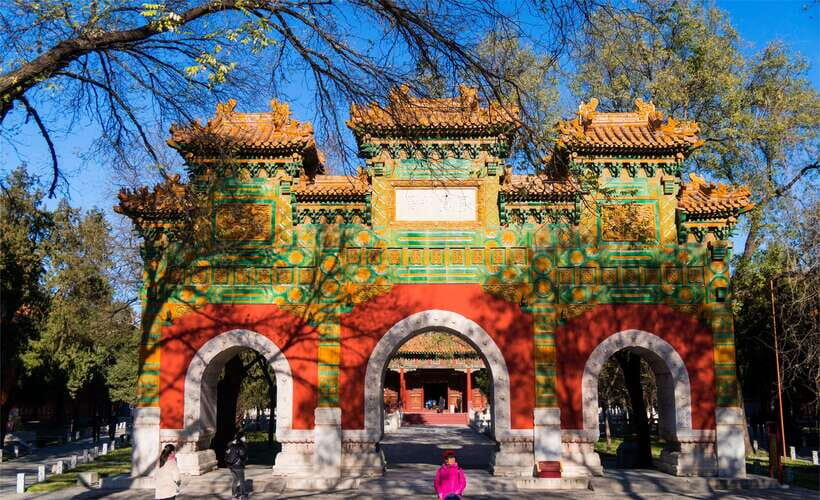
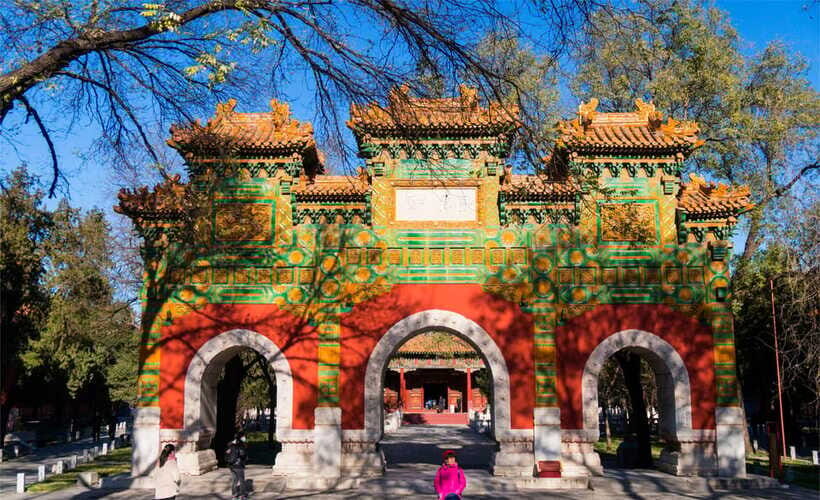
- Glazed memorial Arch
- Biyong Hall
- Yilun Hall
- Jingyi Hall
Then there are the paired, traditionally symmetric elements:
- Imperial tablet Pavilion
- Bell and Drum Pavilion (also lined beside the central axes)
For me, the best part of Guozijian is how it shows education as administration. This wasn’t only about teaching students; it was about governing knowledge and status. You can feel that structure in the layout—gates, halls, and pavilions that all reinforce order.
How to See Both in One Day Without Feeling Rushed
This is designed as a 1-day plan, and that matters. Confucius Temple alone is sizeable, and Guozijian adds more courtyards and halls. So your job is pacing, not checking every single object with perfect attention.
Here’s a practical approach you can use:
- Start with the temple axis first, so the layout rhythm sets your navigation style.
- Then shift to the Imperial College axis, keeping your eyes on gates and major halls rather than getting stuck scanning small details too early.
- Use the exhibitions as your “compression tool.” They help you understand faster than pure self-reading from plaques.
Because the experience is a private group and you’ll have wheelchair accessibility, you should feel flexible inside the sites. Still, bring sensible walking shoes. Courtyards are open-air and walking distances add up fast.
Finally, aim to slow down at the stone tablets and one of the exhibitions. That’s where your brain gets the most payoff per minute.
Price and Value: What About $7 Gets You
At $7 per person, this feels like good value—especially compared with the cost of entry tickets that cover only one building complex. Here you’re getting a full experience across two major historic areas, plus exhibition space in the temple.
The value isn’t only the price tag. It’s the way the ticket structure helps you:
- You can use QR code + passport for fast entry.
- You get skip the ticket line benefits.
- You’re also not stuck hunting for complicated instructions once you arrive.
Also, the long-term appeal is strong. The stone tablets and exam-record details make the visit feel “real,” not generic. Even if you’re not a history buff, you’ll leave with specific, memorable information you can repeat—like the scale of 51,624 Jinshi-related carved records.
Who This Is Best For (and Who Might Not Love It)
This experience is for you if you like:
- architecture with a clear plan (that central axis logic really helps)
- Confucian cultural sites paired with the education system behind them
- the imperial examination story told through tangible records
It’s also a good fit if you want a self-guided style experience with structure. You have enough organization to stay oriented, and enough exhibitions to avoid the “just buildings” problem.
You might want to think twice if you dislike walking through large complexes with many courtyards. It’s one day, and it’s not tiny. Also, if you want lots of English-speaking guided narration (not just exhibitions), this e-ticket format may feel more hands-on than talk-heavy.
Should You Book the Beijing Confucius Temple and Imperial College E-ticket?
I’d book this if you want a high-impact day without chaos. The combination of Confucius Temple + Guozijian, the QR + passport entry, and the exam-focused stone tablet details make it a strong value pick.
It’s especially worth it when you care about connections: how ceremony links to education, and how imperial recognition becomes permanent stone. If you’re traveling on a schedule and want something meaningful that won’t eat your whole day in transit, this is a smart use of time.
If your ideal visit is fast, orderly, and history you can see in physical form, you’ll likely be happy here.
FAQ
What do I need to bring to enter?
Bring your original passport or ID card and use your electronic ticket/QR code to enter the attractions.
How do I enter—do I need paper tickets?
No. You can enter using the QR code along with your passport (or ID card, depending on what you brought).
How long does the experience take?
It’s listed as 1 day. You check starting times based on availability.
What are the main sights included?
You’ll visit Beijing Confucius Temple and Guozijian (Imperial College), including the temple’s exhibitions.
Is the ticket valid for more than one day?
No. The ticket is valid for 1 day.
Is it wheelchair accessible?
Yes, it’s marked as wheelchair accessible.
Is there free cancellation?
Yes. You can cancel up to 24 hours in advance for a full refund.
You Might Also Enjoy
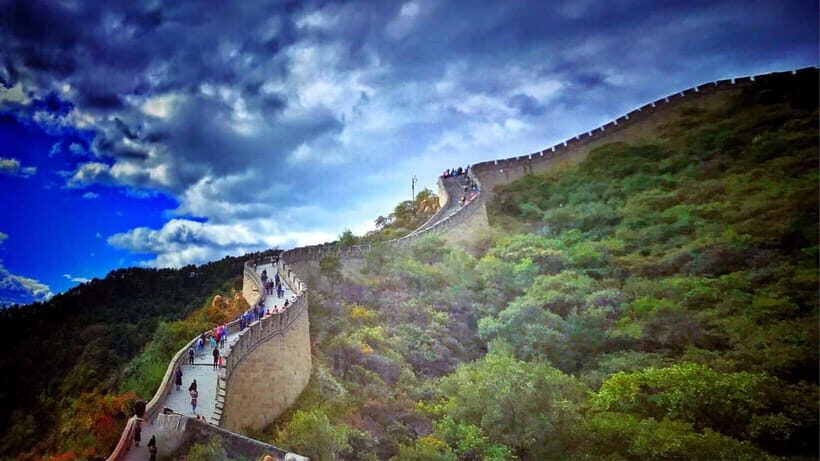 Beijing Juyongguan Great Wall Ticket And Options
 All Inclusive Private Day Tour: Tian’anmen Square, Forbidden City, Temple of Heaven and Summer Palace
 Private City Tour By Public Transportation: Temple Of Heaven, Tiananmen Square and Forbidden City
 Twilight Glow at Badaling Great Wall Evening Bus Tour+Ticket