REVIEW · BEIJING
All Inclusive Private Tour to Mutianyu Great Wall and Ming Tombs
Book on Viator →Operated by Jenny's Guide & Driver Service · Bookable on Viator
Mutianyu and Ming Tombs in one clean day. This private tour pairs the less-crowded Great Wall at Mutianyu with Beijing’s Ming imperial burial grounds, plus a guide who connects stone monuments to what China looks like today. I love the fully restored Wall details and the steep-but-safe climb with railings. I also love the Ming Tombs focus on the Sacred Way and a real sense of how Ming power was staged in stone. The main drawback: this is mountain time, and the route is not suitable if you have serious heart or asthma issues.
Logistics are also handled for you, which matters on a long day: hotel or airport pickup, a professional driver, timed stops, and tickets included. If you want the best views without burning energy on a long mountain path, the included cable car (recommended) is the smart move.
In This Review
- Key things to notice before you go
- Private Pickup and a Tight 9-Hour Route
- Mutianyu Great Wall: Less Crowded, Fully Restored, and Properly Steep
- Getting Up the Wall: Cable Car Saves the Day
- Your Great Wall Stop: How 3 Hours Plays Out
- Ming Tombs: A Royal Burial City Built in Stone
- The Sacred Way: Where the Ceremony Starts
- Changling Tomb or Dingling Tomb: Choose Your Ming Moment
- Lunch and On-the-Road Comfort
- Tickets, Cable Car, and Entrance Fees: The Value Math
- Who This Tour Fits Best (and Who Should Skip It)
- What Makes This Day Feel Well Run
- Should You Book This Private Mutianyu and Ming Tombs Tour?
- FAQ
- FAQ
- How long is the tour?
- Where does pickup happen?
- Which Great Wall section is visited?
- How do I get up to the Great Wall area?
- What’s included for the Great Wall?
- What is included at the Ming Tombs?
- Is lunch included?
- Is this a private tour?
- What should I plan to pay for myself?
- Who should not take this tour?
- What if I need to cancel last-minute?
- What documents do I need?
Key things to notice before you go

- Mutianyu Great Wall is farther from downtown than Badaling, but it tends to feel calmer while staying fully restored.
- Hand rails on steep sections make a big difference for footing when the Wall gets vertical.
- Cable car included so you can skip the 40-minute walk each way on the mountain path.
- Ming Tombs are a major Ming Dynasty necropolis, with thirteen emperors’ mausoleums spread across the site.
- You’ll follow the Sacred Way and then visit either Changling Tomb or Dingling Tomb (depending on your plan).
Private Pickup and a Tight 9-Hour Route
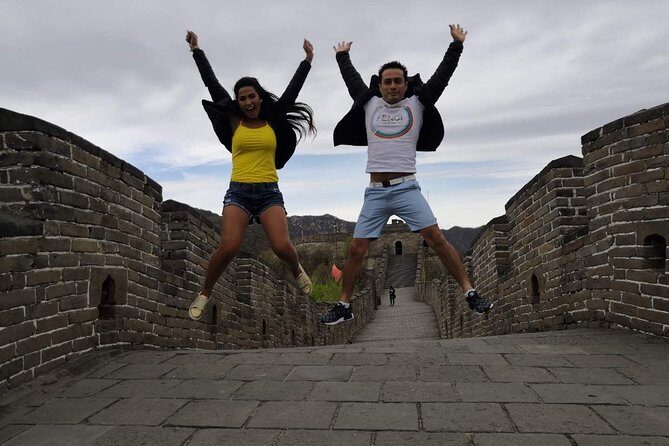
This is built as a no-stress, private day: you get hotel pickup (or pickup from the airport) and drop-off back in Beijing. The whole experience runs about 9 hours, with the Great Wall and Ming Tombs taking the main chunks.
Because it’s private, you’re not stuck waiting in a big crowd for everyone to show up. It’s also easier to keep your day moving at a human pace—especially helpful when one part of the plan is physically demanding and the other is a lot of walking on uneven ground.
Expect time in the car too. From downtown Beijing to the Wall at Mutianyu is about 1.5 hours each way, so your day is designed to balance sightseeing with travel.
You can also read our reviews of more private tours in Beijing

Mutianyu Great Wall: Less Crowded, Fully Restored, and Properly Steep
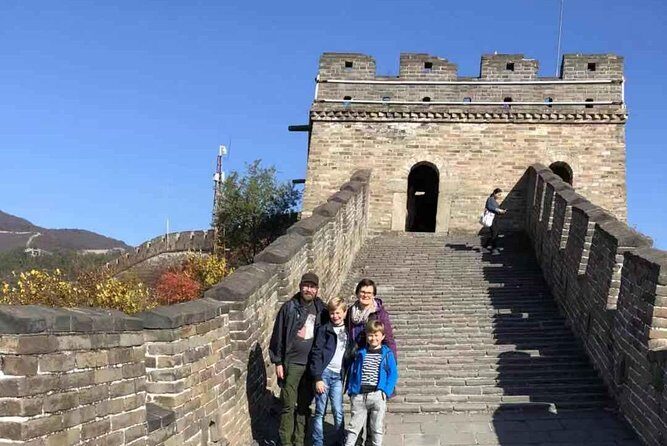
Mutianyu is a Great Wall section outside the usual headline route. The payoff is simple: it’s farther from Beijing than Badaling, and it typically feels less crowded, even though it’s restored and ready for visitors.
I like that Mutianyu doesn’t feel like a half-working Wall. It’s described as fully restored, with real attention to the walking surfaces and safety features. You’ll also find hand rails on the steeper parts, which is a practical upgrade when you’re climbing and descending.
And then there are the views. Mutianyu gives you broad sightlines over the surrounding area—exactly what you want from the Wall. From the higher segments, the Wall becomes more than a wall. It turns into a line of architecture that shows how the Ming-era engineers used terrain.
One consideration: the Wall is on a mountain top, so you should plan for real physical effort. Even if you use the cable car, you’ll still climb stairs and walk sections that can feel steep.
Getting Up the Wall: Cable Car Saves the Day
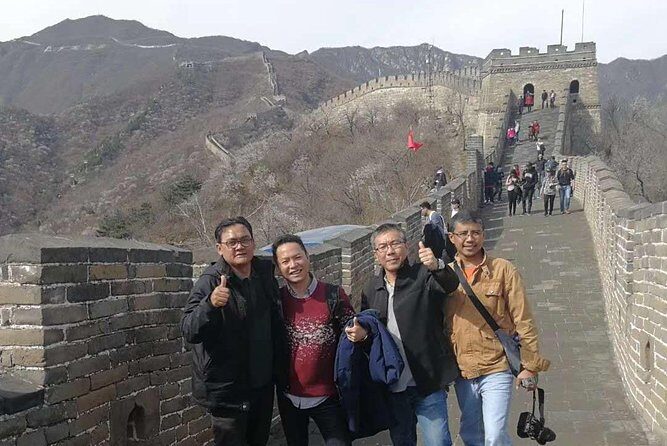
Here’s the smart tip baked into the plan: Great Wall is up in the hills, and there’s a 40-minute walk each way through the mountain path if you don’t use the cable car.
This tour suggests the cable car (and the plan includes cable car or chairlift/toboggan tickets). For most people, that’s the difference between a great day and a day where your energy is spent on logistics instead of views.
You also avoid the kind of pre-sightseeing fatigue that makes the Wall feel harder than it needs to be. If you want to spend your energy on photos, walking the restored sections, and taking in the scenery, the cable car is how you keep that balance.
Your Great Wall Stop: How 3 Hours Plays Out
You’ll spend about 3 hours at Mutianyu, which is a good length for a private visit. It’s enough time to walk meaningful stretches, stop for views, and still feel like you had a plan instead of just rushing along.
This is also where the guide’s role matters. A strong guide helps you pick the right segments to walk so you’re not zigzagging unnecessarily. And since the tour includes an English-speaking guide, you’re not just looking at stone—you’re understanding why the design matters.
If you’re the type who likes to ask questions, this tour setup makes it easy to keep going. The day is organized, and the guide can answer questions in real time—covering both historical context and what you’re seeing in modern China.
Practical advice: wear grippy shoes. The Wall surfaces can be uneven, and even with rails, good footwear keeps you confident.
Ming Tombs: A Royal Burial City Built in Stone
After the Wall, you move to the Ming Tombs, the royal burial complex for Ming Dynasty emperors near Beijing. This is UNESCO World Heritage territory, and it works differently than the Great Wall. Instead of a defensive structure across mountains, you get a designed ceremonial landscape.
Here are the big-picture facts to keep in mind as you walk:
- The Ming Tombs are the largest clusters of imperial cemeteries in China.
- There are mausoleums for thirteen emperors.
- Construction began in 1409 with Changling Tomb for Emperor Zhu Di.
- The complex was completed in 1644, with Emperor Chongzhen buried in Siling Tomb.
That timeline helps the place feel real. You’re not looking at one emperor’s project. You’re seeing centuries of imperial power expressed through architecture, ritual, and stone sculptures.




The Sacred Way: Where the Ceremony Starts
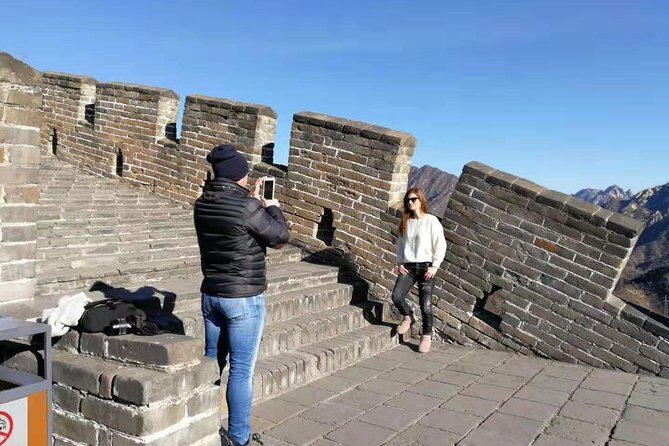
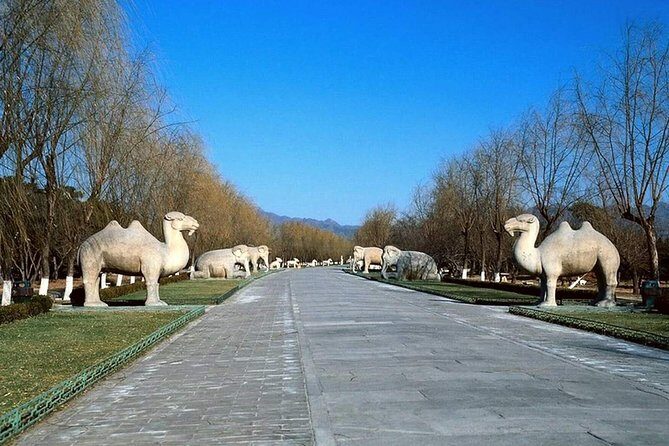
Your Ming Tombs visit includes about 2 hours, and one of the featured highlights is the Sacred Way. This is the long ceremonial route leading into the tomb area, lined with stone figures and designed to build a sense of progression.
The plan describes the Sacred Way as a main way leading to the emperors’ tombs, with stone sculptures arranged in two lines. It’s a classic approach: you walk into the imperial story step by step, and each segment makes the rules of rank feel visible.
I like Sacred Way because it turns history into movement. You can’t just read about it. You experience the scale and the rhythm of the approach, which makes the Ming burial complex more understandable.
Caution for comfort: expect walking on-site. Even if the stop is only 2 hours, it’s not a sit-down museum experience. Wear shoes you trust.
Changling Tomb or Dingling Tomb: Choose Your Ming Moment
The tour plan includes the Sacred Way plus a visit to either Changling Tomb or Dingling Tomb. You’ll see one tomb in addition to the main ceremonial route.
Why this matters: each tomb visit gives you a different angle on Ming design and royal burial style. Even within one imperial complex, you’re still looking at how the Ming dynasty materialized power through architecture and sacred space.
If you’re deciding based on interest, here’s the best way to think about it with the info you have:
- Changling Tomb is tied to Emperor Zhu Di, and the overall complex timeline starts with its construction in 1409.
- Dingling Tomb is another of the publicly opened portions, alongside the Sacred Way and Changling Tomb.
Either way, you’ll walk away with a clearer sense of how this imperial cemetery functioned as a ritual landscape, not just a set of graves.
Lunch and On-the-Road Comfort
Lunch is included, served at local Chinese restaurants after the Wall stop. That’s a practical inclusion, because it prevents the common problem on long private days: you spend time hunting for food, then arrive late or cranky.
You’re also getting bottled water, which is a small but real quality-of-life benefit in Beijing’s heat and changing temperatures.
Because you’re on a private vehicle, you’ll have more control over timing and breaks than you would on a group tour. It’s one of those details that makes the day feel smooth.
Tickets, Cable Car, and Entrance Fees: The Value Math
This tour costs $218 per person, and it’s private. That price covers a lot more than just a guide.
What you get included:
- Private transport with a professional driver
- English-speaking tour guide
- Hotel pickup and drop-off
- Meals as per itinerary, including lunch
- Bottled water
- Entrance fees
- Cable car tickets or chairlift and toboggan tickets
For a day that includes two major UNESCO stops plus mountain transport, the included tickets are where the value really shows. If you tried to book the Wall access, Ming Tomb entry, and transport on your own, the cost can creep up fast—especially once you factor in a driver and the time you’d spend coordinating everything.
One more value point: the tour includes mobile tickets, which reduces the hassle of last-minute paperwork. You still want to double-check your personal documents, but the on-tour flow is simpler.
And since this is a private group, you’re paying for time efficiency. That’s the kind of value you feel on a long day.
Who This Tour Fits Best (and Who Should Skip It)
This is a great match if you:
- Want a private day with pickup and drop-off
- Prefer less crowded Great Wall walking at Mutianyu over the busiest sections
- Like guided context—especially explanations connecting historical China to present-day China
- Are okay with a full day that includes real walking and steep sections
It’s also worth noting who should not book. The tour data says it is not suitable for people with cardiopathy & asthma. If you have concerns, it’s smart to talk to a medical professional before committing to a route that includes mountain elevation and steep climbs (even with rails and cable car).
Finally, children must be accompanied by an adult, and the child rate applies only when sharing with one paying adult.
What Makes This Day Feel Well Run
A lot of Great Wall days fail on one detail: they feel rushed. This one is structured around two clear stops—3 hours at Mutianyu and 2 hours at the Ming Tombs—with included meals and on-tour tickets. That balance keeps the day from turning into a frantic checklist.
The guide element is also a big deal. The experience is set up so your guide can answer questions and explain what you’re seeing, including both historical themes and what China is like today. And the driver support matters more than you’d think when you’re traveling between sites. Smooth transport reduces stress, and stress is the enemy of good photos.
If you’re the sort of traveler who likes things organized so you can just enjoy, this format fits that personality.
Should You Book This Private Mutianyu and Ming Tombs Tour?
Book it if you want a calm, well-paced private day that hits two UNESCO heavyweights without making you coordinate tickets or transport. The Mutianyu choice is the key advantage: less crowded than the famous alternative, yet restored and view-rich.
Skip it (or get advice first) if you need very gentle walking or you have heart or asthma concerns, since the Wall area involves elevation and steep sections even with rails.
If you’re traveling with limited time in Beijing and want a day that feels organized from pickup to drop-off, this is the kind of booking that buys back your energy for the views and the history.
FAQ
FAQ
How long is the tour?
It runs about 9 hours approximately, with around 3 hours at the Great Wall and about 2 hours at the Ming Tombs.
Where does pickup happen?
You can be picked up from your Beijing city hotel or from the airport.
Which Great Wall section is visited?
You’ll visit the Great Wall at Mutianyu, which is farther from Beijing than Badaling but tends to be less crowded.
How do I get up to the Great Wall area?
The tour suggests using the cable car instead of the 40-minute walk each way through the mountain path, and cable car or chairlift/toboggan tickets are included.
What’s included for the Great Wall?
Admission tickets are included, and the plan also includes the cable car/ chairlift and toboggan tickets.
What is included at the Ming Tombs?
Admission tickets are included, and you’ll visit the Sacred Way plus either Changling Tomb or Dingling Tomb.
Is lunch included?
Yes. Lunch at local Chinese restaurants is included after your Great Wall visit.
Is this a private tour?
Yes. It’s a private activity, and only your group participates.
What should I plan to pay for myself?
Gratuities are recommended but not included.
Who should not take this tour?
The tour is not suitable for people with cardiopathy or asthma.
What if I need to cancel last-minute?
You can cancel for a full refund if you cancel at least 24 hours in advance. If you cancel less than 24 hours before the start time, the amount paid is not refunded.
What documents do I need?
A current valid passport is required, and the tour info also notes that a visa to the third country is required on the day of travel. Also, confirmed connected flight tickets or a boarding pass are mentioned as required.