REVIEW · BEIJING
10-Day China Tour to Beijing, Xian, Chengdu and Shanghai
Book on Viator →Operated by Travel China Guide · Bookable on Viator
Beijing to Shanghai in 10 days sounds intense. What makes this trip work is the tight routing: big-ticket sights in each city plus practical transport that keeps you from playing logistics roulette.
I especially like how the itinerary strings together iconic places such as the Forbidden City, the Great Wall, the Terracotta Warriors, and giant pandas in a way that feels logical (not random). Another thing I like: you’re not left to figure everything out on your own—airport pickup, an air-conditioned vehicle, and a professional guide help smooth the rough edges.
One consideration: this is a fast-paced tour with long days and a lot of walking inside major attractions, so you’ll want comfortable shoes and solid energy management.
On day one, the meet-and-transfer setup matters. I like that you start with a guide greeting you at the airport area (for example, Emily has been specifically mentioned as a supportive guide in Beijing), then you get a free afternoon to reset before the big days begin. You’ll also use a mobile ticket, so you’re not stuck hunting paperwork for each stop.
Finally, you get the core travel “plumbing” handled for you. You’ll stay in twin-sharing rooms, drink two bottled waters per person per day, and you’ll have breakfast plus a small set of lunches included—enough structure to keep costs predictable without forcing every meal.
In This Review
- Key highlights before you go
- What you’re really buying for $2,979
- Day one in Beijing: arrival done the easy way
- Tiananmen Square and the Forbidden City: where the city’s story starts
- Lama Temple and Temple of Heaven: two different belief worlds
- Mutianyu Great Wall with cable car: the wall without the marathon
- Summer Palace: imperial garden scale with real-world walking
- The high-speed train to Xi’an: a travel day that doesn’t waste the day
- Terracotta Warriors Museum: plan to focus, not rush
- Big Wild Goose Pagoda and Ever Bright City: history plus an easy evening vibe
- Xi’an City Wall and the Muslim Quarter: two angles on the city
- Chengdu: pandas first, then a local neighborhood afternoon
- Flying to Shanghai: protect your energy
- The Bund and Huangpu River Cruise: old Shanghai meets new Shanghai
- Shanghai Museum and Yu Garden: art of the past, gardens of the past
- Zhujiajiao Ancient Town: a break from Shanghai’s speed
- Departure from Shanghai: flight timing, plus an optional maglev idea
- Price vs. value: who this tour is for
- Should you book this 10-day China tour?
- FAQ
- What’s included in the tour price?
- How do you travel between the cities?
- Are admission tickets included?
- Where does the tour start and what time?
- Do you get pickup at the airport?
- Is international airfare included?
- Can I get a refund or change the booking?
Key highlights before you go
- Airport-to-hotel transfer on arrival means you start clean, not stressed.
- Great Wall at Mutianyu with round-trip cable car arranged for less hiking and more wall time.
- Terracotta Warriors museum time plus the chance to pair it with Xi’an highlights close by.
- Giant Panda Base morning visit when pandas are more active.
- Shanghai’s top museum + Yu Garden + Zhujiajiao gives you both culture and old-water-town contrast.
- City-to-city speed options: high-speed trains Beijing→Xi’an and Xi’an→Chengdu, then a Chengdu→Shanghai flight.
What you’re really buying for $2,979
At about $2,979 per person for roughly 10 days, the value comes from what’s bundled—not just the sightseeing. This package includes hotel nights (twin-sharing), a professional guide, an air-conditioned vehicle, and major transport between cities. It also covers most of the admissions you’ll care about, plus 9 breakfasts and 3 lunches, which adds up quickly on its own in China.
You’re also buying time. High-speed rail removes a lot of the fatigue that comes from slower overland travel, and it puts you closer to city centers. Then you top it off with a domestic flight (Chengdu to Shanghai) to protect your schedule, especially since Shanghai is the widest, most time-sensitive city in the mix.
The tour is designed for a group, but it’s described as private for your group, so you won’t be stuck sharing your day with a random crowd. That said, it still follows a set rhythm—so you’ll want to go in with a “move with the plan” mindset rather than expecting long unscheduled detours.
You can also read our reviews of more tours and experiences in Beijing.
Day one in Beijing: arrival done the easy way
Your first day begins with the practical stuff: you arrive, a guide meets you at the airport area, and you transfer to the hotel. After that, the rest of the day is yours. This free time is underrated. You can eat something simple, adjust to the air and pace, and get your bearings without rushing into a giant museum crawl the moment you land.
If you’re arriving with jet lag, this is the smart setup. Beijing can feel big and organized but also slightly chaotic at street level, especially around major landmarks. Getting settled first lets you enjoy the sites instead of just enduring them.
Tiananmen Square and the Forbidden City: where the city’s story starts
In the morning, you’ll head to Tiananmen Square. It’s a huge urban space, and even if you don’t go heavy on explanations, it’s still worth seeing because it frames the entire imperial core of Beijing. You don’t need long here—just enough time to orient yourself before stepping into the palace world.
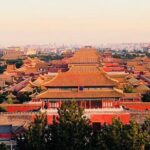
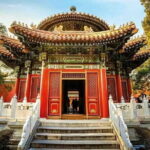
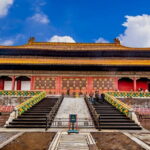
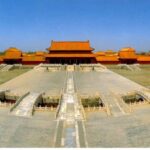
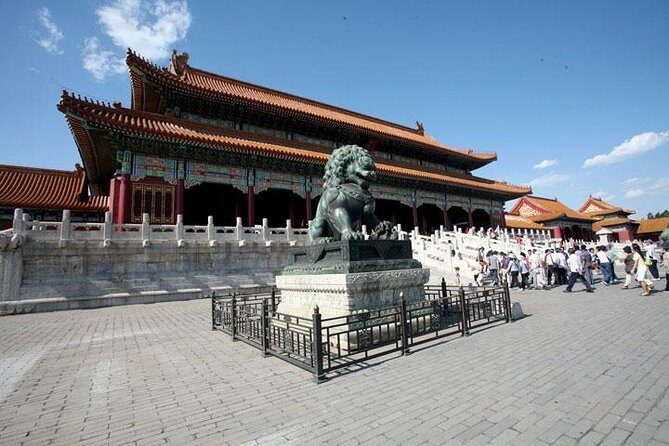
Then you move to the Forbidden City (Palace Museum), where ticket time is included and the visit runs long enough to feel real rather than rushed. This is one of those places where you’ll learn best by slowing down at key halls and courtyards, not by sprinting from gate to gate. If you like architecture, ceremonial layouts, and objects staged to impress, you’ll get a lot out of this.
A practical note: it’s a major complex, so it pays to wear shoes that can handle uneven stone and long indoor-outdoor walking. The tour gives you structure, but your body still does the work.
Lama Temple and Temple of Heaven: two different belief worlds
After lunch, you visit Lama Temple (Yonghegong), described as the best preserved lamasery in Beijing. What I like about this stop is the mix of architectural influences—Han, Manchu, Mongolian, and Tibetan. It’s a reminder that China’s cultural and religious life isn’t one single style or one single story.
Next comes the Temple of Heaven. The point here isn’t just pretty buildings—it’s the idea of emperors worshiping the heavens for good harvests. Even if you don’t go deep into ritual details, the site makes the concept easier to grasp because the layout is built for ceremonial movement.
This pair works well because it contrasts two worlds in the same trip: one tied to Buddhist monastic traditions, the other to seasonal, agricultural-era spiritual beliefs.
Mutianyu Great Wall with cable car: the wall without the marathon
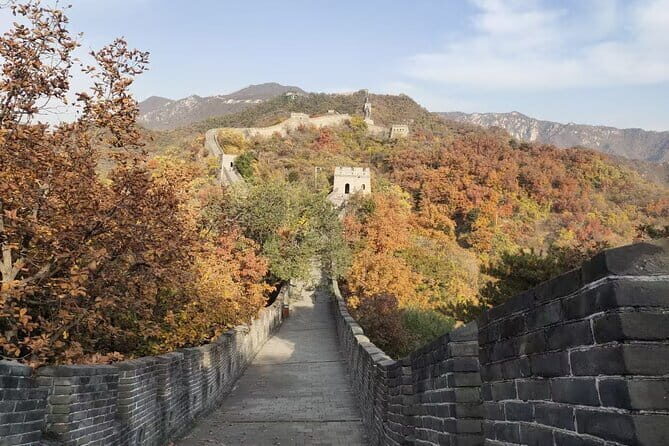
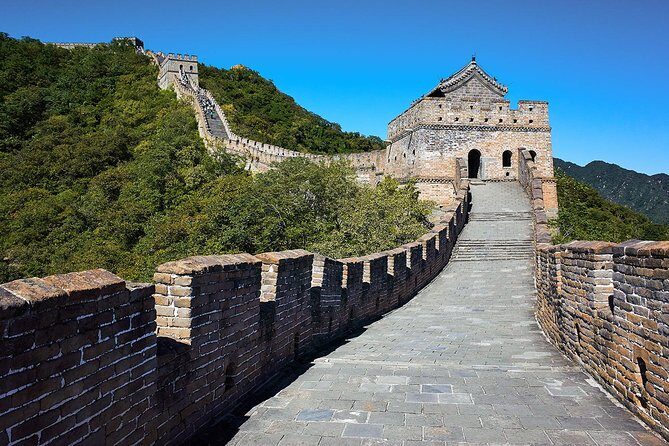
One of the strongest parts of the itinerary is the Mutianyu Great Wall day. You get cable car arrangement for round-trip, and that matters. It turns the experience from an endurance challenge into a “see more wall per hour” scenario.
Standing on the wall and looking out at the stretches is the main event, and Mutianyu is a classic choice because it’s a dramatic wall segment that feels built for visitors rather than just surviving as a relic. You’ll likely spend a few hours here, which is enough to soak in views without feeling trapped.
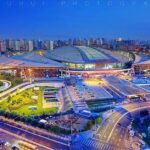
In the afternoon, you also stop at the Bird’s Nest National Stadium for photos at a distance. Admission isn’t included, so don’t plan on spending time inside. But as a visual landmark, it’s fun, especially for anyone who connects it with the 2008 Olympic era.
Then you shift to Hutong neighborhoods by taking a rickshaw ride through the narrow alleys. Hutongs are lined with old residential courtyards, and the rickshaw format helps you move through tight lanes without feeling like you’re wrestling the streets. This is one of the better “Beijing beyond the big monuments” moments in the trip.
Summer Palace: imperial garden scale with real-world walking
The next Beijing day centers on the Summer Palace (Yiheyuan), described as the largest existing imperial garden. This isn’t just a “see one building” stop. Gardens on this scale are meant for strolling, pausing, and moving between viewpoints—so plan on enjoying it slowly.
The construction and the landscape are tied together in a way that makes the time feel worth it. If you like gardens, water features, and long visual lines, you’ll likely feel satisfied rather than checking boxes.
The high-speed train to Xi’an: a travel day that doesn’t waste the day
After Beijing, you take a high-speed train to Xi’an. The trip is about 4.5 hours, and the tour even nudges you to bring fruits or snacks and something to watch or read. That’s the right advice: trains are comfortable, but they’re also long enough to get bored without a plan.
When you arrive, the tour handles the transition so you’re not standing around wondering what comes next. That “someone has thought about the next step” feeling is a big part of why package tours can be worth it.
Terracotta Warriors Museum: plan to focus, not rush
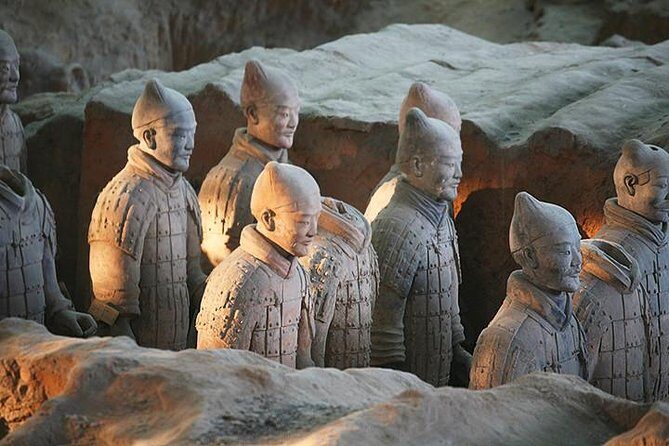
In Xi’an, the standout is the Museum of Qin Terra-cotta Warriors and Horses. You get about four hours here, which is ideal. You’ll see three excavated pits with warrior figures and Chinese ancient weapons—so you’re not just skimming one section and leaving with half the story.
This is also where pacing matters most. If you rush, you miss the sense of how the site is arranged and how the figures are presented across pits. If you slow down at key points, you’ll come away with a clearer understanding of why this place remains so famous.
A tip that helps on days like this: take a few steps back and look at the overall scene before going closer. It makes the scale hit harder.
Big Wild Goose Pagoda and Ever Bright City: history plus an easy evening vibe
After the museum, you visit Big Wild Goose Pagoda (Dayanta). The time here is shorter, around an hour, so it works best as a focused stop rather than a long wander. It’s a square brick pagoda and, as described, the biggest of its kind.
Then you head to Grand Tang Dynasty Ever Bright City, a popular tourist street where people dress in traditional Chinese clothing. It’s less solemn than the warriors museum, and that balance is good. You get a night-feeling area without adding another major walking-heavy attraction.
Xi’an City Wall and the Muslim Quarter: two angles on the city
The Xi’an schedule includes both a scenic and a street-level cultural day.
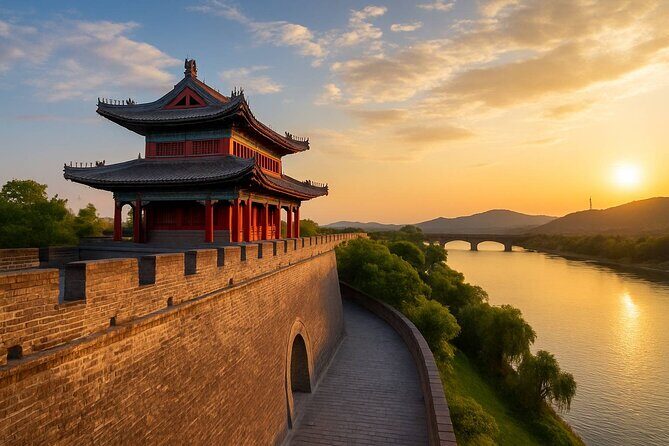
First, there’s Xi’an City Wall (Chengqiang), with a leisure stop at City Wall Park before visiting the wall itself. It’s described as the most complete existing urban fortification in China, so it’s not just scenic—it’s also historically meaningful. If you like city views and a sense of how the city was protected, you’ll probably enjoy this break from temple-and-museum days.
Next is the Xi’an Mosque, noted as one of the oldest, largest, and best-preserved Islamic mosques in China. The time here is short, but it’s a good contrast to the rest of the trip because it shifts the cultural lens.
Then you get exploring time in the Muslim Quarter. The tour explicitly encourages you to explore by yourself and includes snacks and halal foods. The best value here is freedom: you can choose what you want to eat instead of being locked into one menu. Just keep an eye on queues and don’t expect every stall to be your kind of food.
Chengdu: pandas first, then a local neighborhood afternoon
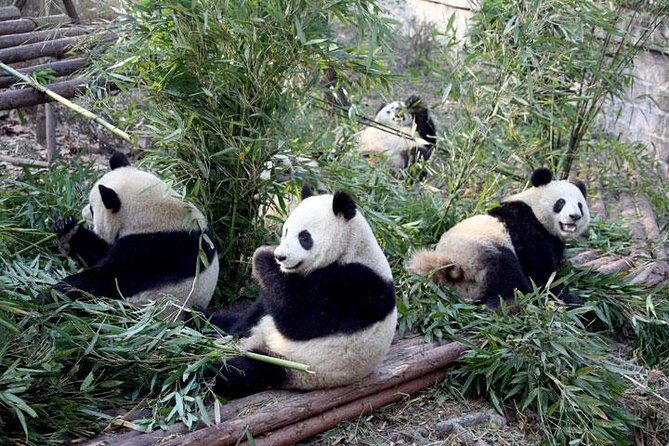
Chengdu starts with the Giant Panda Breeding Research Base. This morning pickup is earlier because pandas are more active then, and that’s the practical trick you want. If you go later in the day, you risk seeing more sleeping than pandas.
You’ll spend about two hours at the base, then move to Xiaojiahe Residential District for an afternoon that’s designed to feel like locals do things. You’ll even have lunch on your own cost at Yongle Rest (named in the plan), and the point is simple: don’t make every hour a museum.
This is one of the more human-feeling sections of the tour. It’s not “only sights,” it’s a change of pace. If your feet need a breather after intense heritage stops, this part helps.
Flying to Shanghai: protect your energy
Chengdu to Shanghai is handled by flight. The plan escorts you to the airport, and once you land, your guide takes you to your hotel for check-in.
That choice matters. Overland would eat time. A flight preserves a real evening in Shanghai, and the city already moves fast once you’re there.
The Bund and Huangpu River Cruise: old Shanghai meets new Shanghai
Shanghai’s early highlights are classic for a reason.
The Bund is on the west bank of the Huangpu River, and you’ll see western-style buildings preserved from the early 20th century. Then you take a one-hour cruise on the Huangpu River, which gives you the skyline views and lets you compare the past side and the modern side.
A cruise like this is perfect on a tour because you get a lot of views with less strain. You can also use it to figure out what area you want to revisit later, if time and energy allow.
Shanghai Museum and Yu Garden: art of the past, gardens of the past
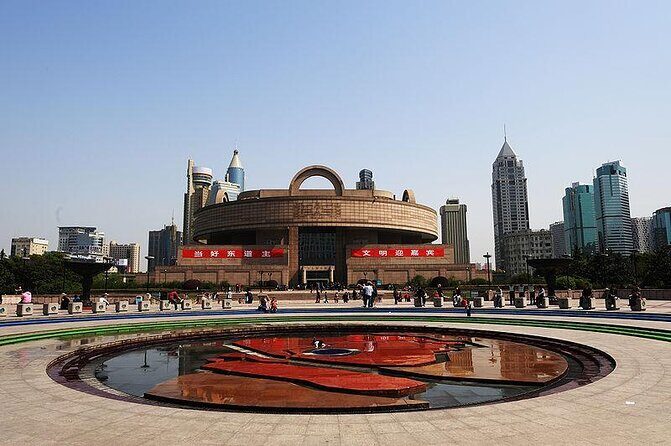
The next morning focuses on Shanghai Museum (Shanghai Bowuguan). It’s described as one of China’s four largest museums and specializing in ancient art. You get about two hours here with ticket included, and it’s a strong add-on after Xi’an and Beijing heritage days.
Then comes Yu Garden (Yuyuan), with time to explore the complex. The tour highlights the Nine Zigzag Bridge made of granite and grass-white jade, plus the mid-lake pavilion. Again, this is a “slow your brain” stop. It rewards attention to small details and the way spaces are composed.
The plan includes an a la carte farewell lunch around midday. That’s a nice pivot: after a full day, you get a softer landing rather than rushing straight into another long activity.
Zhujiajiao Ancient Town: a break from Shanghai’s speed
In the afternoon, you’ll visit Zhujiajiao Ancient Town, described as an “Oriental Venice” water town with folk residences built along rivers. The big difference here is mood. Shanghai can feel like motion and modern density; Zhujiajiao is about staying grounded in older waterways and quieter lanes.
You’ll have around two hours here with ticket included. That’s enough time to walk the main channels, look at the architecture, and buy a snack without feeling like you missed the whole town.
Departure from Shanghai: flight timing, plus an optional maglev idea
On your final day, the tour transfers you to the airport according to your international flight schedule. There’s also an option mentioned if you prefer the maglev train ride to Pudong Airport—useful if you want a faster, fun transport angle at the end of the trip.
This is another area where the tour’s structure helps. Shanghai airport logistics can be stressful if you’re guessing last-minute routes, so having a driver ready keeps the day calmer.
Price vs. value: who this tour is for
This tour makes the most sense if you want the big-name sights without turning every day into a project. It’s a good fit for:
- First-timers who want Beijing + Xi’an + Chengdu + Shanghai in one shot
- People who don’t want to coordinate tickets, transfers, and intercity timing alone
- Travelers who value guided context while still getting some self-time (like Muslim Quarter snacks)
It’s less ideal if you:
- Hate schedules and prefer totally free days
- Need lots of rest between attractions
- Have limited walking tolerance, since many major sights involve standing and moving for extended periods
- Are over 80, since the tour is explicitly noted as not suitable for that age group
On the flip side, the itinerary does give you some recovery built in: free time in Beijing on arrival, rickshaw and community pacing, and structured museum and walking time that’s not all “standing in lines for hours.”
Should you book this 10-day China tour?
If you want one of the simplest ways to hit China’s headline attractions across four cities, I’d say this is a strong booking choice. The value is in the bundled transport and the way the schedule covers iconic sights efficiently: Great Wall at Mutianyu, Terracotta Warriors, giant pandas, and top Shanghai viewpoints plus museum time.
I would book it if you like guided days, can handle walking inside major sites, and want to avoid the hassle of building intercity travel plans. If you’re the type who needs lots of freedom and long unscheduled breaks, you might find the pace a bit tight.
FAQ
What’s included in the tour price?
Hotel accommodation in twin-sharing rooms, 9 breakfasts and 3 lunches, professional guide and experienced driver, an air-conditioned vehicle, two bottled waters per person per day, high-speed train tickets Beijing→Xi’an and Xi’an→Chengdu, and a Chengdu→Shanghai economy flight. Many admission tickets are also included for listed stops.
How do you travel between the cities?
Beijing to Xi’an is by one-way high-speed train. Xi’an to Chengdu is also one-way by high-speed train. Chengdu to Shanghai is by one-way economy-class airfare.
Are admission tickets included?
Several major stops list admission as included (for example the Forbidden City, Lama Temple, Temple of Heaven, Great Wall area, Terracotta Warriors museum, Big Wild Goose Pagoda, Xi’an Mosque, Panda base, Shanghai Museum, Yu Garden, and Zhujiajiao). One stop noted as not included is the Bird’s Nest stadium.
Where does the tour start and what time?
The meeting point is Capital Airport Shunyi, Beijing 101300 China, with a start time of 9:00 am.
Do you get pickup at the airport?
Yes. On arrival in Beijing, a guide meets you at the airport and transfers you to the hotel.
Is international airfare included?
No. China visa fees and international airfare are not included.
Can I get a refund or change the booking?
No. The experience is non-refundable and cannot be changed for any reason.