You’ll see four China “modes” fast. This 10-day route strings together imperial Beijing, Qin-era Xi’an, peaceful Hangzhou, and modern Shanghai with guided stops, included tickets, and high-speed train hops. I like that it keeps the days organized without turning every hour into a sprint.
What really sells me is the mix of major icons and everyday life scenes. In Beijing you’re at the Temple of Heaven, Tiananmen Square, and the Forbidden City, then you finish with Wangfujing’s street energy. In Xi’an you get the Terracotta Warriors and then walk and eat your way through the City Wall, towers, and the Muslim Quarter.
One thing to consider: this is a lot of “big days” in a row. You’ll move between cities on high-speed trains, so if you hate schedules or prefer long unplanned afternoons, you may feel the pace.
In This Review
- Key points worth knowing
- 10 days linking four cities with a “covered-by-guides” plan
- Is $1,588 worth it for 10 days from Beijing to Shanghai?
- Beijing start: Temple of Heaven, Tiananmen Square, Forbidden City, Wangfujing
- Badaling Great Wall plus Olympic Park: icons with contrast
- High-speed train to Xi’an: less travel pain, more culture time
- Terracotta Warriors and Qin-era scenery at Lishan Beacon
- Xi’an City Wall and the tower views: walking like it’s 600 years ago
- Hangzhou: West Lake calm plus Hefang Street energy (the good kind)
- Longjing tea fields, Oriental Pearl Tower, and a night cruise on the Huangpu
- French Concession strolls, Sinan Mansions, Nanjing Road shopping, Chenghuang Miao, and the Bund
- Pudong departure day: keep the last morning simple
- Should you book this Beijing to Shanghai tour?
- FAQ
- How long is the tour?
- Where does the tour start, and when do you meet?
- Which meals are included?
- Are high-speed trains included between cities?
- Are admission tickets included?
- What hotel quality should I expect?
- Does the tour include airport transfers?
- How far in advance is this commonly booked?
- When will I receive confirmation after booking?
- What is the cancellation policy?
Key points worth knowing
- Airport-to-hotel transfers are handled, starting with a 8:00 am meet at Beijing Capital Airport
- High-speed trains connect the cities so you spend less time in transit
- Admission tickets are included for many key sights, not just the headline ones
- 4-star hotels plus daily guidance make the trip feel smooth
- Service stories are strong, including a consultant named Tia and a guide named Jason in past bookings
- Meal coverage is generous: 9 breakfasts, 7 lunches, 7 dinners included
10 days linking four cities with a “covered-by-guides” plan
This tour route is built for people who want the highlights of China without doing all the planning math themselves. You start in Beijing, then switch to Xi’an, slow down in Hangzhou, and finish in Shanghai. The pacing is practical: you’re not bouncing around with long transfers by car, because the big jumps happen on high-speed trains.
I also like that the route doesn’t only chase monuments. It has time for street life, like Wangfujing in Beijing, the Muslim Quarter in Xi’an, Hefang Street in Hangzhou, and old-town Shanghai areas around the Bund and Temple of the Town God area. That’s where your photos stop looking like postcards and start looking like a real trip.
You should know the style is guided and structured. You’ll cover a lot of ground each day, with set meeting times and planned stops. If you’re the type who likes to linger until the light is perfect, it can help to use your “free time” windows well and protect your energy.
You can also read our reviews of more tours and experiences in Beijing.
Is $1,588 worth it for 10 days from Beijing to Shanghai?
At $1,588 per person for about 10 days, the value depends on what you’d otherwise pay to DIY. What makes it feel like a package deal is the combination of:
- High-speed trains between cities (Beijing to Xi’an and Xi’an to Hangzhou)
- 4-star hotels (not mystery inns)
- Guided experiences at the big sights
- Meal inclusions: 9 breakfasts, 7 lunches, 7 dinners
- Tickets included for many stops, while some are free-entry
If you were to assemble this on your own, you’d likely spend time researching train times, reserving seats, finding reputable guides, and booking admission tickets. Here, the planning work is done for you—so you can spend your brainpower on choosing what you want to photograph and what you want to eat.
Also, the service reputation seems to match the structure. In past experiences, a consultant named Tia and a guide named Jason were mentioned for being responsive and knowledgeable, and one family reported a practical dietary reminder card for diabetes plus a small free gift. That’s not a guarantee for every booking, but it’s a clue the company pays attention to details that actually matter while traveling.
Beijing start: Temple of Heaven, Tiananmen Square, Forbidden City, Wangfujing
Beijing day one and two are a crash course in how power is shown in architecture and space. You start with classic imperial symbolism and end with street life.
Temple of Heaven
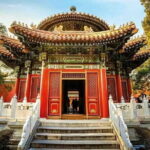
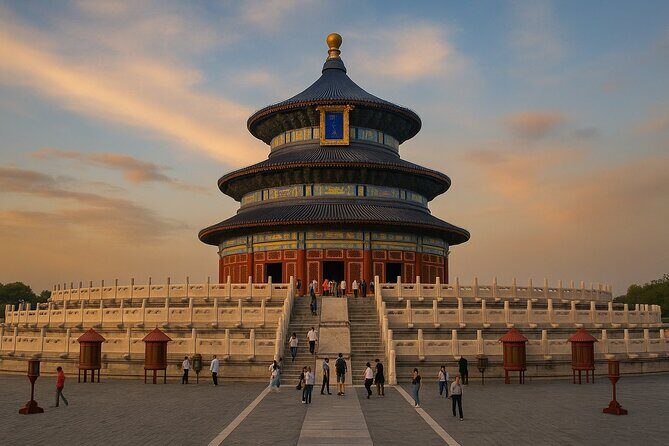
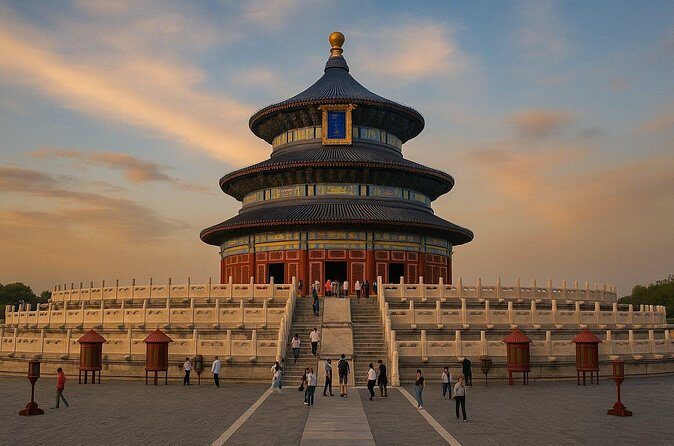
This is the calmer opening. The focus is Ming-era architecture and symbolic layouts tied to ancient cosmology. A nice extra: you might see locals practicing tai chi there, which gives you a sense of everyday use, not just monument viewing. Go in ready to slow down. Even with a guide, it helps to look at how the grounds and buildings align.
Tiananmen Square
Then the trip goes to scale and history. Tiananmen Square feels monumental—surrounded by major landmark buildings and framed by sites like the Great Hall of the People and Mao’s Mausoleum. If you’re sensitive to huge public spaces (or big crowds), bring patience. It’s one of those places where your first reaction is often just size.
Palace Museum (Forbidden City)
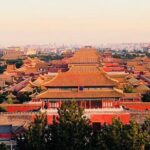
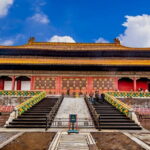
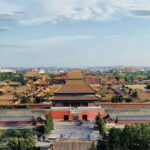
After the open space, the Forbidden City gives you dense detail. You’ll move through grand halls and courtyards, with the point of the visit being scale, imperial architecture, and symbolism. This is also where a guide helps most: without context, you can miss why certain layouts mattered.
Wangfujing Street
To close the day, you shift gears to a street that mixes modern shopping with older Beijing flavor. It’s known for food stalls and lights, so it’s a good place to grab a snack or do light browsing instead of trying to keep up with museum-level focus.
Practical note: Beijing days can include a lot of standing and walking. Comfortable shoes matter more here than what camera strap you’re using.
Badaling Great Wall plus Olympic Park: icons with contrast
The next big Beijing day pairs the most famous wall section with a modern architecture stop.
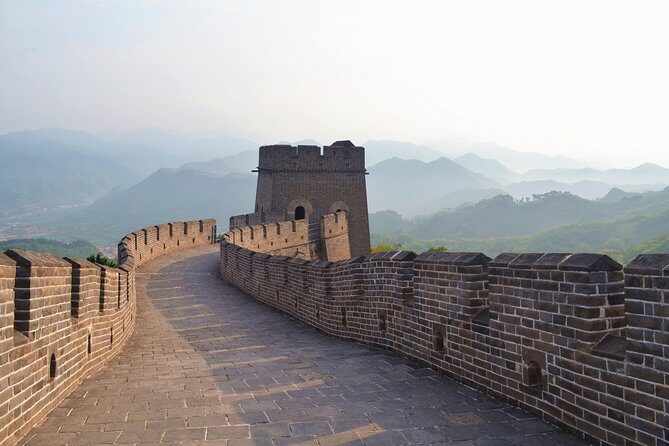
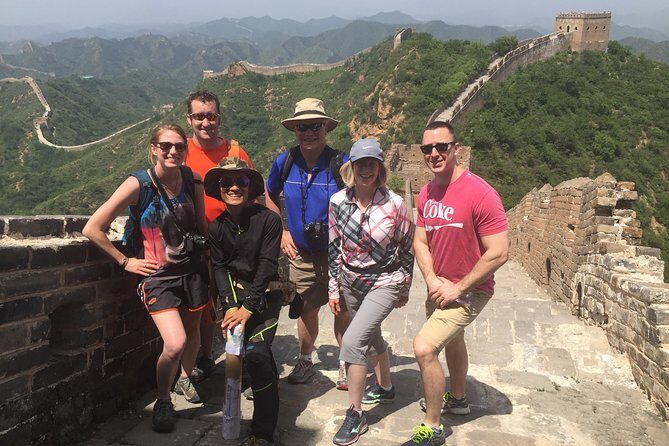
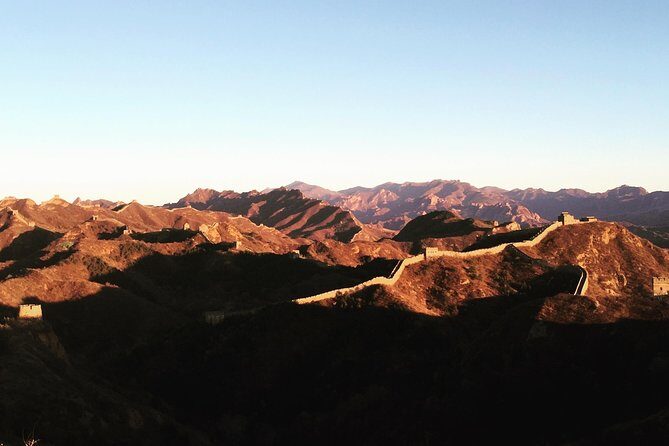
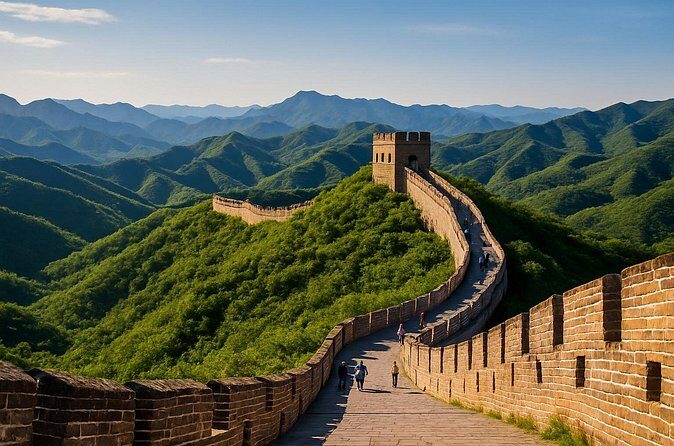
Great Wall at Badaling
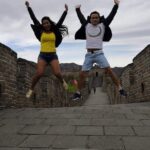
Badaling is accessible and iconic, and it’s also popular. That means you’ll want to treat it like a major attraction: expect lots of people and plan to enjoy the walk as much as the views. A guide can help you time key moments and keep you from wasting time when routes get crowded.
Olympic Park (Bird’s Nest and Water Cube)
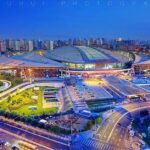
Then you switch to modern China’s architecture ambition. The Olympic Park is spread out and photogenic, centered on the Bird’s Nest Stadium and the Water Cube. This works well after the Great Wall because you get a different kind of visual rhythm—clean angles and big structures instead of steep stone paths.
If you like contrasts, this day hits the mark. If you prefer one “theme per day,” it can feel like whiplash. Either way, it’s a solid use of time.
High-speed train to Xi’an: less travel pain, more culture time
The route keeps momentum by using high-speed trains. Beijing to Xi’an takes about 5 to 6 hours, which is exactly the kind of leg that can wreck a DIY trip if you misjudge timing. Here, you’re basically trading stress for comfort and letting the schedule do the work.
After arrival, you meet your local guide, transfer to the hotel, and get the rest of the day at leisure. That matters. Xi’an is a city where you’ll want a little buffer time to adjust to new smells, new streets, and new pacing.
Terracotta Warriors and Qin-era scenery at Lishan Beacon
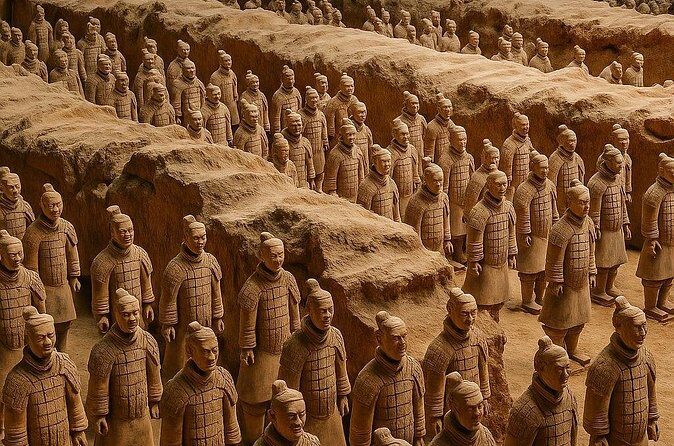
Xi’an’s best day is the Terracotta Warriors—and it earns that attention.
Terracotta Warriors
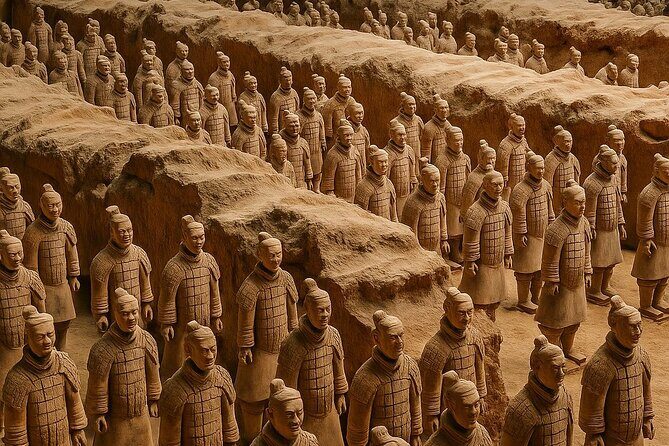
The Terracotta Warriors are an underground army of thousands of life-sized soldiers, each with unique features. The guide value here is in helping you understand what you’re seeing: why the army was built, what the figures were meant to represent, and how to look at the small variations without getting lost in the scale. Plan for a lot of attention, and don’t worry if you feel “overwhelmed” in the first minutes. The site is designed to hit you with magnitude.
Lishan Beacon (linked to Qin Dynasty)
Then the route shifts to a more scenic and historic pairing. Lishan Beacon is associated with the Qin Dynasty and ties into legends around the Huaqing Hot Springs. You also get panoramic hilltop views. This isn’t the same kind of wow as the Warriors, but it balances your day so you’re not stuck in only one type of experience.
A good strategy: treat the Warriors as the main course and Lishan as the digestion walk. You’ll enjoy both more if you don’t try to turn every minute into peak intensity.
Xi’an City Wall and the tower views: walking like it’s 600 years ago
Xi’an gives you a chance to explore from above and around. The City Wall and towers make the city feel more navigable, and they add good photo angles.
Xi’an City Wall
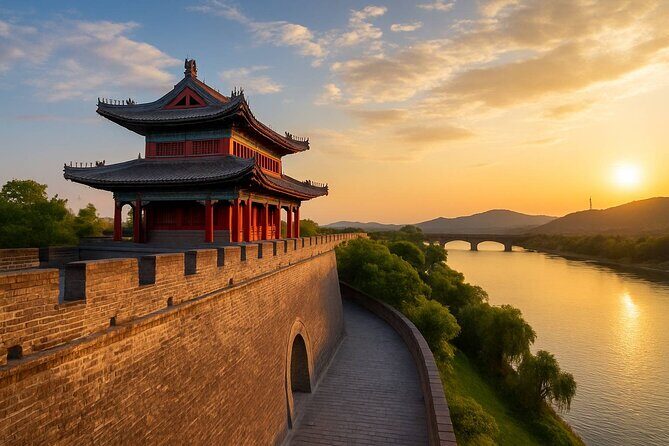
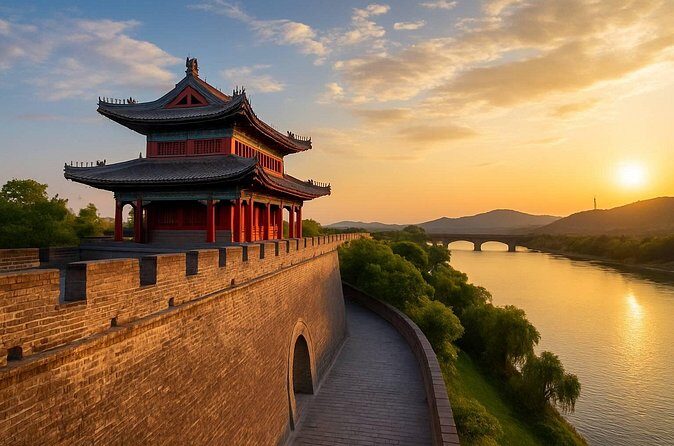
This is one of the best-preserved ancient city walls, with a 14-kilometer loop. You can walk parts of it or bike (your guide can help you choose what fits your stamina). Even if you don’t do the full loop, getting up on the wall shows you the city in layers.
Bell Tower and Drum Tower
The Bell Tower and Drum Tower add contrast: one is about bronze bells and views, and the other is known for drums and traditional performances. Both sit at major points in the city, so you’re not just visiting buildings—you’re using them as orientation.
Muslim Quarter
Then comes the part where you can stop being a “museum person” and start being a “street person.” The Muslim Quarter is a maze of alleys with food stalls and cultural charm. The route highlights classic tastes like lamb skewers and roujiamo, so you know what to look for when you’re hungry and deciding fast.
Grand Tang Dynasty Ever Bright City
This is a free-entry pedestrian zone known for Tang-style splendor, light shows, and cultural performances. Even if you don’t watch everything, it’s a nice way to end a day that started with very ancient forces and ends with staged celebration.
This sequence is a great fit for people who want both history and payoff—views, performances, and food in the same bundle.
Hangzhou: West Lake calm plus Hefang Street energy (the good kind)
After Xi’an, the trip slows down in Hangzhou. You take a high-speed train of about 7 hours, then you’re set up for a more relaxed feel.
West Lake (Xi Hu)
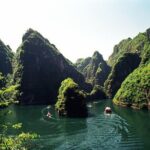
West Lake is UNESCO-listed and known for harmony between water, hills, and cultural spots like pagodas and temples. The key here is that you can enjoy it at multiple speeds: stop for viewpoints, take a gentle stroll, and absorb the setting. This is one of those places where the scenery matters, but you also need mental room to enjoy it.
Hefang Street
Then you transition to Hefang Street, tied to the Southern Song Dynasty. It’s a preserved pedestrian street with older architecture. It’s a good place for snacks and casual wandering, and it gives you a break from the strict “line up for the next big site” feeling.
If Beijing and Xi’an are history with volume, Hangzhou is history with breathing space.
Longjing tea fields, Oriental Pearl Tower, and a night cruise on the Huangpu
Hangzhou sets up Shanghai night-vision later in the route, and this day does it in two distinct ways: tea countryside vibes and city skyline spectacle.
Longjing tea fields
The Longjing tea fields are known as the birthplace of Longjing (Dragon Well) tea, with terraced plantations on the hills west of West Lake. This is a slower, sensory stop. You’re not just looking at a postcard view—you’re seeing how the tea landscape is shaped for cultivation.
Oriental Pearl Tower
Next you get Shanghai’s skyline icon. The Oriental Pearl Tower is 468 meters tall with 11 spheres of varying sizes. It’s a strong visual marker for the city’s modern identity.
Huangpu River cruise
To cap the day, the route includes a Huangpu River cruise. You’ll pass between the Bund on one side and the Pudong towers on the other, with skyline lights reflecting on the water. This is smart scheduling because you’re not trying to do everything in harsh midday brightness. Evening views are often when the city feels most photogenic.
If you want one “wow” moment in Shanghai that doesn’t require a deep knowledge of architecture, this cruise is it.
French Concession strolls, Sinan Mansions, Nanjing Road shopping, Chenghuang Miao, and the Bund
The final full sightseeing day is built for variety. You get old Shanghai charm, a preserved villa enclave, shopping streets, a Taoist temple, and then the classic riverfront finish.
Wukang Road
This is a tree-lined street in the French Concession area, known for historic mansions, cafes, and a calmer, elegant vibe. It’s perfect for a walking break where you can just look at buildings.
Sinan Mansions
Sinan Mansions are restored 1920s garden villas with European-style elegance plus modern touches. The site is associated with notable figures like Zhou Enlai and Mei Lanfang, which adds a human layer to the architecture.
Nanjing Road
Nanjing Road is Shanghai’s iconic shopping boulevard—about 5.5 kilometers from the Bund toward Jing’an Temple. Even if you don’t buy anything, it helps you understand how Shanghai moves: fast, commercial, and bright.
Chenghuang Miao (Yuyuan Garden area)
The route includes the Shanghai Temple of the Town God area, a Taoist temple known for ornate architecture and spiritual significance dating back to the Ming Dynasty. This is a welcome change of pace from shopping streets. You trade neon for incense-and-stone atmosphere.
The Bund
Then you end at the Bund, the famous waterfront promenade. Colonial-era buildings line the river opposite the futuristic Pudong skyline. It’s the old-versus-new face of Shanghai, and it’s ideal for a final photo set.
Pudong departure day: keep the last morning simple
On the last day, you’ll fly out of Pudong International Airport. After breakfast, you get free time before your transfer. That’s useful because your last morning doesn’t have to be another marathon. It’s also a good moment to re-check what you packed and to settle into your next flight mindset without rush.
If you tend to forget souvenirs at the hotel, now’s the time. Last day stress is how loose cables end up in drawers.
Should you book this Beijing to Shanghai tour?
I’d recommend booking if:
- You want one guided plan that covers four cities without you chasing logistics
- You like seeing both top-tier icons and real street life areas
- You value included structure: 4-star hotels, meals, train travel, and guides
- You don’t want to spend days researching train timing and admission logistics
I’d think twice if:
- You hate a fixed schedule and need lots of unscripted time
- You’re extremely sensitive to heavy walking days (especially in Beijing and around major sites)
- You’d rather stay in one city longer than switch every few days
This tour feels best for travelers who want the big hits—Great Wall, Terracotta Warriors, West Lake, The Bund—while still getting enough local texture to remember the trip as more than just famous monuments.
FAQ
How long is the tour?
It runs for about 10 days.
Where does the tour start, and when do you meet?
The start is at Capital Airport Shunyi, Beijing 101300 China, with a start time of 8:00 am.
Which meals are included?
Breakfast is included for 9 days, and lunch is included for 7 days. Dinner is included for 7 days.
Are high-speed trains included between cities?
Yes. The plan includes a high-speed train from Beijing to Xi’an (about 5 to 6 hours) and another high-speed train from Xi’an to Hangzhou (about 7 hours).
Are admission tickets included?
Admission tickets are included for many listed stops, while some stops are free-entry.
What hotel quality should I expect?
The overview says you stay in 4-star hotels.
Does the tour include airport transfers?
Yes. It includes transfer from Beijing Capital International Airport on arrival day, and a transfer to Pudong International Airport on the final day.
How far in advance is this commonly booked?
On average, it’s booked about 21 days in advance.
When will I receive confirmation after booking?
Confirmation is received within 48 hours of booking, subject to availability.
What is the cancellation policy?
You can cancel up to 6 days in advance for a full refund. Canceling 2–6 days before gives a 50% refund, and canceling less than 2 days before isn’t refunded.