REVIEW · BEIJING
One day tour to downtown Tianjin from Beijing by high speed train
Book on Viator →Operated by Cindy Zhang · Bookable on Viator
A second China city, in one day. You ride the high-speed train from Beijing to Tianjin and back the same evening, with Cindy Zhang guiding the story of the city’s former foreign concessions and waterfront life. I like that it saves you the hassle of figuring out train logistics, and I like the way the route stitches together European-style streets with a walk along the Haihe River.
The trade-off is that it’s a long, packed day—about 11 hours—so plan on steady walking and limited downtime. One more thing to know: the return train ticket is not part of the base price, so you’ll pay that separately on the day.
In This Review
- Key highlights you’ll feel on the ground
- Beijing to Tianjin on a single ticket: the real vibe of a fast day
- Where the day starts: Beijing South and the handoff to Tianjin
- Tianjin Railway Station: the skyline cue you get right away
- Jiefang North Road: former French and British concessions in one guided walk
- The Five Great Avenues and Xiaobailou: where Tianjin looks like it borrowed a postcard
- Italian Style Street: shopping energy and Tianjin Jianbing
- Ancient Culture Street by Tianhou Palace: shopping with a temple backbone
- Tianjin Eye and the Haihe River: a quick view that anchors the day
- Jingyuan (Jing Garden): Puyi’s former residence, not just a pretty building
- Heping Lu ShangYeJie: the porcelain House and a pedestrian shopping street stroll
- Haihe Cultural Square and the river walk before heading back
- Price and value: what $234 covers, and what you still pay
- Who should book this Tianjin day trip (and who might skip it)
- Should you book this Tianjin day tour from Beijing?
- FAQ
- Is hotel pickup included?
- How long is the day trip?
- What are the train details?
- How much is the return train ticket?
- What’s included in the price besides transportation?
- Are any attractions free?
- What is the meeting point?
- Is there a group size limit?
- What if the weather is bad?
Key highlights you’ll feel on the ground
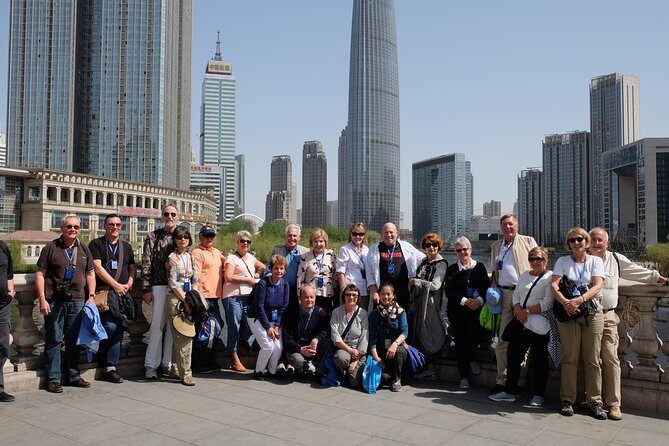
- A guided same-day loop that gets you to Tianjin fast, then back to Beijing on schedule
- Jiefang North Road history, including the former French and British concessions
- Five Great Avenues and Xiaobailou, plus a taste of the old foreign restaurant scene (Keissling)
- Jingyuan (Jing Garden) admission included, the former home tied to Puyi
- Italian Style Street food energy, where Tianjin Jianbing is the obvious snack
- Small group size (up to 20) for easier pacing and fewer crowd headaches
Beijing to Tianjin on a single ticket: the real vibe of a fast day
This is the kind of day trip that works because Tianjin is close enough to do properly—without you spending half the day on planning. You leave Beijing in the morning on a high-speed train (departure is around 9:00), then you’re dropped into Tianjin with a guide who actually explains what you’re seeing instead of just pointing.
I think the best part is the pacing: it’s not “one stop and done.” It’s a sequence of short walks and quick photo moments, lined up so you move through the city’s major identity markers—concessions, European-looking streets, river views, and palace-era culture—before you ever worry about getting back to Beijing.
If you’re the type who gets annoyed by transportation anxiety, you’ll appreciate the structure. If you want a slow morning, this may feel like you’re always mid-step.
You can also read our reviews of more tours and experiences in Beijing

Where the day starts: Beijing South and the handoff to Tianjin
The meeting point is Beijing South Railway Station (Bei Jing Nan Zhan). That matters because it’s central for rail travel, and it keeps the day trip from turning into a long pre-tour commute.
Transfers are included within a defined area (hotel pick-up/drop-off), plus transportation while you’re in Tianjin. If you’re outside that zone and still want pickup, expect an extra charge.
You’ll also use a mobile ticket, which is handy in China where paper tickets can slow everything down at the gate.
The day runs long—roughly 11 hours—so wear comfortable shoes and bring something for temperature swings. It’s a day where you’ll appreciate pockets, because walking times between stops are short but frequent.
Tianjin Railway Station: the skyline cue you get right away
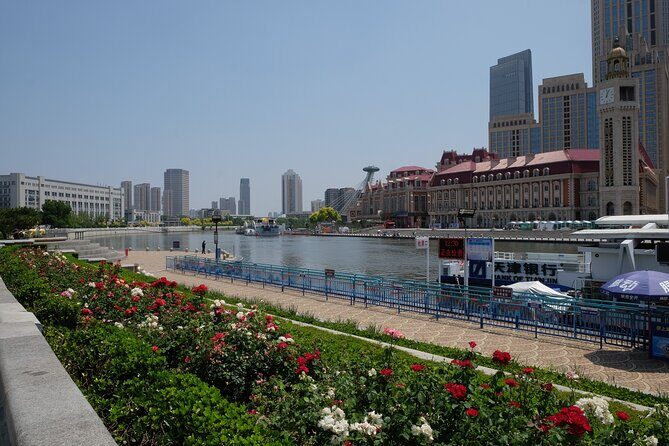
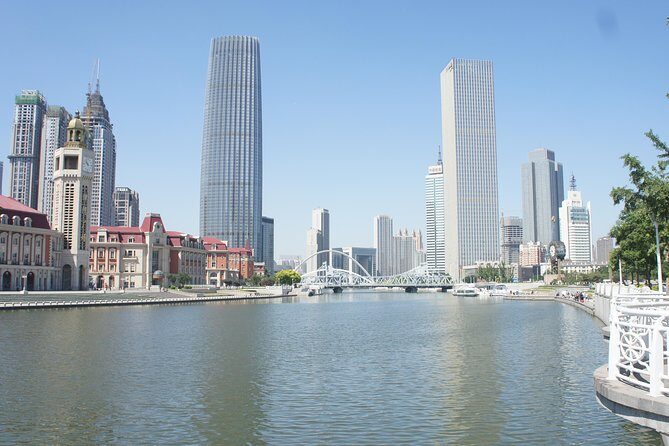
Your first stop is Tianjin Railway Station, and it’s a smart opener. You step out and immediately get the city’s waterfront framing: the Haihe River, plus landmarks like Jinwan Plaza, Liberation Bridge, and the Century Clock.
Even if you don’t know Tianjin at all, this gives you a mental map. You can start connecting later stops—especially the river areas—back to this first “big picture” view.
This is also where the group dynamic shows up. You’ll have a short window (around 15 minutes) to orient yourself, then you’ll shift into street-level walking. If you’re prone to wandering off, this is one of the places where staying with the guide really helps.
Jiefang North Road: former French and British concessions in one guided walk
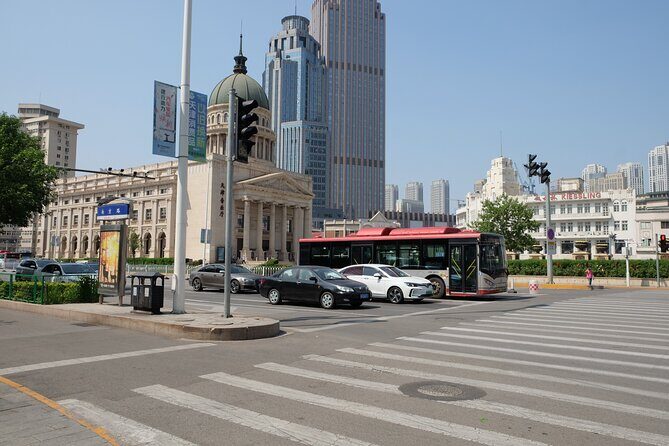
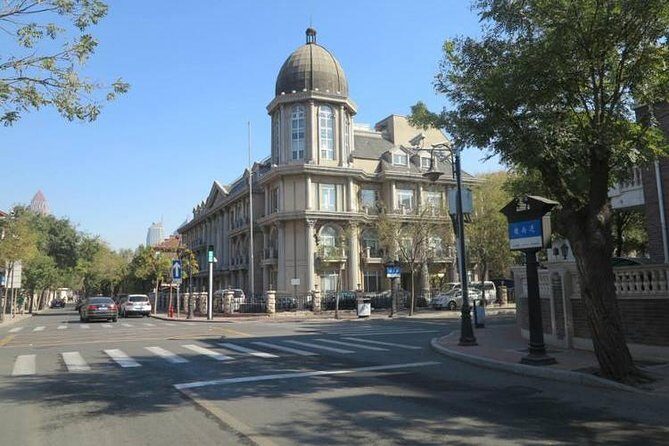
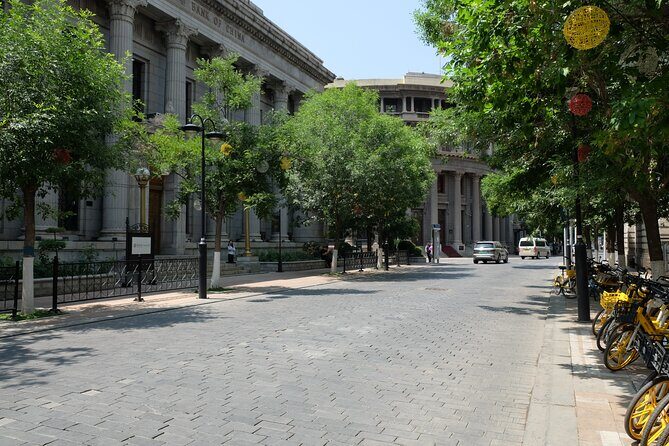
Next comes Jiefang North Road, also part of what many people think of as Tianjin’s old financial street energy. You’re walking through areas tied to the former French concession and former British concession, which means the buildings around you were designed for a different kind of colonial-era city life.
You’ll pass historical structures such as the first post office of the Qing Dynasty, along with buildings tied to clubs, barracks, consulates, and foreign firm life. The key is that your guide connects the architecture to the story—why these buildings exist, what they were used for, and how they shaped the city.
This stop is free admission and lasts about 1 hour 20 minutes. That’s a decent walking window, but still tight enough that you’ll want to keep your phone charged. You’ll likely take more photos than you planned because the street façades are distinctive.
The Five Great Avenues and Xiaobailou: where Tianjin looks like it borrowed a postcard
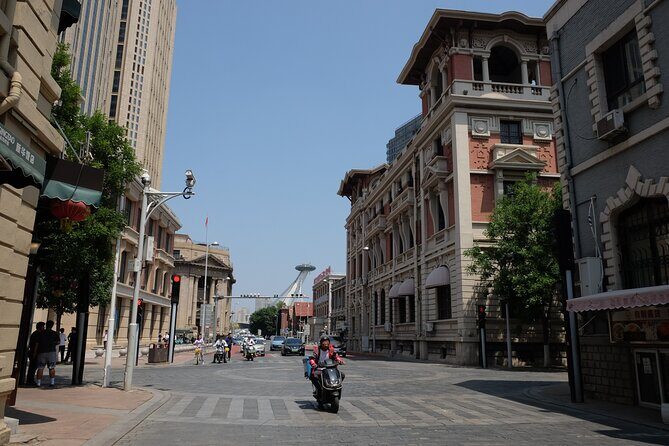
Then you head to Xiaobailou, the older “properous” core area (about a century ago) often linked with the famous European-style streets. The Five Great Avenues are described as a traditional living quarter made up of five east-west streets.
One reason this stop is worth it: it’s not just pretty streets. You’re learning how Tianjin’s foreign concession era left a layout and a street identity behind. The guide’s explanations make it easier to notice details you’d otherwise miss.
You also get a nod to a famous old-school foreign restaurant presence in China, including Keissling. It’s a small mention, but it helps you understand why these “European-looking” areas weren’t just decoration—they were part of a real social scene.
This stop is shorter (around 30 minutes), mostly built around walking and quick sightseeing. If you love street photography, you’ll want to move slowly through the best blocks rather than rushing to the next corner.



Italian Style Street: shopping energy and Tianjin Jianbing
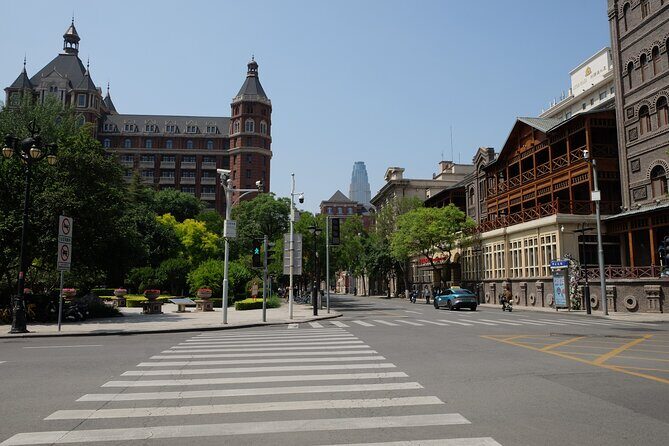
Italian Style Street is tied to the former Italian concession area, and today it’s a recreation and shopping zone. Think of it as a place where the old European street identity has been repurposed into food, snacks, and casual strolling.
You’ll have about 50 minutes here. That’s enough time to shop a bit, grab a bite, and still get back with the group.
The obvious food cue is Tianjin Jianbing, often described simply as Chinese crepes. If you’re only going to try one snack in Tianjin, this is the moment to do it. It’s street food, so you’ll likely see people eating on the move, and the whole area feels designed for that.
One practical note: this is a good stop for basic recharge (snack + water). Keep your phone handy and your pace realistic—Italian Style Street can be a little “bent toward shopping,” so it’s easy to get sidetracked.
Ancient Culture Street by Tianhou Palace: shopping with a temple backbone
After that, you shift to Ancient Culture Street (Gu Wenhua Jie), a traditional-style shopping stretch outside Tianhou Palace. The guide places Tianjin’s story in a bigger geographic frame too, mentioning the confluence of three rivers and Tianjin’s origins.
This stop is about 50 minutes and includes admission. The temple-side setting matters because it makes the street feel anchored, not just commercial. You’ll see the kind of goods people associate with traditional culture, plus the usual snack-and-souvenir mix that keeps the street lively.
If you’re the type who doesn’t love shopping, treat this as a “scene stop.” Walk, glance, take a few photos, and focus on the atmosphere and architectural setting rather than trying to browse everything.
Also, because it’s a temple-adjacent area, it’s a good moment to slow down slightly and observe details. This is one of those stops where you can tell the guide’s history lens from the generic tour route.
Tianjin Eye and the Haihe River: a quick view that anchors the day
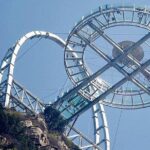
Next you’ll be at the Tianjin Haihe Cultural Square zone and you’ll also see the Ferris wheel known as the Tianjin Eye. It’s described as the only ferris wheel built on a bridge across the river in the world, so even if you don’t ride it, the placement is the point.
Your time here is short—about 10 minutes—so think of it as a skyline punctuation mark. You’ll get a good viewing spot and take in the river crossing and the modern city rhythm along the water.
Because this tour is packed, the goal isn’t to linger. The goal is to make the river feel real in your head. Once you’ve seen this, the later Haihe River walk makes more sense.
Jingyuan (Jing Garden): Puyi’s former residence, not just a pretty building
Now the day shifts into a deeper historical mode at Jingyuan (Jing Garden). This is a former residence tied to Puyi, the Last Emperor of China. The tour frames it clearly: he lived there from 1929 to 1931.
Admission is included, and the stop lasts about 1 hour. That time window helps you actually look at the site rather than speed-running it. I like stops like this because the guide can connect people to places. It’s not just walls; it’s a specific story tied to a specific figure.
One caution: palace-style sites can include indoor and outdoor walking. Wear shoes that handle uneven surfaces, and don’t rush if you want to read the information where it’s available.
This is also the moment where the tour’s small group size becomes useful. Less waiting means you can spend more of your time absorbing what you’re seeing.
Heping Lu ShangYeJie: the porcelain House and a pedestrian shopping street stroll
After Jingyuan, you head toward Heping Road’s pedestrian zone (Heping Lu ShangYeJie). The standout mention here is the porcelain House—a French-style little building decorated with porcelain pieces and porcelain vases and ornaments.
This is a quick stop (about 30 minutes), but it’s memorable because it’s visually specific. Instead of generic “old streets,” you get a concrete landmark you can point to.
Then you walk around the traditional pedestrian shopping street along Heping Road and Binjiang area. The point here isn’t shopping for the sake of shopping. It’s to see how Tianjin’s old-world concessions and modern street life sit next to each other in the same daily routine.
If you’re thinking about souvenirs, this is where you’ll likely have the most choice density. If you’re not into shopping, stay focused on the street details and use this time to rest your feet a bit.
Haihe Cultural Square and the river walk before heading back
Near the end, you walk along the Haihe River at Tianjin Haihe Cultural Square. This is where the day comes full circle. You’ve seen the river framing at the station, you’ve seen modern signage and street identities, and now you get a calmer walk tied to everyday local life.
You have about 40 minutes here. It’s enough time to enjoy the river views without feeling like you missed the train timeline.
Then you head back to Tianjin Railway Station and wait to board. The return timing is around 19:40 to Beijing South Railway Station.
Practical tip: this is a good moment to think about your last snack purchase and then stop buying things. The queue time near rail stations can eat into your energy.
Price and value: what $234 covers, and what you still pay
The published price is $234, and what you’re getting is real structure: guided service, transportation (hotel transfers within the defined area, plus local Tianjin transport), lunch, and entrance tickets for Jing Garden. Ancient Culture Street admission is also included.
What’s not included: the return train ticket (second class). You can pay it on the tour day at CN¥118 per person.
So the value question becomes: does this save you enough effort and cost to justify the guided day? If you’d otherwise spend time sorting train seats, figuring out timing, and mapping Tianjin transport on your own, this tour looks pretty reasonable. The guide’s job is also not just to talk—it’s to make the city readable quickly.
Also look at the group size: up to 20 people means you’re not stuck in a huge crowd. That matters on street stops where you want to keep moving.
Who should book this Tianjin day trip (and who might skip it)
You’ll probably love it if you:
- Want a guided introduction to Tianjin without turning the day into logistics homework
- Enjoy concession-era architecture and street history tied to specific places
- Like a mix of sightseeing and real city atmosphere along the Haihe
You might want to skip or look for a slower alternative if you:
- Need lots of downtime between stops
- Prefer doing fewer places at a deeper pace
- Don’t like paying extra for the return train ticket on the day
This is also a good fit for first-time visitors to Tianjin. It gives you a snapshot with enough key landmarks to help you plan future independent exploring if you fall for the city.
Should you book this Tianjin day tour from Beijing?
If you want Tianjin in one day without the stress of train planning and in-city navigation, this tour is a strong choice. Cindy Zhang is clearly the kind of guide who connects streets, buildings, and timelines so the European-style blocks and palace-era sites don’t feel random.
One caution: it’s long and moving. If you’re traveling with someone who hates walking or hates tight schedules, the day may feel like a sprint.
But if you’re happy with a structured day and you want Tianjin’s concession streets plus a Haihe River finish, book it. It’s one of those trips that pays you back quickly—especially if you’re already in Beijing and want a second city day that actually holds together.
FAQ
Is hotel pickup included?
Hotel transfers are included only within the defined area. If you need pickup outside that area, you may need to pay an extra fee.
How long is the day trip?
The duration is about 11 hours.
What are the train details?
The tour includes high-speed train travel from Beijing to Tianjin, with departure around 9:00. The return train ticket is not included in the base price.
How much is the return train ticket?
The return train ticket in second class can be paid on the tour day for CN¥118.00 per person.
What’s included in the price besides transportation?
The tour includes a guide service, lunch, entrance tickets to Jing Garden, and admission for Tianjin Ancient Culture Street.
Are any attractions free?
Yes. Several stops are listed as free admission, including Tianjin Railway Station, Jiefang North Road, Five Great Avenues, Italian Style Street, and Haihe Cultural Square, among others.
What is the meeting point?
The tour starts and ends back at Beijing South Railway Station (Bei Jing Nan Zhan).
Is there a group size limit?
Yes. The tour has a maximum of 20 travelers.
What if the weather is bad?
The tour requires good weather. If it’s canceled due to poor weather, you’ll be offered a different date or a full refund. Cancellation is free up to 24 hours in advance for a full refund.