REVIEW · BEIJING
Immerse Yourself:Chinese Calligraphy Experience in Beijing Hutong
Book on Viator →Operated by Beijing Tours by Better China Trip · Bookable on Viator
Brush, ink, and characters start fast.
This 1-hour Chinese calligraphy experience in a Beijing Hutong setting is a fun way to get real practice with Hanzi, not just watch from the sidelines. I love that you’ll learn at least 10 Chinese characters, even if Mandarin feels intimidating. I also like the supportive, hands-on teaching style associated with Master Guo Baoqing, which helps beginners get moving quickly instead of freezing with the brush.
One thing to consider: it’s only about 1 hour, so you’ll create a small calligraphy piece and get skills you can build on later, not full-on fluency.
In This Review
- Key Highlights at a Glance
- A 1-Hour Chinese Calligraphy Session in Beijing Hutong
- Meeting Point in Dongcheng: Getting There Without Stress
- Step-By-Step: What Happens During the Class
- 1) Tools, history, and how the brush actually works
- 2) Practice: brush strokes you can feel
- 3) Characters (Hanzi) with guided corrections
- 4) Make your own calligraphy piece
- Why This Class Feels Surprisingly Beginner-Friendly
- The Most Praised Part: Hands-On Teaching That Gets You Writing Fast
- Supplies, Paper, and the Small Details That Improve Your Results
- Price and Value: Is $55 Worth One Hour of Calligraphy?
- Timing and Booking: How Far Ahead You Should Plan
- Weather Matters Here, So Keep Your Flexibility
- Who Should Book This (and Who Might Skip It)
- Should You Book Chinese Calligraphy in Beijing Hutong?
- FAQ
- How long is the Chinese calligraphy experience in Beijing?
- How much does it cost?
- Where does the experience start and end?
- What’s included in the price?
- Is transportation included?
- How many people are in the group?
- What do I learn during the class?
- What is the cancellation policy?
Key Highlights at a Glance
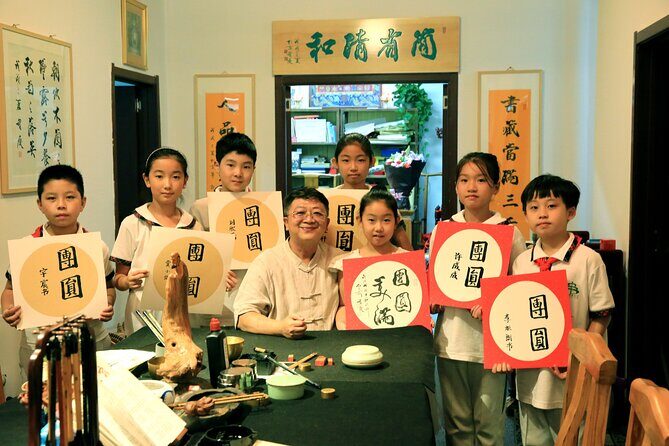
- Learn at least 10 Hanzi during your session, so you leave with usable results.
- Guided practice with a teacher using a hands-on approach that works for beginners.
- Brush strokes and character basics covered with clear instruction.
- Supplies included, so you’re not scrambling for ink, paper, or tools.
- Small group (max 10), which keeps the class from feeling rushed.
A 1-Hour Chinese Calligraphy Session in Beijing Hutong
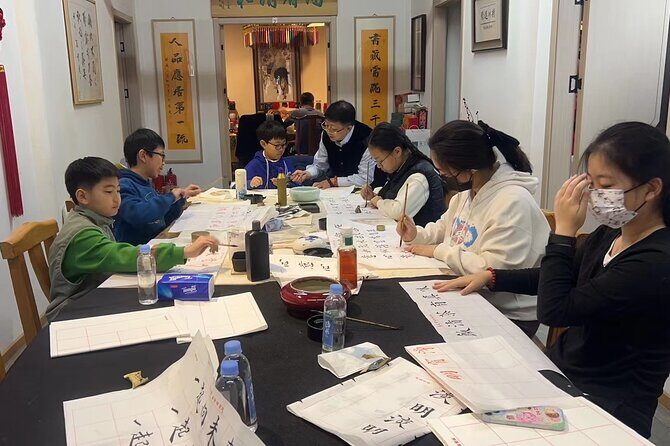
Beijing is loud with options, from palaces to temples, but this is the kind of activity that slows you down on purpose. You trade sightseeing tempo for something tactile: holding the brush, watching ink lines appear, and learning how Chinese characters are actually constructed.
You’ll meet for a guided session in Dongcheng District at 71-3 Ci Qi Kou Da Jie, Dongcheng Qu, Beijing 100051. The timing is tight—about 1 hour—but that’s also the point. This class is designed as a complete “do it now” experience. You’ll go from basics to making your own work without needing prior knowledge.
The vibe fits well with Beijing Hutong life: practical, local, and centered on a craft you can feel. And because the group is capped at 10 travelers, you’re not just one face in a crowd. You get real coaching as you try the strokes and shapes.
You can also read our reviews of more tours and experiences in Beijing.


Meeting Point in Dongcheng: Getting There Without Stress
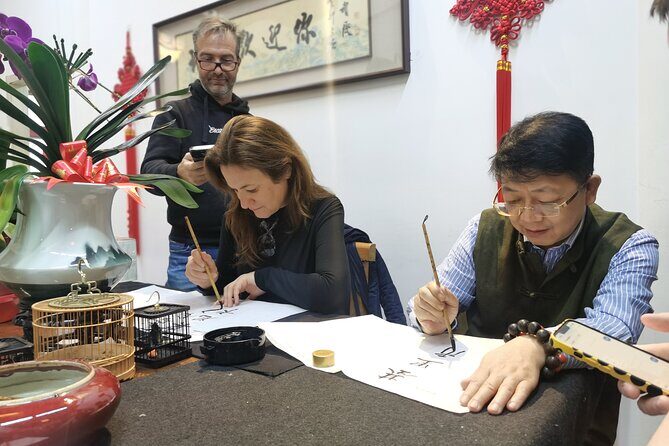
The address is straightforward and the activity is near public transportation, which matters in Beijing. In a city with traffic and a lot of walking, being close to transit saves time and energy so you can show up ready to work, not frazzled.
You also have a clear loop: the activity starts at the meeting point and ends back there. That means you don’t need to plan a second trip to get back to your day. For an hour-long class, that kind of simplicity is worth something.
If you’re arriving from a nearby sight, give yourself a little buffer. Calligraphy is the type of activity where you want your head clear. When you’re ten minutes late, the first thing you lose is patience—and patience is kind of the whole secret ingredient.
Step-By-Step: What Happens During the Class
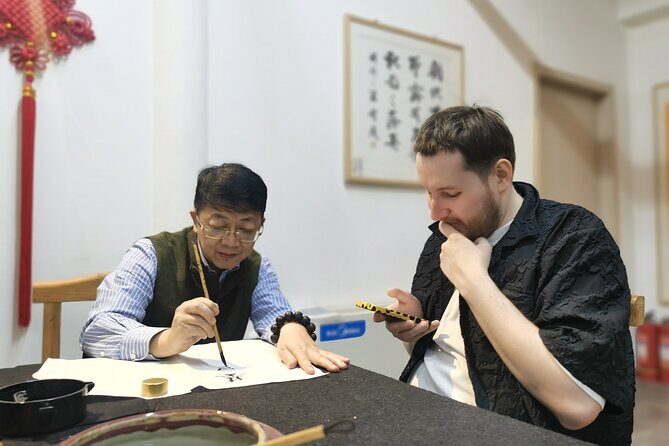
This isn’t a lecture-heavy demo. It’s structured as a guided session where you practice as you go. Here’s the flow you can expect based on how the lesson is described.
1) Tools, history, and how the brush actually works
You start with an introduction to the art: why it matters, what tools are used, and how the writing system connects to the look of the character. You’ll learn about the brush strokes, the basic logic behind characters, and the aesthetic principles that make calligraphy look intentional instead of accidental.
Even if you know zero Mandarin, this part helps you connect sound and shape later. And it sets expectations: calligraphy isn’t random. It’s built, stroke by stroke.
2) Practice: brush strokes you can feel
Next comes the hands-on section. You’ll practice the key strokes, learning how to control the brush line—how to start, how to move, and how to finish. This is the moment where your brain usually says, Wait, it’s that simple? And your wrist says, Actually, it’s not that simple. Both reactions are normal.
The teaching approach is designed to keep beginners from getting stuck. The focus is on doing the basics well, not copying perfectly the first time.




3) Characters (Hanzi) with guided corrections
Then you move from strokes to actual Hanzi. The goal is practical: by the end, you’ll learn at least 10 Chinese characters. That number is important because it turns the class into something you can use after you leave—especially when you’re reading street signs, menus, and simple words in everyday Beijing life.
And because handwriting practice is visual, not just memorization, it tends to click faster than you’d expect. You might feel like you’re learning Mandarin for the first time in a way that makes sense.
4) Make your own calligraphy piece
You’ll create your own calligraphic work as part of the session. This isn’t just about producing a nice souvenir. It’s about translating what you were taught into something you can hold—so your brain links technique to outcome.
Think of it as a training montage, except slower. You’re building muscle memory and character recognition at the same time.
Why This Class Feels Surprisingly Beginner-Friendly
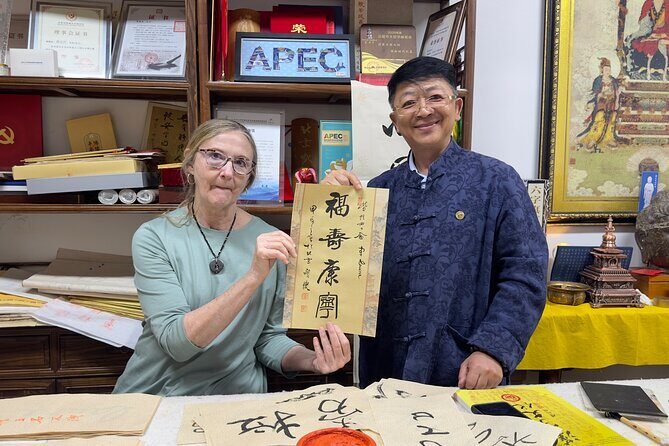
I hear a lot of people worry that Chinese characters are too hard, too many, too complicated. The best thing about this format is that it doesn’t rely on you knowing Mandarin already.
The lesson is built around the fact that learning can be stepwise:
- First you learn strokes
- Then you assemble characters from those strokes
- Then you write enough characters to build confidence
When the session is done, you’re not trying to speak like a native. You’re just leaving able to recognize and write meaningful pieces—at least 10 Hanzi—and that’s a real boost on day one.
This is also where kids often shine. The class is hands-on enough that young learners don’t get overwhelmed by abstract language. Adults do fine too—if you treat it like a craft, not a test.
The Most Praised Part: Hands-On Teaching That Gets You Writing Fast
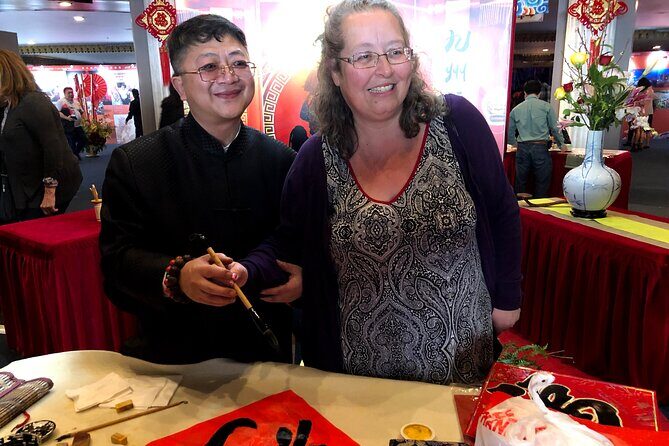
One highlight that comes through strongly is the teaching style. The class is associated with Master Guo Baoqing, and the approach is described as supportive and hands-on. That matters because calligraphy can go one of two ways:
1) You watch politely while someone else does the work.
2) You hold the brush and start learning right away.
You’re getting option two. The practical result is that you connect quickly with the process. You’re not just collecting information—you’re forming character lines with your own hand.
If you like lessons where you can’t hide behind observation, this class matches that preference. And when you’re able to correct your technique during practice, you learn faster than you would by trial and error alone.
Supplies, Paper, and the Small Details That Improve Your Results
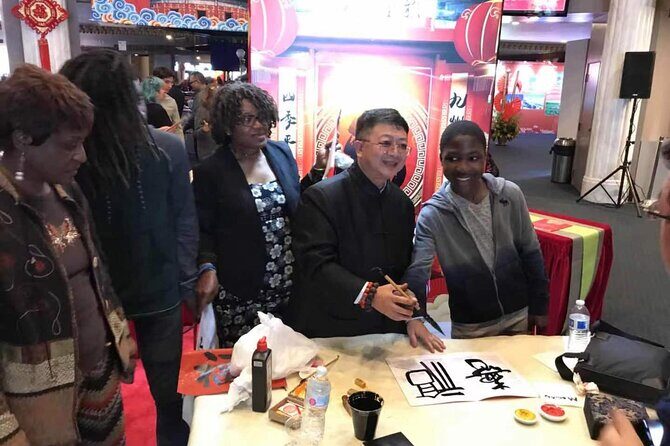
This session includes calligraphy supplies and entry/admission for the Hutong Calligraphy Experiences, so you’re not paying extra for ink or materials you didn’t know you’d need.
Even without a lot of time, good supplies help you focus on technique. The brush and ink behavior change how lines show up on paper, and you’ll get the tools that suit beginners. That’s a quiet but big part of why a short class can still feel rewarding.
Practical tip before you go: wear something you’re comfortable getting a little ink-adjacent. Calligraphy is not a messy disaster, but ink is ink, and small smudges happen when you’re learning.
Also, go in expecting your first character to be imperfect. That’s not failure. That’s training.
Price and Value: Is $55 Worth One Hour of Calligraphy?
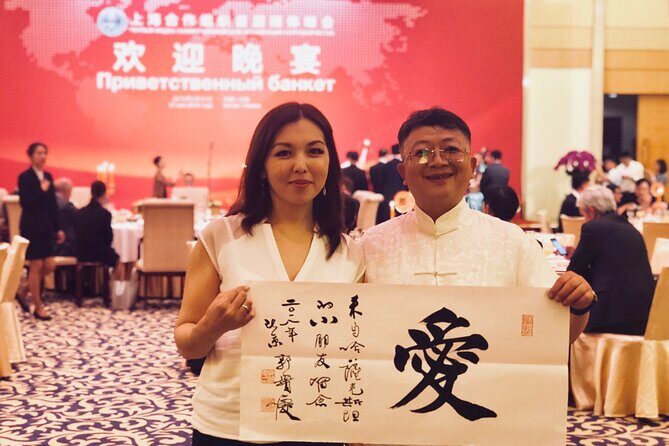
At $55 per person for about 1 hour, it’s not a bargain-bin activity. But it can be good value if you care about doing the craft, not just seeing it.
Here’s where the value comes from:
- Instruction plus practice, not a passive demo
- Supplies included, so you’re not paying surprise add-ons
- Small group size (max 10), which improves the teaching-to-student ratio
- A tangible takeaway: a piece you created yourself
- A language bonus: at least 10 Hanzi learned, not just general culture talk
If your Beijing trip is packed with major sights and you want one activity that leaves you with both a memory and a skill, this price makes sense.
It also tends to be easier to justify when you’re traveling with kids or in a mixed-experience group. Everyone can participate, and the results are visible fast.
Timing and Booking: How Far Ahead You Should Plan
This experience averages being booked about 9 days in advance, so it’s not something I’d wait until the last minute to chase. If you have a specific date in mind—especially during busier travel weeks—reserve early so you’re not stuck with limited options.
You’ll receive confirmation at the time of booking, and you get a mobile ticket, which reduces friction when you arrive.
Weather Matters Here, So Keep Your Flexibility
Calligraphy might sound like it could happen no matter what, but this activity is listed as requiring good weather. That usually means the overall experience depends on conditions where you’ll be meeting and moving briefly around the area.
If it’s canceled due to poor weather, you’ll be offered a different date or a full refund. That’s fair. A crafts session is calmer when the weather cooperates, and the provider builds the plan around that reality.
Who Should Book This (and Who Might Skip It)
This class is a strong match if you:
- want a hands-on cultural activity in Beijing
- like small-group learning instead of big tours
- want something beginner-friendly that still teaches real characters
- prefer experiences you can take home as an actual piece of work
You might skip it if:
- you’re looking for a long, multi-stop program
- you want a heavy history lecture only (this is more practice than talk)
- you don’t have the time to spare for an hour focused on a single skill
For most people, it slots nicely as a break between sightseeing days. It gives your trip balance: see the city, then slow down and make something with it.
Should You Book Chinese Calligraphy in Beijing Hutong?
I’d book it if you want a meaningful Beijing experience that doesn’t require advanced language skills. The biggest selling points are practical: you learn at least 10 Hanzi, you get hands-on coaching, and you leave with a piece you made yourself—all in a small group.
If you’re the type who likes crafts, short classes, and learning by doing, this is one of the better ways to spend an hour in Beijing. The time limit is real, but it’s also what keeps the experience focused and doable.
Go with a beginner mindset, expect a small amount of ink chaos, and enjoy the calm rhythm of stroke practice. That’s the point.
FAQ
How long is the Chinese calligraphy experience in Beijing?
It lasts about 1 hour.
How much does it cost?
The price is $55.00 per person.
Where does the experience start and end?
It starts at 71-3 Ci Qi Kou Da Jie, Dongcheng Qu, Beijing 100051 and ends back at the same meeting point.
What’s included in the price?
Included items are the 1-hour calligraphy experience, calligraphy supplies to use during the activity, and entry/admission for the Hutong calligraphy experience.
Is transportation included?
No. Transportation fee (taxi or subway) is not included.
How many people are in the group?
The experience has a maximum of 10 travelers.
What do I learn during the class?
You will learn at least 10 Chinese characters (Hanzi), and the instruction covers tools, techniques, brush strokes, and aesthetic principles of calligraphy.
What is the cancellation policy?
Free cancellation is available. You can cancel up to 24 hours in advance for a full refund. If you cancel less than 24 hours before the start time, the amount you paid will not be refunded.