REVIEW · BEIJING
Beijing:Forbidden City and Temple of Heaven Small Group Tour
Book on GetYourGuide →Operated by Beijing Youtravel · Bookable on GetYourGuide
Two big UNESCO sights in one day.
This tour makes Beijing’s imperial core feel organized: you start with Tiananmen Square, move straight into the Forbidden City, and finish at the Temple of Heaven with a guide handling the hard parts. I really like the hassle-free setup, including reserved access if you choose that option and the promise of guaranteed entry during busy periods. One possible drawback: it’s a long, hot-walking day, and the Chinese government security checks at Tiananmen can add serious time.
What I love most is how the guide connects buildings to power. You’re not just looking at stone and wood—you learn what each stop meant, from ceremonial gate roles to how emperors and empresses lived behind palace walls. Expect smart, practical pacing, but do plan for crowds and lines around peak days, especially in holiday weeks and weekends.
In This Review
- Key things that make this tour work
- How the day flows (and why it saves you time)
- Tiananmen Square: security first, then the monuments
- Entering the Forbidden City through Meridian Gate
- The Meridian Gate and the power of ceremony
- Three big halls: Supreme Harmony, Central Harmony, Preserving Harmony
- Back palaces: where daily court life actually happened
- A practical lunch window: 3 ideas for the 2-hour gap
- Temple of Heaven: sky worship, blue tiles, and triple roofs
- What the guide experience looks like on the ground
- Crowds, weather, and timing: how to reduce pain
- Value and pricing: what $75 buys you
- Who this tour fits best
- Should you book this Forbidden City and Temple of Heaven small group tour?
Key things that make this tour work
- Guaranteed entry when it matters: if you pick the option, you’re not stuck guessing during pick season.
- A tight route with minimal waiting: you hit Tiananmen, then walk into the Forbidden City via the south entrance area.
- Forbidden City details beyond the highlights: Ming and Qing stories, plus specifics like the role of Meridian Gate and what happens in the major halls.
- Temple of Heaven with the right context: you learn how emperors performed annual rituals seeking good harvests.
- English-speaking guides who manage the day: in practice, guides like Huang, Alice, Lisa, Melody, Susann, and Skye are repeatedly named for organization and clear explanations.
- Small extras that make the day nicer: some guides bring snacks and sweets (white rabbit is mentioned), and a few even share personal touches like handmade calligraphy.
How the day flows (and why it saves you time)
You’re meeting in central Beijing at Beijing Xinqiao Hotel around 9:30 AM, then spending roughly 6 hours seeing three heavy-hitters without trying to coordinate tickets, entry lines, and navigation on your own. The biggest value of a small-group approach is simple: you get a plan that matches the way Beijing’s sights actually run.
The rhythm is also smart. You start early-ish, you deal with Tiananmen Square security checks before the day gets too crowded, and you then use the momentum to walk into the Forbidden City instead of spending your energy figuring out logistics.
Two practical notes I’d give you before you go:
- Wear shoes you can walk in for hours.
- Bring water. Temple terraces and palace courtyards add up fast.
You can also read our reviews of more city tours in Beijing
Tiananmen Square: security first, then the monuments
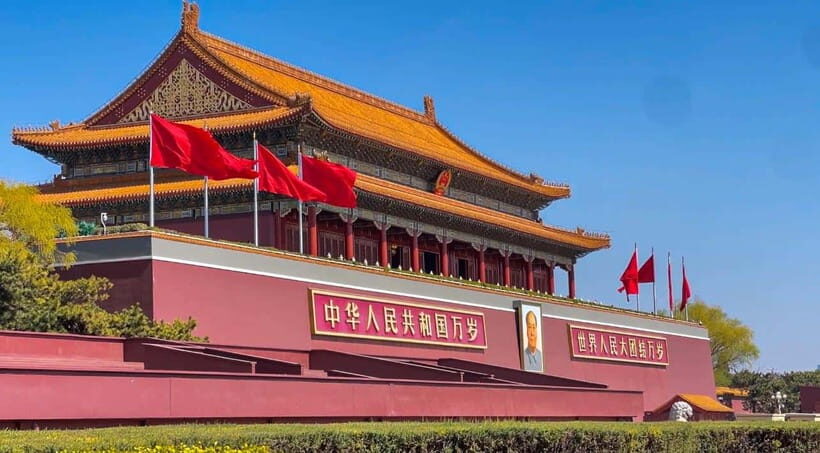
Around 10:00 to 11:00 AM, you walk through Tiananmen Square and the major buildings around it, including the Monument to the People’s Heroes, the Great Hall of the People, the Chairman Mao Memorial House, and the National Museum of China.
Here’s the reality: getting into the secured areas involves strict national security checks. The tour flags that on busy periods (summer holidays and common holidays), lines can stretch. That matters, because it can turn a smooth morning into a stop-and-wait morning.
My advice to you:
- If you can control your travel dates, pick a weekday when possible.
- If you’re traveling in peak weeks, mentally budget extra time for checks.
- Stay close to your guide at the checkpoint. In crowded areas, it’s easy to lose your group.
If you like history that connects symbols to politics, Tiananmen is a strong start point. The guide helps you read the square like a map, not just a photo spot.
Entering the Forbidden City through Meridian Gate
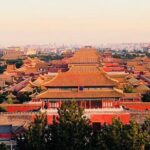
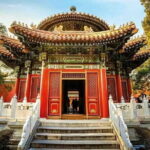
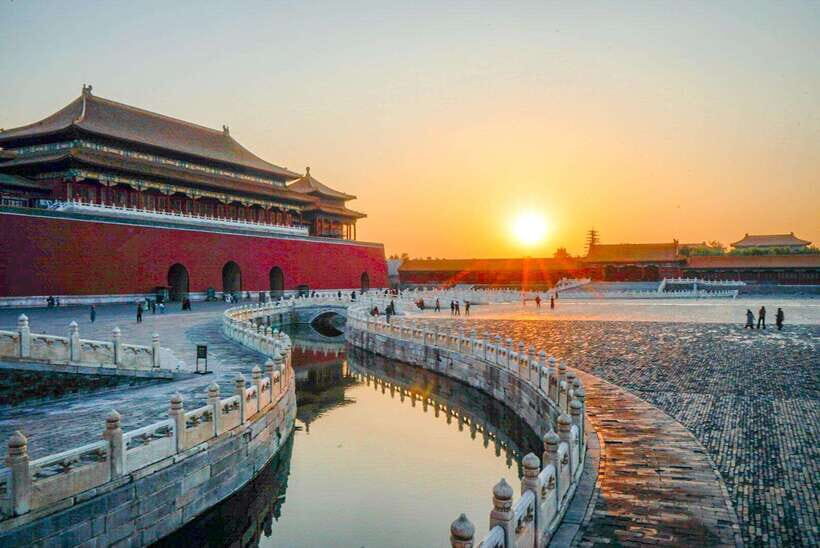
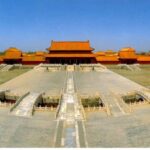
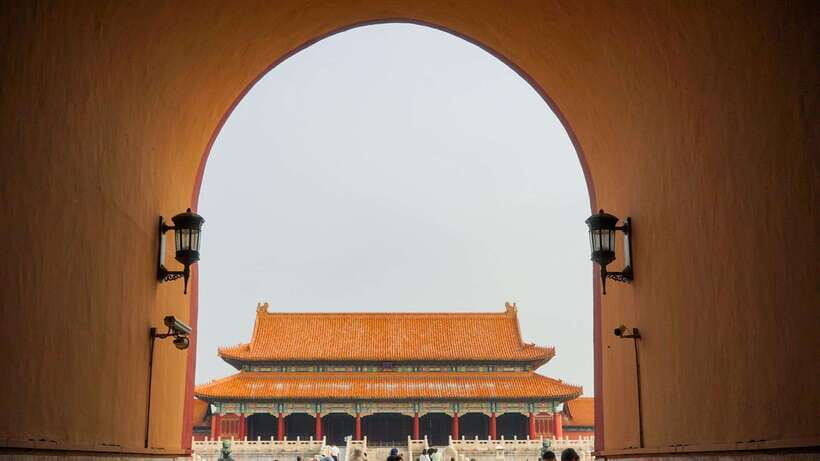
After Tiananmen, you cross the marble bridge area and pass through the Tian’anmen Gate Tower to reach the secured part of the palace complex. From there, you enter the Forbidden City around 12:00 noon from the south gate, the Meridian Gate.
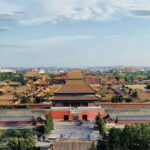
This is the world’s largest wooden palace complex by scale and layout: about 72 hectares and over 980 individual structures. It was built under the Ming dynasty (with key references to the 1404 and 1420 eras), and it served as the home to 24 emperors until 1924, when it became known as the Palace Museum in 1925.
Why that matters for you: if you only see the top “postcard” spots, you miss how the Forbidden City was designed to express rank and control. With a guide, you get the story behind the spaces.
The Meridian Gate and the power of ceremony
At Meridian Gate, you learn its role in imperial ceremonies and punishments. That kind of detail changes how you look at gates. Instead of thinking of them as decorative, you start seeing them as machinery for authority.
Three big halls: Supreme Harmony, Central Harmony, Preserving Harmony
You also focus on the three headline halls:
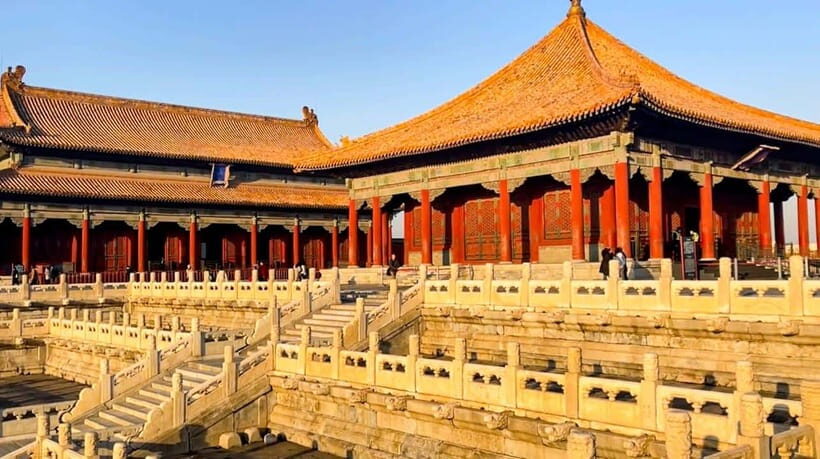
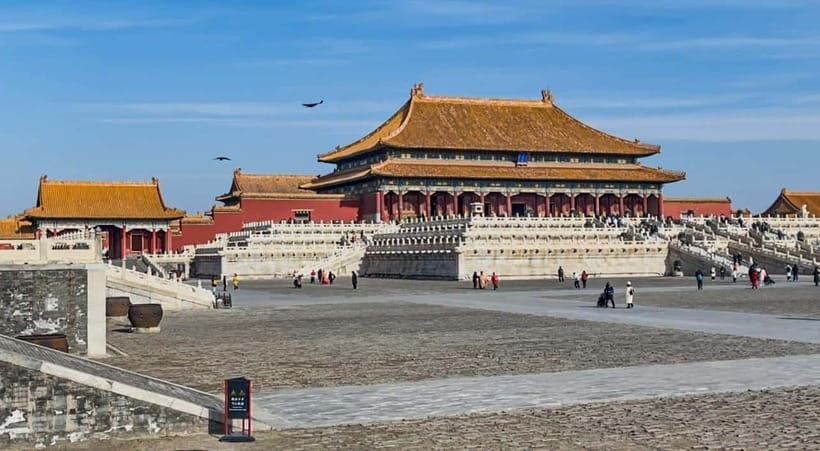
- Hall of Supreme Harmony: described as the highest-ranking ancient architecture in China; you get to see the emperor’s throne position.
- Hall of Central Harmony
- Hall of Preserving Harmony
The guide’s job here is to connect architecture to function. These spaces weren’t built for casual wandering; they were built for court ritual.
Back palaces: where daily court life actually happened
Then you move to the central and western palace areas—where emperors and empresses lived. You’ll spend time at key buildings like:
- Palace of Heavenly Purity: the guide explains how rulers lived and how they approached the topic of choosing the crown prince.
- Hall of Union and Palace of Earthly Tranquility: focused on the power and lives associated with empresses.
- Western Palaces: how Qing emperors chose concubines, and what “real life” could mean for concubines.
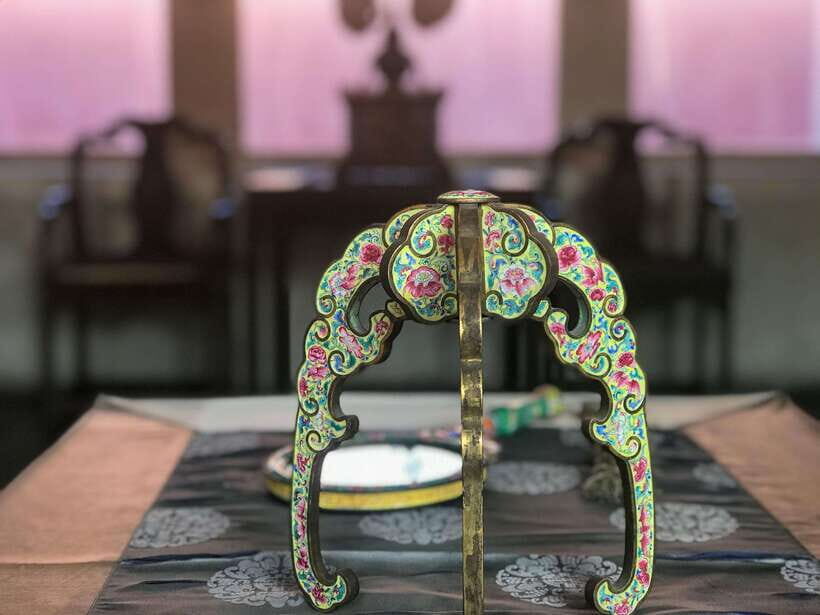
- Imperial Garden: winding water ways, decorated pavilions, and flower-and-tree scenes.
If you enjoy details about court life (not just battles and emperors), this section is where the tour becomes genuinely memorable. The Forbidden City can be overwhelming alone. With a guide, you get a path and a storyline.
A practical lunch window: 3 ideas for the 2-hour gap
Around 2:00 to 2:30 PM, you move by bus to the Temple of Heaven area. Then there’s a lunch break roughly 2:30 to 3:15 PM.
Lunch is not included, so you’re choosing between convenience and your own craving. The tour ends near a subway station later, so you’ll likely want food that’s filling but not slow.
Here’s what usually works well in this part of Beijing:
- Grab something quick near the Temple area so you’re not rushing into the afternoon.
- If you’re picky, consider planning a simple meal before you start queuing for major sights.
- If it’s hot, pick drinks with electrolytes or just stick to water and light foods.
Then you’re back in motion for the Temple of Heaven, which is easier to enjoy when you’re not hungry and overheated.
Temple of Heaven: sky worship, blue tiles, and triple roofs
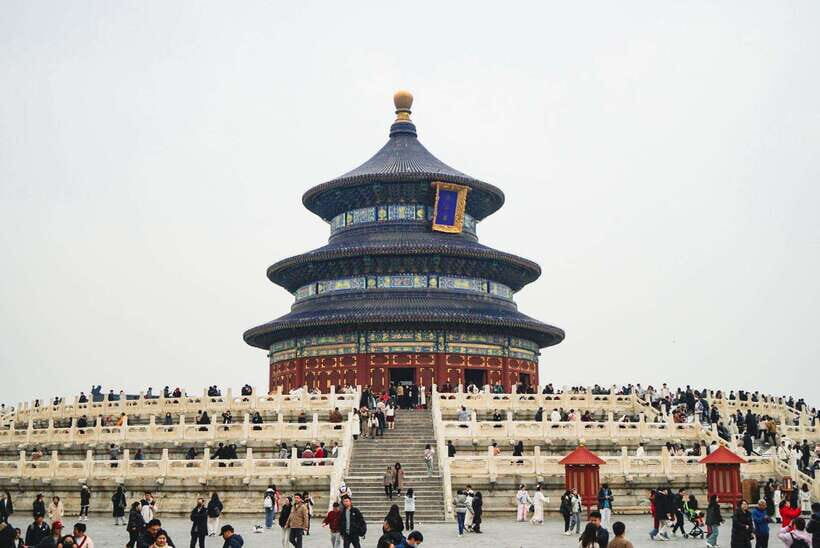
You reach the Temple of Heaven around 3:00 to 3:40 PM. This site is another UNESCO World Heritage stop, famous for its role in celestial worship. Emperors performed solemn rituals here each year, seeking divine favor for a bountiful harvest.
The tour focuses on the architecture that supports the symbolism:
- A triple-layer roof temple style
- Blue tiles
- Tall holy marble terraces
Even if you’re not a religion-history person, you’ll likely appreciate the logic of the design. This is one of those places where geometry and ritual combine, so the guide’s explanations help you “see the point,” not just the view.
Then it’s back to transit and wrap-up. Around 4:00 to 4:20 PM, the tour ends at the subway station near the Temple of Heaven exit.
What the guide experience looks like on the ground
This type of tour rises or falls on the guide. The good ones don’t just recite facts—they help you move, understand what you’re seeing, and handle crowds without stress.
In the guide lineup you’ll commonly see names like Huang, Alice, Lisa, Melody, Susann, and Skye. What repeatedly comes through in how this tour runs:
- Guides keep the group together in crowded, security-heavy zones.
- Explanations are tied to specific buildings (like the court halls and palace areas) so your photos also mean something.
- Some guides bring small extras that improve the day: snacks, sweets like white rabbit, and even personal touches such as handmade calligraphy.
A quick reality check: you may notice that meeting up in the hotel lobby can be clearer than meeting outside. The operator gives a specific meeting point at the hotel, so go inside and look for the guide there.
Crowds, weather, and timing: how to reduce pain
Even with ticketing help, you’re still visiting the most famous sites in Beijing. Expect crowds at Tiananmen and the Forbidden City—especially in:
- Holiday weeks
- Summer holidays
- Weekends (when possible, weekdays usually feel easier)
Weather can also be the real villain. One theme that comes up with palace-and-terrace days is heat. If it’s summer, plan for shade breaks and water breaks even if you feel like you can “power through.”
The tour’s timing helps—starting in the morning and moving through in a logical order. Still, your comfort matters. If you’re someone who gets cranky in lines, this tour will test your patience on peak days.
Value and pricing: what $75 buys you
At $75 per person for a 6-hour small group experience, the value comes from what’s included—because these are ticket-heavy, security-heavy, and logistics-heavy sites.
Based on the package details, you typically get:
- A shared English-speaking guide
- Admission to the Forbidden City, with guaranteed entry if that option is selected
- Temple of Heaven admission when included in your option
- Tian’anmen Square reservations if selected
- Meeting-point pickup (and for private options, hotel pickup and transport cost is mentioned)
What’s not included is mostly the everyday stuff:
- Food and drinks (you’ll handle lunch)
- Hotel drop-off
- “Any transportation fees” are listed as not included, even though bus movement in the day is described. In practice, this means you should confirm what your exact option covers so you don’t get surprised.
My take: if you want a smooth day and you don’t want to spend time clicking through ticket systems while also managing lines, this is one of the cleaner ways to do it. If you’re the type who loves independent planning and enjoys hunting ticket timing, then you might find cheaper routes—but you’ll likely pay back that time in stress.
Who this tour fits best
This is a strong fit if you:
- Want three top sights in one day without building a plan from scratch
- Prefer a guide who explains the meaning behind the buildings
- Travel as a small group or family and want an organized pace
It can also work well for kids and teens. The palace sites can feel “dry” alone, but the guide-style storytelling tends to make emperor-life details easier to grasp—especially when you’re already walking through the actual rooms.
If you’re a slow walker, consider whether 6 hours with major walking and terraces is right for you. You can’t speed up the sites, but you can set yourself up to enjoy them.
Should you book this Forbidden City and Temple of Heaven small group tour?
If you want a day in Beijing that feels guided, organized, and focused on the story—not just the photos—this is an easy yes. The standout reasons are ticket access help (including guaranteed entry during busy periods when selected) and the way the day links Tiananmen, palace halls, and ritual architecture into one coherent imperial circuit.
Book it if:
- You’re visiting in peak times and want to reduce ticket anxiety
- You care about what the buildings meant, not just what they look like
- You want an English-speaking guide to handle security-heavy navigation
Skip or adjust expectations if:
- You’re traveling during the busiest holidays and you’re very sensitive to lines
- You want lots of unstructured time for shopping or lingering alone
If you’re okay with a packed, walking-and-learning day, you’ll leave Beijing’s imperial heart feeling like you actually understood what you saw.