REVIEW · BEIJING
Beijing liulichang : Learn Calligraphy orCarving from Master
Book on GetYourGuide →Operated by Sino-Voyages · Bookable on GetYourGuide
A craftsman’s studio beats the big sights. In Beijing’s Liulichang area, you spend 2 to 2.5 hours in a working workshop, not a photo stop, and you choose what to make.
I love that you’re creating a real keepsake: calligraphy on rice paper, a silk fan painting, or a personal name seal. One consideration: you’re limited by time, so it’s a focused introduction, not a multi-week mastery program.
In This Review
- Key Highlights Worth Booking For
- Starting at Liulichang East Street and Getting the Setting Right
- Choose Your Craft: Calligraphy, Fan Painting, or Seal Carving
- The Meditation of Ink: Calligraphy
- The Elegance of the Fan: Fan Painting
- The Seal of Identity: Seal Carving
- Inside the Traditional Studio: What Teaching Feels Like
- Beyond Technique: The Meaning Behind Ink, Fans, and Seals
- Why ink writing feels different
- Why fans are more than decoration
- Why a seal is such a big deal
- Small-Group Attention and Support from Bruce Gao
- Your Take-Home Artwork: What You’ll Actually Leave With
- Price and Value: Is $75 Fair for This Workshop?
- Who This Workshop Is Best For (and Who Might Prefer Something Else)
- Should You Book Beijing Liulichang Calligraphy or Carving with a Master?
- FAQ
- How long is the workshop?
- What can I choose to make?
- Do I need prior experience?
- What languages are supported during the class?
- Where do I meet the guide?
- Is transportation included?
- Is there a cancellation option and payment flexibility?
Key Highlights Worth Booking For
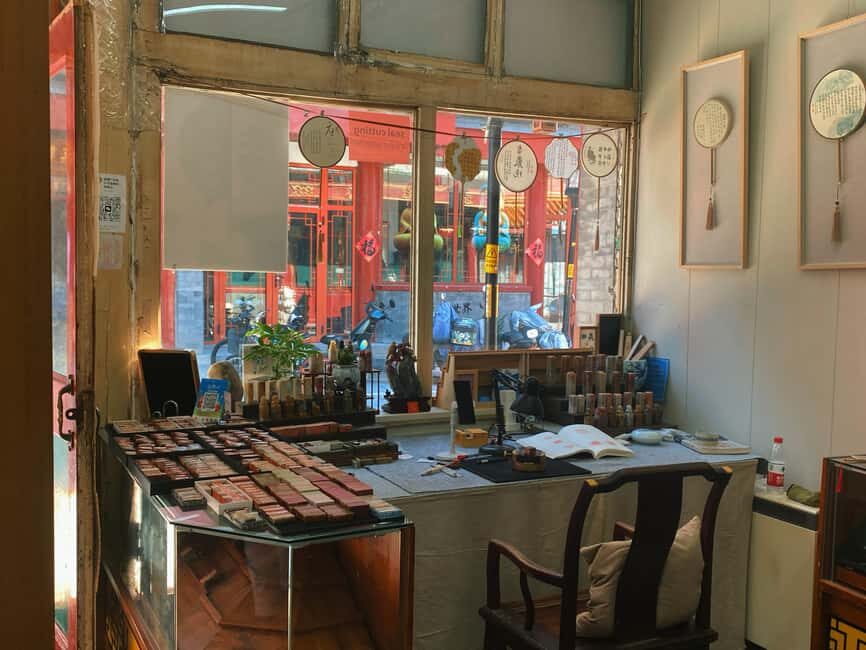
- Three classic crafts to choose from so your souvenir matches your interests
- Practice before the real work (especially for seal carving) so you feel prepared
- A patient, English-friendly teaching setup with Bruce and support interpreters when needed
- Liulichang East Street orientation first so the workshop has context, not just technique
- Cultural meaning, not just how-to steps behind ink, fan motifs, and seals
- Small group attention for more personal feedback and less standing around
Starting at Liulichang East Street and Getting the Setting Right
Your experience starts at a small square entrance of Liulichang East Street. Look for the guide holding a sign that says Sino-Voyages. This is useful because Liulichang can be easy to wander into… and just as easy to wander past.
Before you reach the studio, you’ll get a brief walk through Liulichang to set the tone. You’re not sent straight into a craft room blind. The area is known for arts and trades, and having the time to see the street rhythm helps your later work feel like part of a living culture instead of a one-off activity.
One extra thing I like here is the presence of local storytelling. The experience includes local storytellers sharing hidden histories and personal anecdotes. That means you’re learning why these art forms matter, not just repeating brush movements for an hour.
You can also read our reviews of more tours and experiences in Beijing.

Choose Your Craft: Calligraphy, Fan Painting, or Seal Carving
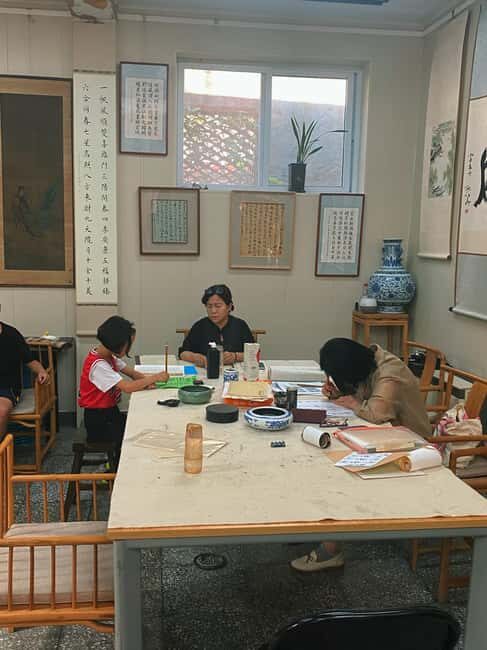
This workshop is built around choice. You pick one hands-on option when you arrive, and that decision drives the whole session.
The Meditation of Ink: Calligraphy
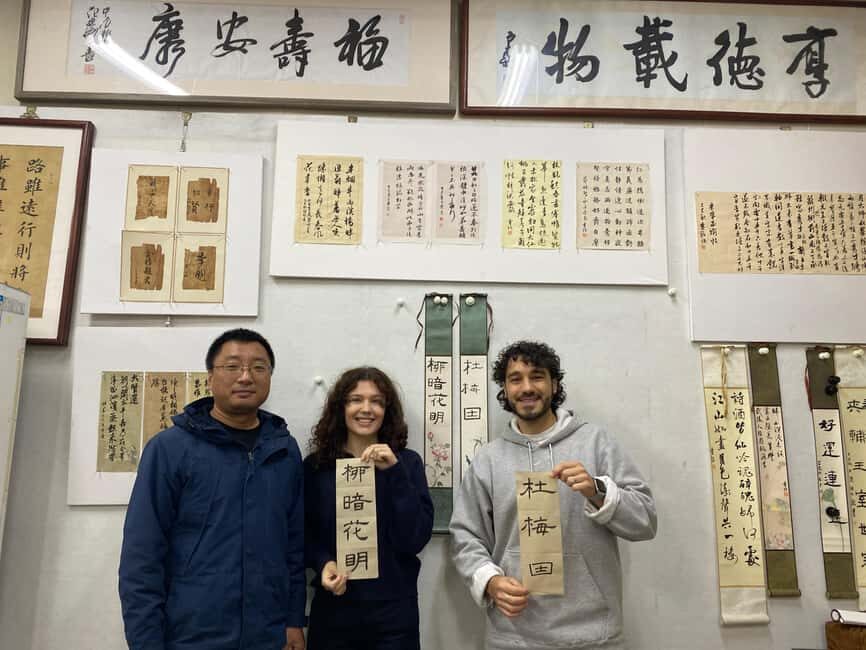
If you choose calligraphy, you’ll practice brush control on rice paper. The goal is not perfect art; it’s focus and flow. You’ll learn to write a meaningful Chinese proverb or your own name, then take home the finished piece on rice paper. It’s one of the most personal souvenirs you can make, because your handwriting and your character choice are the point.
The Elegance of the Fan: Fan Painting
Fan painting is a great option if you want something lighter and more visual. You’ll paint your own design on a delicate silk round fan. Classic motifs like bamboo or orchids are suggested, and you end up with a functional art piece, not just a wall print.
If you’re the type who likes crafts with a clear visual reward, this one usually clicks quickly.
The Seal of Identity: Seal Carving
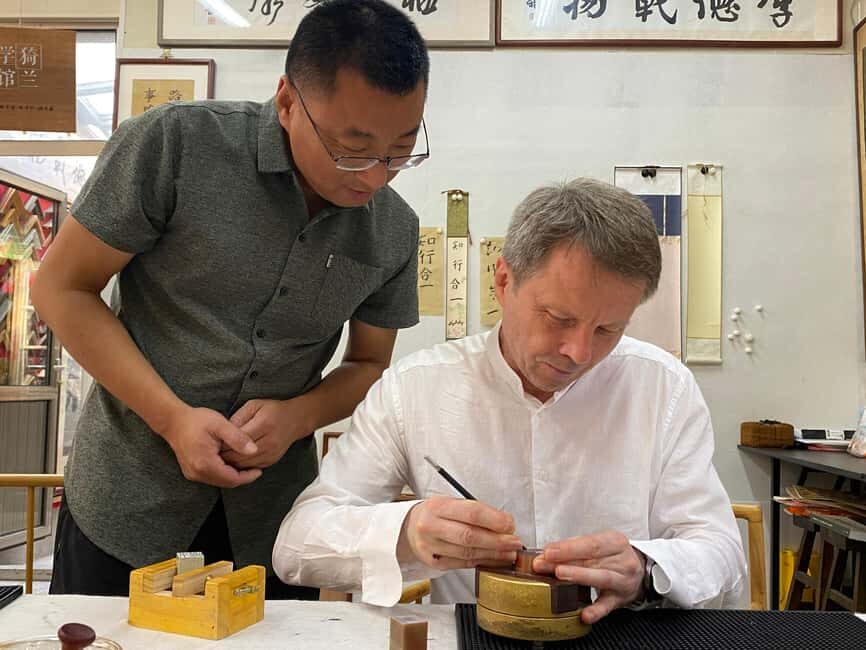
Seal carving is the most dramatic-looking craft, and it’s also the most satisfying when you finally make the final cut. You create your own Chinese name chop, a traditional stamp used for centuries as a signature. You learn to carve the characters and leave with your own seal.
For many people, this is the best “I made this” moment of the whole day. It’s compact, meaningful, and unmistakably Chinese.


Inside the Traditional Studio: What Teaching Feels Like
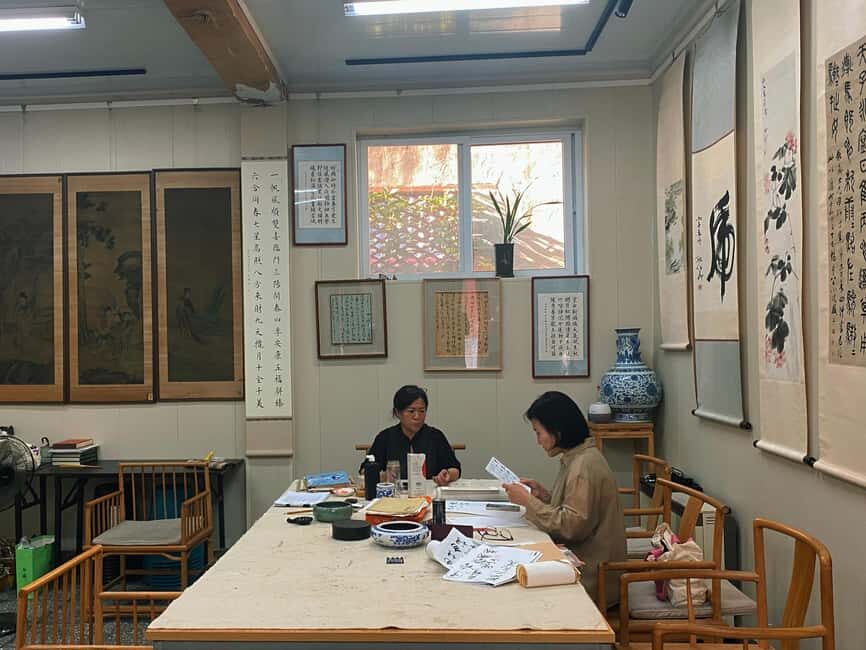
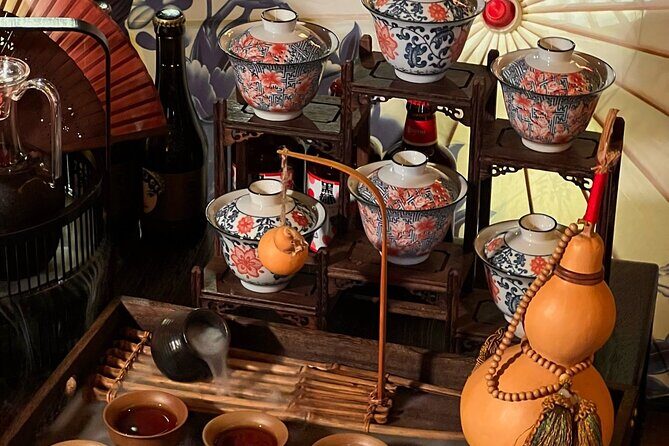
The workshop happens in a serene studio environment in Liulichang’s cultural district. The setting matters. Crafting Chinese calligraphy or carving stone isn’t something you want to do while stuck in a loud crowd, and the pace here is designed to slow you down.
Instruction is led by an expert artisan, with English and Chinese support available. In practice, you’ll likely get extra help if language needs come up. The experience includes interpreters for communication, which matters a lot when a master artisan is focused on fine details and you’re trying to understand instructions quickly.
One theme shows up strongly in the way instruction is set up: you don’t start on the final material immediately. For seal carving, you’ll do practice work on other stones first. That’s a smart design. It lowers pressure, helps you learn the tool motions, and protects your confidence before you get to the real carving.
For calligraphy, you’ll also build up through guided strokes and practice before you commit to the final written piece. The result is that you leave with something you can be proud of, not just a half-formed attempt.
Beyond Technique: The Meaning Behind Ink, Fans, and Seals
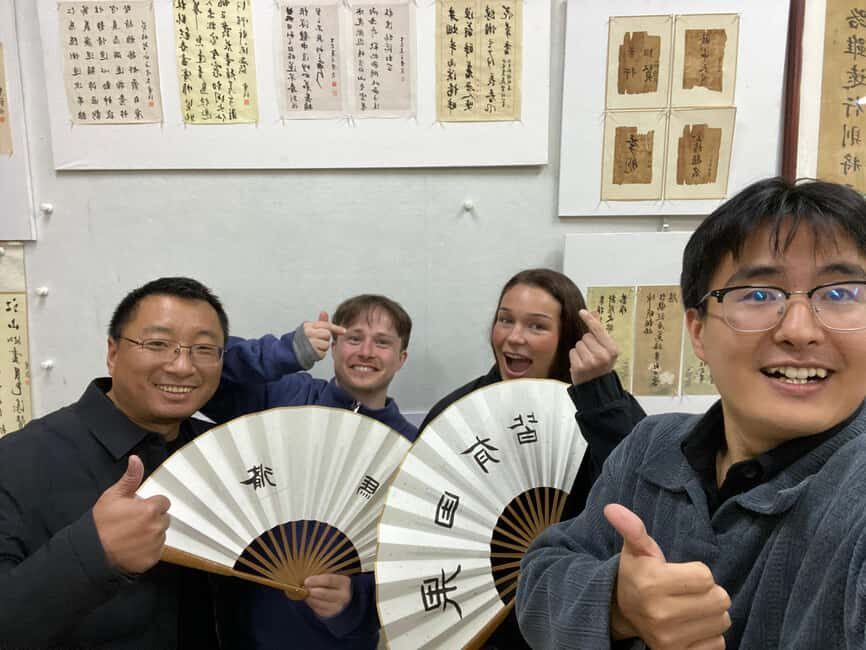
A good art class teaches hands. This one also teaches meaning, which is what makes the souvenir feel more like a cultural connection and less like a souvenir sticker.
Why ink writing feels different
Calligraphy isn’t just about characters. You’re learning a method tied to focus and rhythm—the way ink holds a stroke, the way brush pressure changes character shape, and the discipline of making fewer, clearer movements. When you write a proverb or your name, you’re also connecting to a tradition where written marks carry identity and thought.
Why fans are more than decoration
With the fan, the painting links to a tradition where everyday objects can carry art. If you choose a motif like bamboo or orchids, you’re tapping into symbolism that many Chinese artists and readers recognize. You’re not just painting something pretty; you’re choosing a theme that has meaning.
Why a seal is such a big deal
A seal name chop works like a signature, traditionally used for centuries. That’s why it’s not “random carving.” You’re making a personal identity tool, even if you only use it as a keepsake. The cultural logic is clear: a seal is identity made tangible.
Small-Group Attention and Support from Bruce Gao
This is a small-group experience, and that’s a big part of why people come away happy instead of frustrated. When you’re working with a brush or carving tools, you need feedback. You don’t want to wait your turn in silence while everyone else finishes their craft.
The instructor you may work with is Bruce Gao (sometimes referenced simply as Bruce). In multiple cases, the teaching style is described as patient and encouraging, with support from friends or interpreters when needed. That matters for two reasons:
- you understand what the artisan wants you to do
- you feel comfortable asking questions, even if your Chinese is limited
If you’re worried about being a complete beginner, don’t. The whole structure is built for people with no prior experience. Curiosity is encouraged, and the pacing helps you keep up.
Your Take-Home Artwork: What You’ll Actually Leave With
This workshop is designed so you don’t leave empty-handed. Included in the session are the materials for your chosen activity, plus guidance from the expert artisan, plus the cultural insights behind each art form.
What you take home depends on your choice:
- Calligraphy: a finished piece written on rice paper (a proverb or your name)
- Fan painting: a painted silk fan with a motif you selected
- Seal carving: your own Chinese name chop seal
The fact that it’s personalized is important. A generic “here’s a class sample” souvenir feels disposable. A piece made to your name or chosen characters feels like you own it, because you do.
Also, because the session is only about 2 to 2.5 hours, your art feels like a real craft accomplishment you can point to right after class ends.
Price and Value: Is $75 Fair for This Workshop?
At $75 per person, this isn’t the cheapest activity in Beijing. But it is strong value for what’s included.
Here’s what that price typically covers:
- one hands-on workshop in your chosen art form
- high-quality materials for that craft
- guidance from an expert artisan in a traditional studio setting
- cultural insights about history and meaning
- a personalized handmade artwork to take home
- a tranquil environment away from crowds
- small-group attention
The biggest “not included” item is transportation to the venue. That’s not unusual, but it does mean you should plan your route ahead of time. Liulichang is in an area where you can easily get off-track if you don’t have a simple plan for getting back to your hotel.
If you want a workshop-style experience where you make something meaningful, not just watch, this pricing starts to make sense quickly. You’re paying for instruction quality, materials, and the final keepsake.
Who This Workshop Is Best For (and Who Might Prefer Something Else)
This experience fits well if you’re the kind of traveler who:
- wants a hands-on cultural activity rather than another sightseeing loop
- enjoys creative work even if you’ve never done it before
- likes smaller, quieter moments in Beijing
- wants a souvenir with personal meaning (name, proverb, seal identity)
You don’t need prior experience. The workshop is specifically positioned for beginners and encourages curiosity.
A couple of practical considerations:
- If you’re expecting a long, slow process that teaches every advanced technique, you’ll probably feel time-limited. The session is built for a satisfying first experience.
- If you’re traveling with kids, it’s not suitable for children under 5 years.
- The studio is wheelchair accessible, which is a helpful detail if mobility is a factor.
Should You Book Beijing Liulichang Calligraphy or Carving with a Master?
I think you should book this if you want one standout cultural experience that’s not just about seeing famous places. The best part is the combination: Liulichang’s arts district context, a calm studio environment, small-group attention, and a real souvenir you make in your own name or chosen motif.
Book it especially if you’re torn between learning something practical and bringing home something beautiful. This class hits both.
If you’re the type who only wants quick sightseeing, skip it. But if you want a gentle, structured craft session where you feel guided—and leave with a personalized piece of Chinese art—this is a very solid use of time in Beijing.
FAQ
How long is the workshop?
The experience runs about 2 to 2.5 hours.
What can I choose to make?
You choose one hands-on workshop: calligraphy, fan painting, or seal carving.
Do I need prior experience?
No. You don’t need prior experience, and the session is designed for beginners.
What languages are supported during the class?
Instruction is available in English and Chinese.
Where do I meet the guide?
Meet at the small square entrance of Liulichang East Street. The guide will be holding a sign that says Sino-Voyages.
Is transportation included?
No, transportation to the venue is not included.
Is there a cancellation option and payment flexibility?
You can cancel up to 24 hours in advance for a full refund. You may also be able to reserve now and pay later.